Nikhil Prasad Fact checked by:Thailand Medical News Team Apr 18, 2026 5 months, 2 weeks, 2 days, 2 hours ago
Medical News: A new scientific study is shedding fresh light on why some COVID-19 patients develop severe breathing problems while others experience milder illness. Researchers have identified a crucial biological imbalance involving a hormone-regulating system in the body that appears to directly influence how badly the lungs are affected during infection.
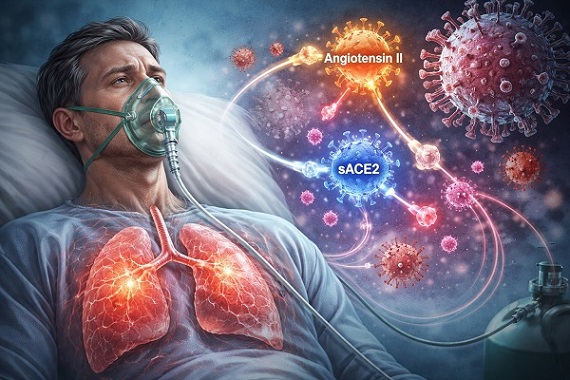 Key hormone imbalance identified as a driver of severe COVID-19 breathing complications
A Critical System Disrupted by the Virus
Key hormone imbalance identified as a driver of severe COVID-19 breathing complications
A Critical System Disrupted by the Virus
Scientists have long known that COVID-19 affects more than just the lungs, but this new research highlights how deeply it interferes with the body’s internal regulation systems. The focus of the study was the renin-angiotensin-aldosterone system, or RAAS, which plays a vital role in controlling blood pressure, fluid balance, and inflammation.
The research team from the Laboratório de Aids e Imunologia Molecular at Instituto Oswaldo Cruz (Fiocruz), the Laboratório de Pesquisa Sobre o Timo at Instituto Oswaldo Cruz (Fiocruz), and the Instituto Nacional de Infectologia Evandro Chagas (Fiocruz), all based in Rio de Janeiro, Brazil, analyzed blood samples from hospitalized COVID-19 patients and compared them with healthy individuals. Their findings revealed significant disruptions in key RAAS components.
Hormone Imbalance Drives Lung Complications
The study found that levels of angiotensin II, a hormone that can constrict blood vessels and promote inflammation, were significantly elevated in COVID-19 patients. At the same time, levels of soluble ACE2, a protein that normally helps counterbalance angiotensin II, were also increased but appeared to be functioning abnormally.
Patients with higher angiotensin II levels were more likely to require oxygen support and experience shortness of breath. This suggests that the hormone may play a direct role in damaging lung tissue and reducing oxygen exchange.
This
Medical News report highlights that this imbalance creates a dangerous feedback loop where inflammation worsens while the body’s natural repair processes struggle to keep up, leading to escalating respiratory distress in more severe cases.
Immune System Signals Reveal Deeper Damage
Beyond hormone changes, the researchers also examined a wide range of immune signaling molecules. They found that soluble ACE2 levels were linked to increased levels of IL-13 and fibroblast growth factor, both of which are associated with tissue repair and fibrosis.
Meanwhile, angiotensin II showed a strong negative relationship with IL-3, an immune regulator, suggesting that higher hormone levels may suppress certain protective immune responses.
The study also uncovered that lower oxygen levels were associated with reduced levels of LIF, a molecule known to support tissue recovery, indicating that patients with worse oxygenation may have a diminished ability to heal damaged lung tissue.
>
Comorbidities Make the Situation Worse
The research further confirmed that underlying health conditions significantly influence how the disease progresses. Patients with diabetes showed reduced levels of key immune molecules such as MCP-1 and LIF, which may weaken their ability to respond effectively to infection.
Those with hypertension had higher levels of inflammatory markers like IP-10, while individuals with obesity showed increased levels of IL-12p70, a cytokine linked to stronger inflammatory reactions. Age also played a role, with older patients showing higher levels of TNF and HGF, both associated with worsening disease severity.
These findings highlight how pre-existing conditions can amplify the harmful effects of RAAS disruption, making certain individuals far more vulnerable to severe outcomes.
New Hope for Targeted Treatments
The study’s findings are important not only for understanding the disease but also for improving treatment strategies. By targeting the RAAS system and restoring balance between angiotensin II and ACE2, doctors may be able to reduce inflammation, protect lung function, and improve recovery in severe cases. Monitoring these biomarkers could also help identify high-risk patients early, allowing for more personalized and timely interventions.
Conclusion
In conclusion, this study provides strong evidence that COVID-19 severity is closely linked to disruptions in the RAAS system and the resulting imbalance between angiotensin II and ACE2. This imbalance appears to drive inflammation, impair tissue repair, and contribute directly to respiratory decline. The additional impact of comorbidities such as diabetes, hypertension, and obesity further worsens this process, while age-related immune changes increase vulnerability.
Together, these findings offer a clearer picture of how COVID-19 causes severe disease and open the door to more targeted and effective treatment approaches that could significantly reduce complications and improve patient outcomes.
The study findings were published in the peer reviewed International Journal of Molecular Sciences.
https://www.mdpi.com/1422-0067/27/8/3579
For the latest COVID-19 News, keep on logging to Thailand
Medical News.
Read Also:
https://www.thailandmedical.news/articles/coronavirus




 Share
Share
 Tweet
Tweet
 Share
Share

































