Nikhil Prasad Fact checked by:Thailand Medical News Team Mar 30, 2026 5 months, 3 days, 21 hours, 14 minutes ago
Medical News: Breakthrough insight into how the body heals from severe infection
A new scientific study has uncovered a promising biological pathway that may help patients recover from severe COVID-19, offering fresh hope for improving treatment outcomes. Researchers found that a naturally occurring protein called annexin A1 plays a key role in calming harmful inflammation and aiding recovery in hospitalized patients.
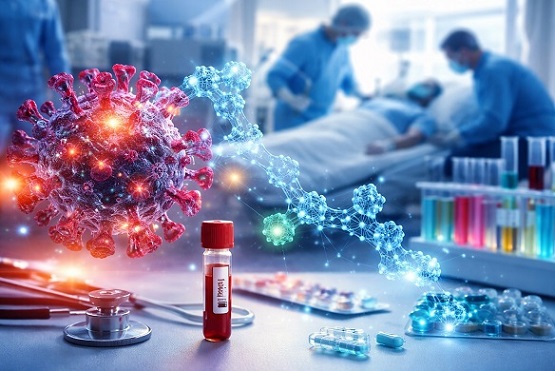 Emerging research shows a natural protein may help the body resolve inflammation and improve
COVID-19 survival outcomes
What scientists set out to investigate
The research team analyzed blood samples from 61 hospitalized COVID-19 patients, ranging from severe to critically ill cases, including those requiring life support such as mechanical ventilation or extracorporeal membrane oxygenation (ECMO). These patients were compared with 23 healthy individuals.
The study was conducted by scientists from multiple institutions, including Faculdade de Medicina da Universidade do Porto (FMUP), Centro Hospitalar e Universitário de São João (CHUSJ), Instituto de Saúde Pública da Universidade do Porto, i3S—Instituto de Investigação e Inovação em Saúde, Instituto Nacional de Saúde Doutor Ricardo Jorge, and NOVA Medical School, Universidade NOVA de Lisboa. Their goal was to understand how annexin A1 and its receptor, known as FPR2, behave during COVID-19 infection and whether they influence disease severity or recovery.
Key findings reveal a recovery-linked protein
At the time of hospital admission, levels of annexin A1 were significantly higher in all COVID-19 patients compared to healthy individuals. This suggests that the body rapidly activates this protein in response to infection.
More importantly, researchers observed that annexin A1 levels continued to rise over time in patients who survived, especially during the later stages of hospitalization. In contrast, patients who did not survive showed lower levels of this protein in the later weeks.
This
Medical News report highlights that annexin A1 appears to be closely linked with recovery, suggesting it may help the body resolve inflammation and repair tissue damage caused by the virus.
Understanding the role of inflammation control
COVID-19 is known to trigger excessive inflammation, often referred to as a “cytokine storm,” which can damage organs and worsen outcomes. Annexin A1 belongs to a group of molecules called pro-resolving mediators, which help switch off inflammation once it has served its purpose.
The study found that annexin A1 worked in coordination with another molecule called resolvin E1, both of which are involved in calming inflammation. Higher annexin A1 levels were also linked to reduced signs of blood vessel damage, a major complication in severe COVID-19 cases.
Interestingly, although most patients were treated with dexamethasone, a standard anti-inflammatory drug, the amount of the drug given did not appear to directly influence annexin A1 levels. This suggests the body may regulate this protein independently as part of its natural healing process.
Stable receptor but active signaling pathway
The researchers also examined FPR2, the receptor that annexin A1 binds to in order to exert its effects. While FPR2 levels were elevated in COVID-19 patients compared to healthy individuals, they remained relatively stable throughout hospitalization. This indicates that while the receptor is present and ready, the key changes driving recovery may depend more on the availability and activity of annexin A1 itself.
Why this discovery matters
These findings shed light on a crucial but previously underexplored mechanism in COVID-19 recovery. By enhancing the body’s ability to resolve inflammation rather than simply suppressing it, annexin A1 could represent a new therapeutic target.
Future treatments might focus on boosting this pathway to improve survival rates and reduce complications in critically ill patients.
Conclusion
Overall, the study provides compelling evidence that annexin A1 is not just a bystander but an active player in the recovery process from severe COVID-19. Its increasing levels in survivors, association with reduced inflammation, and interaction with other healing molecules point to a protective and restorative role. Targeting this pathway could lead to more effective therapies that support the body’s natural ability to heal while minimizing harmful inflammation.
The study findings were published in the peer reviewed journal: Biomolecules.
https://www.mdpi.com/2218-273X/16/4/508
For the latest COVID-19 news, keep on logging to Thailand
Medical News.
Read Also:
https://www.thailandmedical.news/articles/coronavirus




 Share
Share
 Tweet
Tweet
 Share
Share