Nikhil Prasad Fact checked by:Thailand Medical News Team Feb 18, 2026 6 months, 1 week, 5 days, 21 hours, 36 minutes ago
Medical News: Researchers from the Department of Neurology at Juntendo University Nerima Hospital and the Department of Obstetrics and Gynecology at Tokyo-Kita Medical Center have documented a rare and troubling case in which a COVID-19 infection triggered a progressive brain disorder affecting balance and coordination. Their findings suggest that even mild COVID-19 illness may, in rare situations, cause the immune system to attack the brain.
 Rare autoimmune brain damage discovered months after mild COVID-19 infection, highlighting hidden neurological risks
The condition involves damage to the cerebellum, the part of the brain responsible for balance, coordination, and smooth movement. This
Medical News report highlights how the immune system mistakenly produced harmful antibodies called anti-Zic4 antibodies that targeted healthy brain cells. These antibodies are usually linked to cancer-related neurological disorders, but in this case, no cancer was found, indicating COVID-19 itself may have triggered the immune attack.
Symptoms Appeared Weeks After Mild Infection
The patient, a 53-year-old woman, initially experienced only mild COVID-19 symptoms such as fever, fatigue, and cough. She recovered without complications. However, about two months later, she began experiencing slurred speech, unsteady walking, and difficulty maintaining balance. These symptoms gradually worsened, affecting her ability to perform daily activities.
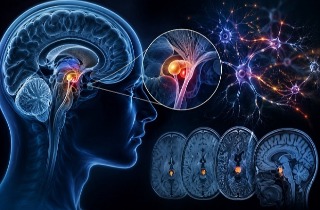
Neurological examination confirmed serious coordination problems. Doctors observed involuntary eye movements, unstable walking, and impaired limb coordination. Brain scans revealed significant shrinkage, or atrophy, of the cerebellum, especially in areas essential for posture and balance.
Laboratory analysis of her spinal fluid showed increased levels of immune proteins, confirming inflammation in the brain. Blood tests revealed strong positivity for anti-Zic4 antibodies, confirming that her immune system had launched an abnormal attack on cerebellar tissue.
Immune System Attack Identified as the Cause
Anti-Zic4 antibodies target proteins that play an important role in the development and function of cerebellar nerve cells. Normally, these antibodies appear in patients with certain cancers, particularly small-cell lung cancer. However, extensive scans found no evidence of cancer in this patient.
Researchers believe COVID-19 may have triggered this autoimmune response through a process known as molecular mimicry. In simple terms, the virus may resemble certain brain proteins closely enough to confuse the immune system. As a result, the immune system begins attacking both the virus and the brain.
Another possible explanation involves prolonged inflammation caused by COVID-19. Inflammatory chemicals released during infection can overstimulate immune cells, making them more likely to attack healthy tissue. This can lead to lasting brain inflammation and gradual loss of brain cells.
Brain Scans Show Ongoing Degenera
tion Despite Treatment
Doctors treated the patient using immune-modulating therapies, including steroid medications, intravenous immunoglobulin (IVIG), and plasmapheresis, a procedure that filters harmful antibodies from the blood. Initially, her symptoms improved, and antibody levels dropped.
However, one year later, antibody levels rose again, and brain scans showed continued cerebellar shrinkage and reduced blood flow to affected brain regions. Surprisingly, her symptoms remained relatively stable, and her thinking abilities remained intact. Cognitive testing confirmed her memory, attention, and reasoning were largely unaffected.
This finding suggests that brain damage may continue silently even when symptoms appear stable. Imaging scans showed ongoing structural damage despite treatment, highlighting the need for long-term monitoring.
Why This Discovery Matters
This case expands scientific understanding of how COVID-19 can trigger long-lasting neurological complications. Previously, anti-Zic4 antibodies were almost always linked to cancer, but this case confirms infections alone can cause similar damage.
The findings also show that immune-related brain damage can progress slowly over time. Even when patients seem stable, underlying brain deterioration may continue. This makes early detection and continuous monitoring essential.
Researchers emphasize that while such complications remain rare, doctors should be aware of unusual neurological symptoms appearing weeks or months after COVID-19 infection.
Conclusion
This case highlights the powerful and sometimes unpredictable effects COVID-19 can have on the immune system and brain. It demonstrates that even mild infections can trigger autoimmune reactions that persist long after recovery. The progressive cerebellar damage observed in this patient underscores the importance of early diagnosis, regular brain imaging, and long-term medical follow-up. While treatments can stabilize symptoms, they may not fully stop ongoing brain degeneration. These findings also raise important questions about how viral infections may trigger autoimmune diseases and emphasize the need for further research to develop more effective treatments and preventive strategies.
The study findings were published in the peer reviewed journal: Neuropsychopharmacology Reports.
https://onlinelibrary.wiley.com/doi/10.1002/npr2.70094
For the latest COVID-19 news, keep on logging to Thailand
Medical News.
Read Also:
https://www.thailandmedical.news/articles/coronavirus
https://www.thailandmedical.news/articles/long-covid




 Share
Share
 Tweet
Tweet
 Share
Share