Nikhil Prasad Fact checked by:Thailand Medical News Team Mar 09, 2026 6 months, 3 weeks, 5 days, 4 hours, 32 minutes ago
Medical News: Long COVID continues to puzzle scientists as new complications emerge months after the initial infection. A new clinical investigation has now revealed that subtle kidney damage may be occurring in many long COVID patients long before traditional medical tests can detect it. Researchers discovered that special urinary biomarkers that reflect injury in the kidney’s tubular structures can identify early renal damage even when standard kidney function tests appear normal.
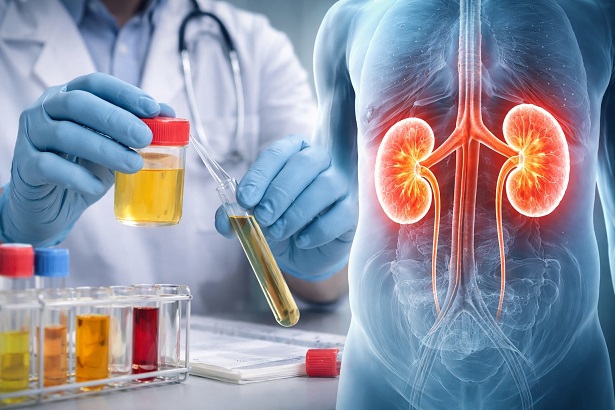 Early kidney injury may be silently developing in long COVID patients even when standard tests appear normal
The research was conducted by scientists from the Instituto de Biofísica Carlos Chagas Filho at the Universidade Federal do Rio de Janeiro, the National Institute of Advanced Technologies in Diagnosis and Prognosis of Chronic and Neglected Diseases (INATEC), the Institute of Thoracic Diseases at Clementino Fraga Filho University Hospital (HUCFF) at the Universidade Federal do Rio de Janeiro, the Biomedical Institute at Fluminense Federal University, the Department of Medicine at the State University of Ponta Grossa, and the Network of Studies for Understanding the Pathogenesis of Late Effects of COVID-19 supported by the Carlos Chagas Filho Foundation for Research Support of the State of Rio de Janeiro (FAPERJ).
Kidney Damage May Be More Common Than Previously Thought
Long COVID is known for symptoms such as fatigue, breathing difficulties, cognitive problems, and persistent inflammation. However, the kidneys are increasingly being recognized as another organ that may suffer long-term consequences after infection with SARS-CoV-2. Previous research suggested that roughly one in five COVID-19 survivors may experience some level of declining kidney function over time.
Traditional diagnosis of kidney disease relies heavily on measurements such as serum creatinine and estimated glomerular filtration rate (eGFR). These indicators typically change only after significant loss of kidney function has already occurred. Because of this limitation, mild or early kidney injury may remain unnoticed for months or even years.
This
Medical News report highlights how scientists explored whether more sensitive biological markers could reveal hidden kidney damage in individuals experiencing long COVID.
Examining Patients Months After COVID-19 Infection
The study involved 75 patients who had previously been hospitalized with COVID-19 but had no history of chronic kidney disease before infection. Participants were divided into three groups depending on how long it had been since their infection: 6 months, 12 months, or 24 months.
Researchers analyzed urine samples to measure several indicators linked to kidney injury. These included protein-to-creatinine ratio, albumin-to-creatinine ratio, and two specialized tubular damage biomarkers known as kidney injury molecule-1 and beta-2 microglobulin.
Nearly half of the patients still had normal kidney filtration rates. However, about 34.7 percent showed mild reductions in kidney fil
tration and 16 percent displayed more serious decline. Surprisingly, even among individuals whose filtration rates appeared completely normal, almost 30 percent had abnormal tubular biomarkers suggesting hidden kidney injury.
Early Tubular Damage Appears Before Filtration Declines
One of the most striking findings was the timing of these abnormalities. Tubular damage markers were most frequently elevated six months after infection. In contrast, measurable decline in kidney filtration tended to become more apparent much later, particularly around the 24-month mark.
This pattern suggests that injury to the kidney’s tubular cells may occur earlier in the disease process, potentially acting as an early warning sign before more serious kidney dysfunction develops.
Scientists believe SARS-CoV-2 may directly affect kidney cells, particularly those involved in filtering and reabsorbing proteins. Damage to these cells may interfere with the kidney’s ability to properly process substances in the blood, leading to protein leakage and other abnormalities detectable in urine tests.
Why Early Detection Matters
The findings emphasize the importance of monitoring kidney health in people recovering from COVID-19, even if routine blood tests appear normal. Detecting early tubular injury could allow doctors to monitor patients more closely and possibly intervene before permanent damage develops.
Overall, the study suggests that hidden kidney injury in long COVID patients may be far more common than previously recognized. Using more sensitive urinary biomarkers could significantly improve early diagnosis and help clinicians better understand the long-term consequences of SARS-CoV-2 infection. Early identification of this silent form of kidney injury is critical because individuals with subclinical damage may face a higher risk of developing acute kidney injury or chronic kidney disease later in life if the condition goes unnoticed.
The study findings were published in the peer reviewed International Journal of Molecular Sciences.
https://www.mdpi.com/1422-0067/27/5/2420
For the latest on Long COVID, keep on logging to Thailand
Medical News.
Read Also:
https://www.thailandmedical.news/articles/long-covid




 Share
Share
 Tweet
Tweet
 Share
Share

































