Nikhil Prasad Fact checked by:Thailand Medical News Team Feb 21, 2026 5 months, 2 days, 13 hours, 30 minutes ago
Medical News: A surprising new case report from Sweden suggests that dangerous microscopic blood clots lingering after COVID-19 infection may be reduced using a combination of three commonly available blood-thinning medications. The findings offer new hope to people suffering from Long COVID symptoms such as chest pain, fatigue, and exercise intolerance that have remained unexplained for years.
 Experimental triple blood thinner therapy dramatically reduced hidden microclots and improved Long COVID symptoms in a Swedish case study
The research was conducted by Dr. Lisa Noren, a Specialist in Family Medicine based in Stockholm, Sweden, who also served as the patient in this detailed clinical investigation. Additional diagnostic biomarker testing was supported through a biorepository research program at Stellenbosch University Hospital in Stellenbosch, South Africa, while clinical guidance was also associated with cardiology specialists at Karolinska University Hospital in Stockholm. This
Medical News report highlights how the study sheds light on a possible mechanism behind persistent Long COVID symptoms and explores an experimental treatment approach.
Microclots Emerging as Hidden Drivers of Long COVID
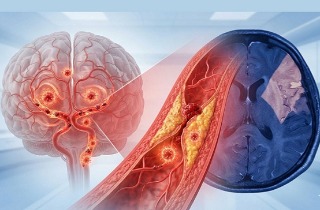
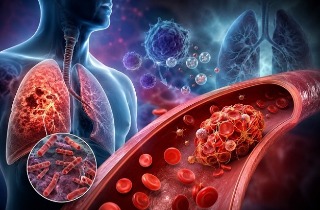
Scientists have increasingly suspected that Long COVID may involve tiny clots known as microclots forming inside small blood vessels. These microclots, too small to be detected by conventional hospital clotting tests, can disrupt normal blood flow and oxygen delivery to tissues.
The patient in this study, a 52-year-old physician, developed severe symptoms following COVID-19 infection in 2020. She experienced chest pain during physical activity, abnormal heart rate responses, fatigue, and reduced ability to exercise. Despite extensive testing, including ECG scans, cardiac MRI, and angiography, major heart arteries appeared normal. However, specialized testing confirmed microvascular dysfunction, meaning the smallest blood vessels were not functioning properly.
Using advanced plasma fluorescence microscopy performed through the Stellenbosch research program, doctors discovered an extremely high microclot burden score of 15 out of 16, far above normal levels.
Triple Blood Thinner Therapy Shows Dramatic Improvements
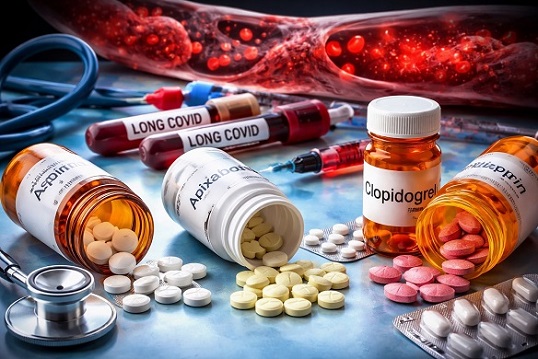
To address the microclots, the patient initiated an experimental triple antithrombotic therapy consisting of low-dose aspirin, clopidogrel, and apixaban, along with pantoprazole to protect the stomach lining. These medications work through different mechanisms to prevent clot formation and reduce abnormal clotting activity.
Over a period of 5.5 months, remarkable improvements were observed.
Walking test performance improved significantly, with completion time dropping from 289 seconds to 233 seconds. Objective measurements from wearable monitoring devices showed reduced exertion strain, indicating improved cardiovascular efficiency. Muscle endurance also improved, with chair-stand repetitions increasing from 27 to 39 before fatigue set in.
Most importantly, laborato
ry analysis showed that the microclot burden dropped dramatically from 15 out of 16 to just 3 out of 16.
The patient also reported reduced chest pain, improved stamina, and less post-exercise fatigue. Medication needed to control chest pain was reduced, and overall physical functioning improved substantially.
Understanding How Microclots May Cause Long COVID Symptoms
Microclots may block capillaries, the smallest blood vessels responsible for delivering oxygen to muscles, nerves, and organs. When oxygen delivery is disrupted, tissues become stressed and energy production declines. This may explain many Long COVID symptoms such as fatigue, brain fog, muscle weakness, and chest discomfort.
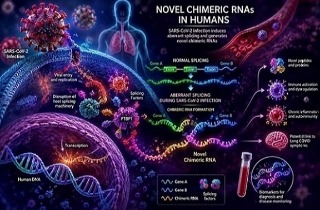
Researchers believe SARS-CoV-2 infection may trigger abnormal clotting through inflammation, immune activation, and damage to the inner lining of blood vessels, known as the endothelium.
Triple antithrombotic therapy may help by preventing new clot formation while allowing the body to gradually clear existing microclots and restore normal blood flow.
Important Limitations and Need for Larger Trials
Despite these promising results, researchers emphasize that this is a single case report and does not prove that the treatment works for all Long COVID patients. Spontaneous recovery or placebo effects cannot be ruled out.
Triple antithrombotic therapy also carries risks, particularly bleeding, and should only be used under medical supervision. The treatment remains experimental and is not currently considered standard care.
However, the dramatic reduction in microclots and parallel improvement in symptoms strongly support the theory that microvascular clotting plays a key role in Long COVID.
Conclusions
This case provides compelling evidence that persistent microclots may be an important and previously overlooked cause of Long COVID symptoms. The observed improvements in physical function, reduction in clot burden, and overall symptom relief suggest that targeting abnormal clotting mechanisms could represent a promising therapeutic strategy. However, large randomized controlled trials are urgently needed to confirm safety, effectiveness, and identify which patients may benefit most. Until then, this approach remains experimental but represents a potentially important breakthrough in understanding and treating Long COVID.
The study findings were published on a preprint server and are currently being peer reviewed.
https://www.preprints.org/manuscript/202602.0988
For the latest on Long COVID, keep on logging to Thailand
Medical News.
Read Also:
https://www.thailandmedical.news/articles/long-covid
https://www.thailandmedical.news/articles/coronavirus




 Share
Share
 Tweet
Tweet
 Share
Share