COVID-19 Virus Found Rapidly Mutating Even in Non-Immunocompromised Individuals and Even During Acute Infections
Nikhil Prasad Fact checked by:Thailand Medical News Team May 15, 2026 3 months, 4 days, 22 hours, 23 minutes ago
Medical News: Scientists in Italy have uncovered disturbing new evidence showing that the COVID-19 virus can rapidly mutate inside infected individuals even during the early stages of infection and even in people who are not severely immunocompromised. The findings challenge earlier beliefs that major viral evolution mainly occurs only in chronically infected or heavily immunosuppressed patients. Instead, the new research suggests that dangerous new viral mutations may emerge far more easily and frequently than previously thought.
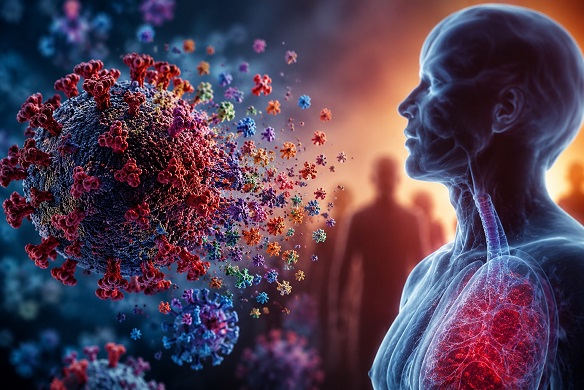 Italian researchers discover that SARS-CoV-2 can rapidly evolve inside ordinary infected patients within just
weeks of infection
The study was conducted by researchers from the Department of Biomedical and Clinical Sciences at the University of Milan, the III Division of Infectious Diseases at ASST Fatebenefratelli Sacco Luigi Sacco Hospital in Milan, and the National PhD Programme in One Health Approaches to Infectious Diseases and Life Science Research at the University of Pavia in Italy.
Scientists Monitored COVID-19 Evolution Inside Patients
The research team analyzed 58 COVID-19 patients who remained positive for SARS-CoV-2 over extended periods between 2021 and 2023. The majority of the patients were elderly, with a median age of 83 years, and most required hospitalization. Researchers repeatedly collected nasal swabs from the patients over several weeks to observe how the virus changed genetically over time.
Using whole genome sequencing technology, the scientists closely tracked viral mutations developing inside individual patients. They discovered that SARS-CoV-2 was constantly changing, acquiring new mutations while also losing older ones during the course of infection.
More than 8,000 genetic mutations were identified throughout the study. Many of the mutations occurred in the spike protein, especially within the receptor binding domain, the critical part of the virus that attaches to human cells and is targeted by vaccines and antibodies.
Viral Mutations Appeared Shockingly Fast
One of the most concerning findings was how quickly the virus evolved. Researchers observed that many patients developed highly divergent viral populations within just three weeks of infection.
The study found that during the first week of infection, the virus rapidly generated numerous random mutations, increasing viral diversity inside the body. During the second week, some weaker mutations disappeared through a purification process. However, by the third week, new mutations began emerging again, producing increasingly altered viral populations.
Importantly, many of these new mutations appeared suddenly and were not detectable earlier as low-frequency minority variants. This suggests that SARS-CoV-2 can rapidly generate entirely new mutations unexpectedly while adapting to pressures from the human immune system.
Researchers said this pattern demonstrates a dynamic evolutionary process occurring inside infected individuals, even during acute infections.
This
hailandmedical.news/">Medical News report highlights growing fears among scientists that new SARS-CoV-2 variants may emerge directly inside ordinary infected patients rather than only through prolonged infections in severely immunocompromised individuals.
Omicron Variants Showed Particularly High Mutation Activity
The study involved multiple viral variants including Delta, BA.1, BA.2, BA.5, BQ and XBB recombinant strains. Researchers noted that Omicron-related variants appeared especially prone to rapid mutation accumulation.
Patients infected with BQ variants remained positive for an average of nearly 39 days, much longer than BA.1 infections which typically cleared in about 16 days.
The XBB recombinant variants represented the largest group in the study and were also associated with many of the deaths recorded among patients.
Researchers found that the virus accumulated mutations not only in the spike protein but also in viral regions responsible for replication and immune suppression, including RdRp and PLpro proteins. Some mutations identified were associated with immune escape, increased cell fusion and potentially enhanced transmissibility.
Heart Disease Linked to Faster Viral Evolution
Another alarming finding was that patients with cardiovascular disease showed significantly greater viral mutation accumulation over time compared to patients without heart-related conditions.
Scientists believe that severe inflammation, vascular damage and immune disturbances associated with cardiovascular disease may create an environment that allows the virus to evolve more aggressively inside the body.
Findings Raise New Concerns About Future Variants
The researchers warned that SARS-CoV-2 remains highly adaptable and capable of rapidly evolving inside infected individuals regardless of treatment status. The findings strongly suggest that even short-term infections may contribute to the emergence of future variants with increased transmissibility or immune escape abilities.
The study also underscores the importance of continuous genomic surveillance of hospitalized COVID-19 patients to identify potentially dangerous mutations before they spread widely through communities. Researchers stressed that understanding how SARS-CoV-2 evolves within individual patients may help improve future vaccines, antiviral therapies and pandemic preparedness strategies. They added that persistent infections may occur more commonly than previously recognized, even in people who are not classically immunocompromised, allowing the virus repeated opportunities to adapt and evolve.
The study findings were published in the peer reviewed journal: Frontiers in Microbiology.
https://www.frontiersin.org/journals/microbiology/articles/10.3389/fmicb.2026.1794039/full
For the latest COVID-19 news, keep on logging to Thailand
Medical News.
Read Also:
https://www.thailandmedical.news/articles/coronavirus




 Share
Share
 Tweet
Tweet
 Share
Share