New Hope Against Bird Flu as Scientists Identify Multiple Treatments That Target the Virus
Nikhil Prasad Fact checked by:Thailand Medical News Team Jun 12, 2026 1 month, 3 weeks, 1 minute ago
Medical News: As bird flu viruses continue to evolve and spread across species, scientists are increasingly searching for treatments that can work against a wide range of avian influenza strains rather than focusing on a single subtype. A new review has highlighted a promising strategy: targeting a cellular process known as autophagy, which many bird flu viruses hijack to help themselves survive and multiply. The findings suggest that several existing compounds, natural products, and host-directed therapies could potentially combat multiple avian influenza viruses, including the dangerous H5N1, H7N9, H9N2, H3N2, H6N6, and even emerging strains such as H10N3.
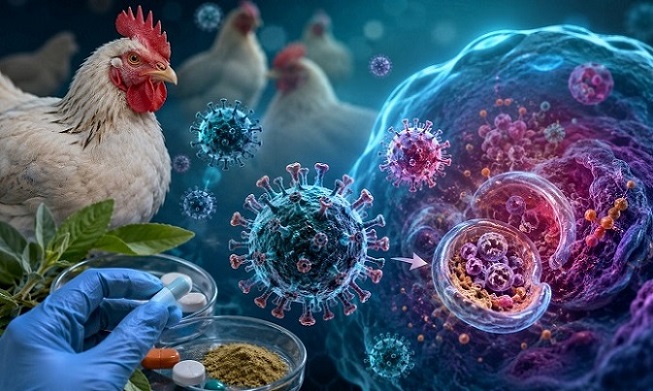 Scientists identify several drugs and natural compounds that may fight multiple bird flu strains by targeting the cellular
autophagy pathway
Bird Flu Uses the Body’s Own Machinery
Researchers found that avian influenza viruses manipulate a natural cellular recycling system called autophagy. Under normal conditions, autophagy helps cells remove damaged components, fight infections, and maintain healthy function. However, many bird flu viruses have learned how to exploit this system to support viral replication and evade immune defenses.
The review showed that highly pathogenic viruses such as H5N1 can trigger the formation of autophagosomes and increase autophagic activity in both human and animal cells. Other strains, including H9N2 and H3N2, also alter autophagy, although they do so in different ways depending on the virus subtype and the infected host species.
The researchers involved in the study are from the College of Animal Science at Xichang University, the Key Laboratory of Animal Epidemic Disease Detection and Prevention in Panxi District at Xichang University, the Liangshan Ecological Breeding Engineering Technology Research Center, and the College of Veterinary Medicine at Northwest A&F University in China.
Existing Drugs Show Broad Antiviral Potential
One of the most important findings was that several compounds that block autophagy significantly reduced replication of multiple bird flu viruses.
Among the most promising was
3-Methyladenine (3-MA), which inhibited replication of H5N1 and H9N2 viruses in laboratory studies and animal models. The compound also reduced lung inflammation, pulmonary swelling, and tissue damage associated with severe infections.
Other notable agents included:
-LY294002, another inhibitor of the autophagy pathway that suppressed H5N1 and H9N2 replication.
-Wortmannin, which reduced H9N2 viral growth.
-
Chloroquine (CQ), which interfered with later stages of autophagy and was effective against both H5N1 and H9N2.
-
Bafilomycin A, which blocked autophagic degradation and reduced viral replication.
-
ABMA, which interfered with late endosome function and hindered H3N2
replication.
Researchers noted that many of these compounds not only reduced virus levels but also lessened lung injury, a major cause of death in severe bird flu infections.
Natural Compounds Could Become Future Therapies
Perhaps even more exciting is the growing list of natural compounds that appear capable of suppressing multiple avian influenza viruses.
-Baicalin, a flavonoid extracted from the medicinal plant Scutellaria baicalensis, inhibited viral growth by suppressing autophagy. It showed activity against H3N2 and H6N6 strains.
-Procyanidins, plant-derived antioxidants found in fruits and seeds, demonstrated activity against H9N2, H5N1, and H3N2 by disrupting critical autophagy-related protein complexes needed by the viruses.
-Eugenol, the major active component of cloves, inhibited replication of H3N2, H9N2, and H5N1. Scientists found that it not only interfered with autophagy but also reduced oxidative stress and inflammatory signaling pathways that viruses use to their advantage.
-
Evodiamine, derived from the medicinal herb Evodia rutaecarpa, showed similar broad-spectrum effects against H3N2, H9N2, and H5N1 by activating mTOR and preventing the formation of essential autophagy structures.
The review also highlighted evidence that
Aloe vera compounds may interfere directly with the viral M2 protein, helping block virus-induced autophagy and suppress H3N2 infection. This
Medical News report highlights that several of these naturally derived compounds appear capable of targeting multiple influenza subtypes simultaneously, making them attractive candidates for future broad-spectrum antiviral development.
Harnessing the Body’s Own Defenses
Scientists also identified several host proteins that naturally restrict influenza viruses.
Proteins such as HSPA1L, S1PR1, HFE, ATG5, ATG7, and Beclin1 were found to play important roles in controlling viral replication. In particular
, HSPA1L showed the ability to suppress H5N1, H3N2, H9N2, and H7N9 by promoting destruction of viral proteins through selective autophagy mechanisms.
Another promising approach involves immune-enhancing peptides. One experimental peptide called
AIP-C5 improved protection against H5N2, H7N9, and H9N2 infections when used alongside influenza vaccines, suggesting future vaccine technologies could become more effective by carefully regulating autophagy.
Conclusion
The review reveals that targeting autophagy may become one of the most powerful broad-spectrum strategies against avian influenza viruses. Instead of attacking a single viral protein that can easily mutate, these approaches target cellular pathways that many bird flu strains depend upon for survival. Compounds such as 3-MA, chloroquine, baicalin, procyanidins, eugenol, evodiamine, and Aloe vera-derived molecules have demonstrated activity against multiple avian influenza subtypes, including H5N1, H9N2, H3N2, H6N6, H7N9, and related viruses. Equally important, many of these therapies appear capable of reducing the dangerous lung inflammation and cytokine storms associated with severe infections. Although most findings remain at the laboratory and animal-study stage, the growing body of evidence suggests that autophagy-targeted treatments could eventually lead to broad-spectrum antiviral drugs that remain effective even as bird flu viruses continue to evolve and generate new variants.
The study findings were published in the peer reviewed journal: Pathogens.
https://www.mdpi.com/2076-0817/15/6/623
For the latest on Bird Flu, keep on logging to Thailand
Medical News.
Read Also:
https://www.thailandmedical.news/articles/h5n1-avian-flu
https://www.thailandmedical.news/articles/influenza-or-flu




 Share
Share
 Tweet
Tweet
 Share
Share