Nikhil Prasad Fact checked by:Thailand Medical News Team Apr 19, 2026 5 months, 2 weeks, 1 day, 1 hour, 2 minutes ago
Medical News: Scientists are uncovering a powerful and often overlooked connection between the gut and the brain, revealing that the microbes living in our intestines may shape brain health from infancy to old age. A new scientific review is now drawing attention to how disruptions in this delicate ecosystem could influence the risk of neurological disorders later in life.
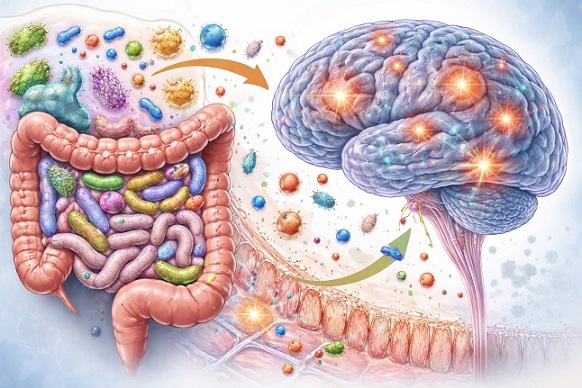 Gut microbes may quietly shape brain health and disease risk across the entire human lifespan
A Lifelong Communication Network
Gut microbes may quietly shape brain health and disease risk across the entire human lifespan
A Lifelong Communication Network
The human gut is home to trillions of microorganisms that form a dynamic ecosystem known as the microbiome. These microbes are not passive; they actively communicate with the brain through a complex system called the microbiota–gut–brain axis. This network integrates signals from the nervous system, immune system, hormones, and metabolic pathways, allowing the gut and brain to constantly exchange information.
One of the fastest communication routes is the vagus nerve, which acts like a direct highway between the gut and the brain. At the same time, hormones released in the gut and immune molecules circulating in the bloodstream can influence brain activity, mood, and behavior. Scientists now believe that this system plays a role in shaping cognition, emotional responses, and even decision-making processes.
Early Life Programming and Long-Term Effects
Researchers emphasize that early life is a critical window when the gut microbiome and brain develop side by side. Factors such as whether a baby is born naturally or via cesarean section, whether they are breastfed, and whether they are exposed to antibiotics can all influence microbial colonization.
Experimental findings show that the absence or imbalance of gut microbes during early development can lead to long-term changes in brain function. These include altered stress responses, differences in neurotransmitter activity, and disruptions in how brain cells connect and communicate. Microbial signals are also involved in shaping microglia, the brain’s immune cells, which play a key role in maintaining neural health and responding to injury.
This
Medical News report highlights that early disruptions in gut bacteria may “program” the immune and metabolic systems in ways that increase susceptibility to neurological disorders decades later.
Key Biological Pathways Driving the Connection
Scientists have identified several core mechanisms that explain how gut microbes influence the brain. One major pathway involves immune activation. When the microbiome becomes imbalanced, harmful bacterial components such as lipopolysaccharides can enter the bloodstream, triggering inflammation. This systemic inflammation can extend to the brain and alter neural function.
Another important pathway involves barrier integrity. The gut lining and the blood–brain barrier normally act as protective shields. However, microbial imbalance can weaken these barriers, allowing tox
ins and inflammatory molecules to reach the brain more easily.
Metabolic signaling is also crucial. Gut bacteria produce compounds such as short-chain fatty acids that help regulate inflammation, maintain barrier function, and influence gene expression in brain cells. At the same time, disruptions in tryptophan metabolism can lead to the production of neurotoxic compounds, increasing oxidative stress and neuronal damage.
Bridging Early Life and Neurodegeneration
One of the most compelling aspects of the research is the idea that early-life microbial disturbances may have long-term consequences that only become apparent in old age. Chronic low-grade inflammation, often driven by gut imbalance, is now recognized as a key contributor to neurodegenerative diseases.
Over time, repeated immune activation can “prime” brain immune cells, making them more reactive and prone to causing damage. This may help explain why conditions like Alzheimer’s disease and Parkinson’s disease develop gradually over decades rather than appearing suddenly.
Evidence from Major Brain Disorders
The review highlights strong associations between gut dysbiosis and major neurodegenerative diseases. In Parkinson’s disease, changes in gut bacteria have been linked to increased intestinal permeability and the buildup of abnormal proteins that may travel to the brain via neural pathways.
In Alzheimer’s disease, reduced levels of beneficial bacteria and increased levels of inflammatory microbes have been observed. Some studies have even detected bacterial toxins within brain tissue, suggesting a direct role in promoting amyloid plaque formation and neuroinflammation.
Emerging research in amyotrophic lateral sclerosis also suggests that gut microbes and their metabolites may influence disease severity, although this area is still under investigation.
Environmental and Lifestyle Influences
Environmental factors play a major role in shaping the gut microbiome across the lifespan. Diet is one of the most important influences. Diets high in fiber support beneficial bacteria that produce protective compounds, while diets rich in processed foods and sugars can disrupt microbial balance.
Antibiotic use, particularly in early life, has been linked to long-term changes in the microbiome and may slightly increase the risk of neurodevelopmental disorders. Stress is another major factor, as it can alter gut bacteria and trigger inflammatory responses through the body’s stress hormone systems.
Even environmental pollutants such as air pollution are now being studied for their potential to disrupt the microbiome and affect brain development.
Future Directions and Therapeutic Potential
Researchers are increasingly exploring ways to target the microbiome for therapeutic benefit. Potential strategies include dietary interventions, probiotics, postbiotics, and even fecal microbiota transplantation. These approaches aim to restore microbial balance and reduce inflammation, thereby protecting brain health.
However, scientists caution that much of the current evidence is still based on observational studies. More long-term human research is needed to confirm whether modifying the microbiome can directly prevent or treat neurological diseases.
Conclusion
The emerging science surrounding the microbiota–gut–brain axis is transforming our understanding of brain health. Rather than viewing neurodegenerative diseases as isolated conditions of old age, researchers now see them as the result of complex biological processes that begin early in life. The interplay between gut microbes, immune responses, metabolic activity, and environmental exposures appears to shape brain function across decades. Although many questions remain, the findings highlight the importance of maintaining a healthy gut as a potential strategy for preserving cognitive function and reducing disease risk over the long term.
The study findings were published in the peer reviewed Journal of Clinical Medicine.
https://www.mdpi.com/2077-0383/15/8/3065
For the latest on gut microbiome and brain issues, keep on logging to Thailand
Medical News.
Read Also:
https://www.thailandmedical.news/articles/alzheimer,-dementia-




 Share
Share
 Tweet
Tweet
 Share
Share

































