Nikhil Prasad Fact checked by:Thailand Medical News Team Apr 16, 2026 5 months, 2 weeks, 4 days, 7 hours, 19 minutes ago
Medical News: A new clinical study has found that a specialized preservative-free artificial tear formulation can significantly improve eye surface health, reduce discomfort, and enhance quality of life in patients undergoing long-term glaucoma treatment.
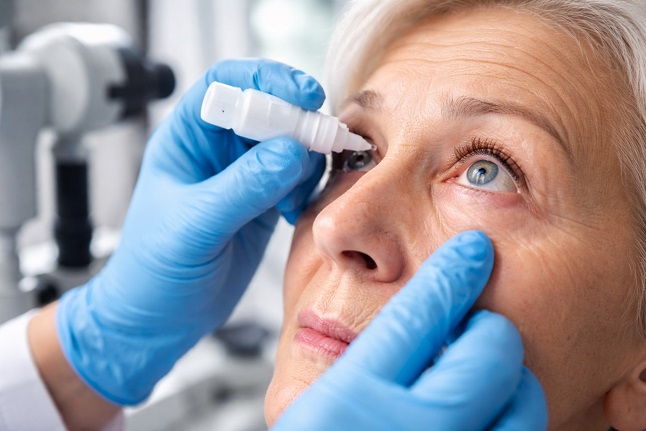 Specialized artificial tears improve eye comfort, tear stability, and treatment experience in glaucoma patients
The Overlooked Impact of Glaucoma Therapy
Specialized artificial tears improve eye comfort, tear stability, and treatment experience in glaucoma patients
The Overlooked Impact of Glaucoma Therapy
Glaucoma is a chronic eye disease that requires continuous use of medicated eye drops to prevent vision loss. However, these treatments often come with a hidden cost.
Many patients develop ocular surface disease, a condition that causes dryness, irritation, and fluctuating vision. Over time, these symptoms can become severe enough to affect daily comfort and even reduce adherence to treatment.
Researchers from the Ophthalmology Unit, Department of Experimental Medicine, and the Laboratory of Biometry, Department of Systems Medicine, University of Rome “Tor Vergata,” Italy, explored whether adding targeted artificial tears could help counter these effects.
Study Design and Patient Groups
The study involved 38 patients diagnosed with primary open-angle glaucoma, covering a total of 76 eyes.
Participants were divided into two groups based on their treatment: one using preserved prostaglandin eye drops and the other using preservative-free versions.
All patients were given preservative-free artificial tears containing trehalose, sodium hyaluronate, and N-acetyl-aspartyl-glutamic acid (NAAGA), administered three times daily for one month. Researchers assessed tear production, tear stability, eye surface condition, visual function, and patient-reported outcomes before and after treatment.
Significant Improvements in Tear Function and Eye Surface Health
After one month, both groups showed clear and consistent improvements. Tear production increased significantly, with measurements rising by approximately 4–5 millimeters.
Tear film stability also improved, with break-up time increasing by about five seconds - indicating a more stable and protective tear layer.
Patients experienced a marked reduction in symptoms. Ocular discomfort scores dropped substantially, reflecting less dryness, irritation, and visual disturbance. Clinical grading of eye surface damage also showed meaningful improvement, with reductions in redness and tissue irritation.
Enhanced Visual Quality and Daily Comfort
Beyond symptom relief, patients demonstrated improved contrast sensitivity, suggesting clearer and more stable vision.
This improvement is likely linked to better tear film quality, which plays a critical role in maintaining optical clarity.
Quality-of-life assessments revealed a strong increase in patient satisfaction related to artificial tear use. Many participants reported improved comfort during daily activities, although their perception of glaucoma as a disease remained unchanged.
This
Medical News report underscores that these benefits were observed regardless of whether patients used preserved or preservative-free glaucoma medications, suggesting that ocular surface damage is not solely driven by preservatives but also by long-term exposure to topical therapy.
Mechanism Behind the Benefits
The artificial tear formulation combines three key components. Trehalose protects cells from environmental stress and dehydration. Sodium hyaluronate provides sustained hydration and lubrication. NAAGA contributes anti-inflammatory effects, helping to reduce irritation and stabilize the ocular surface.Together, these ingredients create a supportive environment that promotes healing, reduces inflammation, and enhances tear film integrity.
Additional Clinical Observations
The study also reported a modest but statistically significant reduction in intraocular pressure. This may be due to improved patient adherence, as increased comfort often leads to more consistent use of prescribed medications.
Additionally, slight improvements were observed in visual field measurements. Researchers suggest that improved tear film stability may enhance the accuracy of these tests by reducing surface irregularities that can interfere with vision.
Conclusions
The findings demonstrate that adjunctive use of preservative-free artificial tears can play a meaningful role in glaucoma management. By improving tear stability, reducing ocular surface damage, and enhancing patient comfort, this approach addresses a critical but often overlooked aspect of long-term treatment. Incorporating such supportive therapies into routine care may improve both patient experience and treatment outcomes over time.
The study findings were published in the peer reviewed Journal of Clinical Medicine.
https://www.mdpi.com/2077-0383/15/8/3012
For the latest on Glaucoma, keep on logging to Thailand
Medical News.
Read Also:
https://www.thailandmedical.news/articles/glaucoma-news




 Share
Share
 Tweet
Tweet
 Share
Share

































