Nikhil Prasad Fact checked by:Thailand Medical News Team Apr 20, 2026 5 months, 2 weeks, 36 minutes ago
Medical News: A surprising biological process that literally makes cells burst open is now emerging as a powerful new weapon against some of the deadliest cancers affecting the digestive system. Scientists are turning their attention to a phenomenon known as pyroptosis, a highly inflammatory form of cell death that could reshape how gastrointestinal cancers are treated in the future.
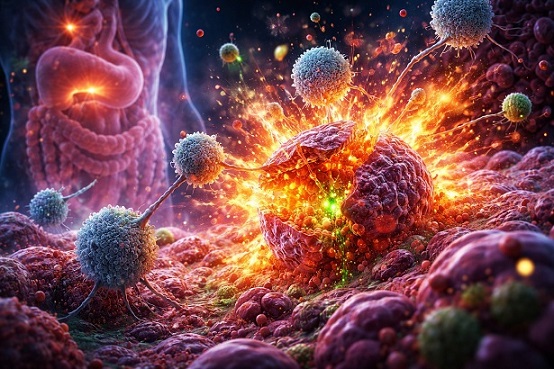 A breakthrough discovery shows how explosive cancer cell death could activate the immune system to
fight gastrointestinal tumors more effectively
A Different Kind of Cell Death
Unlike traditional cell death, which happens quietly, pyroptosis is dramatic and violent. It causes cancer cells to swell, rupture, and release powerful inflammatory signals into the surrounding environment. These signals then alert the immune system, potentially triggering a stronger and more effective attack against tumors.
Researchers from Metropolitan General Hospital, Holargos, Athens, Greece, have explored this mechanism in depth, revealing how pyroptosis operates through specialized proteins called gasdermins. These proteins create tiny pores in the cell membrane, leading to cell rupture and the release of immune-stimulating molecules.
Why This Matters for Cancer
Gastrointestinal cancers, including colorectal, gastric, esophageal, pancreatic, and liver cancers, remain among the leading causes of cancer deaths worldwide. Traditional treatments like chemotherapy often struggle because tumors develop resistance. Pyroptosis offers a different approach by not only killing cancer cells but also activating the body’s immune defenses.
According to findings, pyroptosis acts as a double-edged sword. On one hand, it can destroy tumors and stimulate immune responses. On the other hand, if uncontrolled, it may fuel chronic inflammation, which can actually help tumors grow.
The Double-Edged Sword Effect
One of the most fascinating aspects of pyroptosis is its dual nature. In early stages of cancer, it appears to help eliminate malignant cells and recruit immune fighters such as T-cells. However, in advanced disease, prolonged inflammation caused by pyroptosis can create an environment that supports tumor survival and spread.
This
Medical News report highlights that key inflammatory molecules like interleukin-1β and interleukin-18 play a central role in this process. These molecules can either boost anti-cancer immunity or contribute to harmful, long-term inflammation depending on the biological context.
Microbiome Connection Raises New Possibilities
The research also underscores the important role of gut bacteria. Certain harmful microbes can manipulate pyroptosis to promote cancer growth, while beneficial bacteria may enhance its tumor-fighting effects.
This opens the door to innovative treatments using probiotics or engineered microbes designed to trigger targeted pyroptosis in cancer cells without harming healthy tissue. Such approa
ches could offer safer and more precise therapies in the future.
New Treatment Strategies Emerging
Scientists are now exploring ways to harness pyroptosis for therapeutic use. One promising strategy involves switching cancer cells from a silent form of death, known as apoptosis, to the more aggressive pyroptosis. This switch can make tumors more visible to the immune system and improve treatment response.
There is also growing interest in combining pyroptosis-inducing drugs with immunotherapy. By making tumors more inflamed and detectable, these treatments could significantly enhance the effectiveness of immune-based therapies.
Additionally, researchers are investigating drugs that either trigger or regulate pyroptosis depending on disease stage. Personalized treatment approaches may soon rely on biomarkers such as gasdermin expression levels to determine the most effective strategy for each patient.
Conclusion
The discovery of pyroptosis as a key player in gastrointestinal cancers represents a major shift in understanding how tumors grow and respond to treatment. While its dual nature presents challenges, it also offers a unique opportunity to develop more effective therapies that not only kill cancer cells but also mobilize the immune system. Future research must carefully balance its tumor-fighting benefits against the risks of excessive inflammation, while advancing clinical trials to validate these findings. If successfully harnessed, pyroptosis could become a cornerstone of next-generation cancer treatment, offering renewed hope for improved survival and better outcomes in patients facing aggressive gastrointestinal malignancies.
The study findings were published in the peer reviewed journal: Biomedicines.
https://www.mdpi.com/2227-9059/14/4/911
For the latest cancer research, keep on logging to Thailand
Medical News.
Read Also:
https://www.thailandmedical.news/articles/cancer




 Share
Share
 Tweet
Tweet
 Share
Share

































