Study Finds That Ubiquinol Fails to Boost Memory but Reveals Hidden Brain Benefits
Nikhil Prasad Fact checked by:Thailand Medical News Team Jun 28, 2026 1 month, 3 weeks, 12 hours, 2 minutes ago
Medical News:
Large Clinical Trial Finds CoQ10 Supplement Raises Blood Levels but Does Not Improve Overall Cognition in Healthy Seniors
A new Australian clinical trial has found that while daily supplementation with ubiquinol, the active form of coenzyme Q10 (CoQ10), dramatically increased blood CoQ10 levels in older adults, it did not significantly improve overall memory, thinking ability, blood pressure, arterial stiffness, inflammation or mood after three months. However, researchers uncovered intriguing biological links suggesting that people who achieved higher CoQ10 levels and lower oxidative stress tended to perform better on memory tests.
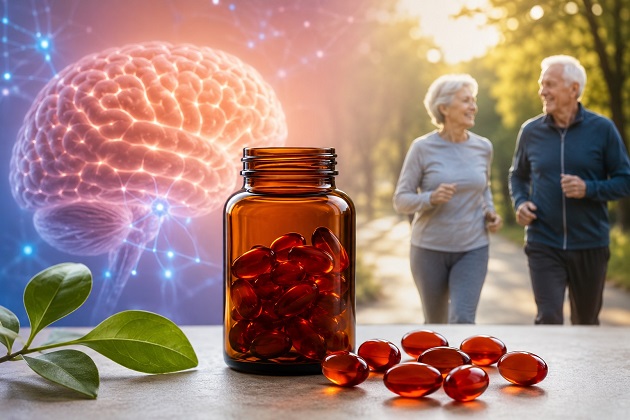 A major clinical trial found ubiquinol greatly increased blood CoQ10 levels but did not significantly improve overall
cognition in healthy older adults despite promising biological signals
The research was conducted by scientists from the Centre for Mental Health and Brain Sciences at Swinburne University, the Baker Heart and Diabetes Institute, Monash University, La Trobe University, Austin Health, the University of Melbourne, and Metavate Consulting, Australia.
Why Researchers Investigated Ubiquinol
As people age, memory and thinking skills naturally decline, even in those without dementia. Scientists have long searched for safe nutritional approaches that could help preserve brain function before serious cognitive impairment develops.
Ubiquinol is the reduced, biologically active form of CoQ10, a naturally occurring compound that plays a critical role in producing cellular energy and protecting cells from oxidative damage. Previous laboratory and animal studies suggested that CoQ10 might protect brain cells by reducing oxidative stress and inflammation while improving blood vessel function.
These encouraging findings prompted researchers to test whether ubiquinol could provide measurable cognitive benefits in healthy older adults.
How the Study Was Conducted
The randomized, double-blind, placebo-controlled trial enrolled 111 adults aged 60 years and older living in Australia. Participants received either 200 mg of ubiquinol daily or a matching placebo for 90 days. Neither participants nor investigators knew who received the active supplement until the study ended.
Researchers measured memory, processing speed, mood, blood pressure, arterial stiffness, inflammation, oxidative stress and numerous blood biomarkers before and after supplementation.
What the Researchers Found
The most striking finding was that ubiquinol supplementation successfully increased plasma CoQ10 concentrations by roughly four times compared to placebo, confirming that the supplement was well absorbed by the body.
Despite this impressive biological response, participants taking ubiquinol did not perform significantly better on overall memory tests, processing speed assessments or most individual cognitive tasks. Likewise, no meaningful improvements were observed in blood pressure, arterial stiffness, inflammatory markers, oxidative stress measurements or mood when co
mpared with the placebo group.
One cognitive test measuring digit span actually favored the placebo group, although researchers noted that this isolated finding did not reflect improvements across the broader cognitive assessment battery.
This
Medical News report highlights that increasing a nutrient in the bloodstream does not necessarily produce immediate clinical improvements, particularly over a relatively short treatment period.
Hidden Signals Suggest Potential Brain Benefits
Although the primary results were disappointing, deeper statistical analyses revealed important patterns that may help explain why earlier research has sometimes suggested benefits.
Among participants receiving ubiquinol, individuals whose blood CoQ10 levels increased the most also demonstrated better memory performance at the end of the study. Researchers also found that participants who experienced greater reductions in oxidative stress tended to achieve stronger memory scores.
Another interesting observation involved inflammation. In the placebo group, rising levels of the inflammatory marker high-sensitivity C-reactive protein were associated with slower thinking speed. This relationship was not seen in the ubiquinol group, suggesting the supplement may have helped blunt some harmful effects of increasing inflammation even though average inflammatory markers did not significantly change.
Importantly, ubiquinol was generally well tolerated, with adverse events occurring at rates similar to those seen in the placebo group and no treatment-related serious adverse events reported.
What the Findings Mean
The researchers believe their results should not be interpreted as evidence that ubiquinol has no role in brain health. Instead, the findings suggest that healthy older adults may simply not experience measurable cognitive improvements after only 90 days of supplementation. The biological associations between higher CoQ10 levels, reduced oxidative stress and better memory indicate that the supplement may still benefit individuals at greater risk of cognitive decline or those with conditions involving elevated oxidative stress. The authors recommend larger and longer clinical trials to determine whether sustained supplementation or targeting higher-risk populations can translate these encouraging biological effects into meaningful improvements in cognitive health.
The study findings were published in the peer reviewed journal: Antioxidants.
https://www.mdpi.com/2076-3921/15/7/806
For the latest news, keep on logging to Thailand
Medical News.
Read Also:
https://www.thailandmedical.news/news/breakthrough-hope-for-coq10-deficiency-treatment
https://www.thailandmedical.news/news/coq10-reverses-dangerous-liver-lipid-damage
https://www.thailandmedical.news/news/long-covid-news-study-finds-that-coenzyme-q10-supplementation-can-help-in-in-post-viral-fatigue-syndrome-caused-by-mitochondrial-dysfunction




 Share
Share
 Tweet
Tweet
 Share
Share