Study Links Microclots, Endothelial Injury and Neutrophil Inflammation to Long COVID in Children
Nikhil Prasad Fact checked by:Thailand Medical News Team Apr 27, 2026 5 months, 1 week, 1 hour, 35 minutes ago
Medical News: New Research Uncovers Clear Biological Damage Behind Long COVID in Young Patients
A major new study has revealed that long COVID in children and young adults is driven by a combination of microscopic blood clots, damage to blood vessel linings, and persistent immune system activation. These findings provide strong biological evidence that the condition is not psychological or vague, but instead involves measurable and potentially serious changes in the body.
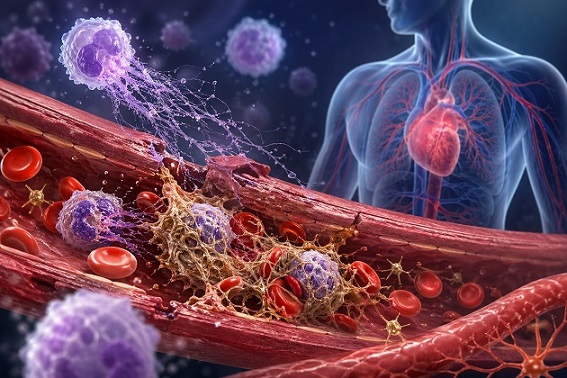 New study reveals that blood clots, immune overactivation, and vascular damage are driving long COVID
in young patients
Researchers analyzed 84 participants aged 25 and below from across the United States and Canada, including 61 with long COVID and 23 healthy controls. The aim was to uncover what is happening inside the body that could explain the persistent symptoms many young individuals continue to face months after initial infection.
Cardiovascular Symptoms Are Widespread and Often Debilitating
The study found that symptoms linked to blood circulation were extremely common in young long COVID patients. Many reported dizziness when standing, difficulty breathing during physical activity, heart palpitations, and episodes of feeling faint. Chest pain, chest tightness, and prolonged coldness in the hands and feet were also frequently reported, while some experienced swelling in the legs and feet.
These symptoms strongly pointed to underlying problems in blood flow and vascular health, leading researchers to investigate deeper biological mechanisms affecting the circulatory system.
Significant Increase in Microclots Detected
One of the most important findings was the clear increase in fibrin amyloid microclots in individuals with long COVID. These tiny clots were not only more numerous but also larger compared to those found in healthy individuals.
Microclots can obstruct tiny blood vessels and impair oxygen delivery to tissues. The study found that many of these clots fell within a size range that could significantly disrupt normal circulation, with some reaching unusually large sizes. This provides a plausible explanation for symptoms such as fatigue, dizziness, and exercise intolerance.
Interestingly, the presence of these microclots did not depend solely on detectable viral proteins in the blood, suggesting that once triggered, the clotting process may continue independently.
Clear Evidence of Endothelial Injury
A central and critical finding of the study was the presence of endothelial injury—the damage of the inner lining of blood vessels. This lining plays a vital role in regulating blood flow, preventing clot formation, and maintaining overall vascular health.
Researchers identified abnormal levels of endothelial-related biomarkers, including those involved in angiogenesis, inflammation, and vascular repair. Some markers that normally help immune cells move out of the bloodstream were reduced, suggesting that inflammatory activity was being trapped within the blood vessels themselves.
<
br />
At the same time, markers associated with vascular growth and repair were elevated, indicating that the body was actively trying to heal ongoing damage. This combination strongly points to continuous injury occurring within the vascular system.
Neutrophil Activation and NETosis Drive Damage
The study also highlighted a major role for neutrophils, a type of immune cell that becomes overactive in long COVID. These cells were found to release increased amounts of cell-free DNA, a sign of a process called NETosis.
During NETosis, neutrophils release sticky web-like structures designed to trap pathogens. However, in long COVID, this process appears to become excessive and harmful. These structures can damage surrounding tissues, including the endothelium, and promote further clot formation.
This
Medical News report underscores that increased NETosis was strongly linked to higher levels of microclots and inflammatory markers, suggesting a self-perpetuating cycle of clotting and vascular injury.
Laboratory Experiments Confirm Direct Vascular Damage
To confirm these findings, researchers conducted laboratory experiments using human endothelial cells. They exposed these cells to activated neutrophils triggered by spike-related immune complexes.
The results were striking. The activated neutrophils caused clear endothelial damage, including increased cell death and breakdown of the protective barrier that lines blood vessels. This led to increased leakage and loss of vascular integrity.
Importantly, the spike protein alone did not cause this damage. Instead, it was the immune-triggered activation of neutrophils that led to the injury, highlighting the role of immune dysfunction rather than direct viral attack.
Biomarkers Offer Hope for Diagnosis and Classification
The study identified several key biomarkers that could help diagnose long COVID and distinguish between different patient groups. Microclot burden emerged as one of the strongest predictors of the condition, followed by levels of cell-free DNA and specific vascular markers.
Researchers also identified distinct subgroups of long COVID patients based on these biomarkers, suggesting that the condition may not be the same in all individuals. This could have important implications for personalized treatment approaches in the future.
Researchers and Institutions Involved
The study was conducted by scientists from the Department of Pediatrics at Mass General Hospital, Harvard Medical School, the Department of Surgery at Mass General Hospital, the Department of Pathology at Brigham and Women’s Hospital, the Department of Psychiatry at Mass General Hospital, and the University of Texas Southwestern Medical Center.
Conclusion
The findings from this study provide strong and convincing evidence that long COVID in children and young adults is driven by a complex interaction between microclot formation, immune system overactivation, and ongoing endothelial injury. These processes appear to reinforce each other, creating a cycle of inflammation, impaired blood flow, and vascular damage that can persist long after the initial infection has resolved. The identification of measurable biomarkers offers hope for more accurate diagnosis and targeted treatments. However, further large-scale studies are urgently needed to better understand the long-term risks and to develop safe and effective therapies aimed at restoring vascular health.
The study findings were published in the peer reviewed journal: Pediatric Research.
https://www.nature.com/articles/s41390-026-05024-1
For the latest on Long COVID, keep on logging to Thailand
Medical News.
Read Also:
https://www.thailandmedical.news/articles/long-covid




 Share
Share
 Tweet
Tweet
 Share
Share

































