Nikhil Prasad Fact checked by:Thailand Medical News Team Mar 30, 2026 6 months, 4 days, 21 hours, 52 minutes ago
Medical News: Researchers have uncovered a critical protein that may finally offer a safer way to prevent dangerous brain blood vessel abnormalities, a discovery that could change how doctors treat a condition affecting millions worldwide.
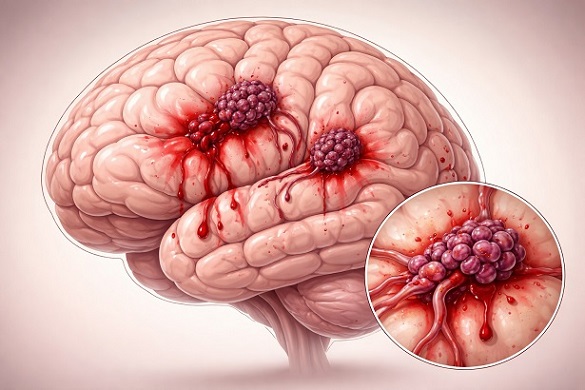 Scientists discover TIE2 protein as a key driver of dangerous brain vessel abnormalities and a promising new
drug target
A Hidden Threat Inside the Brain
Cerebral cavernous malformations, or CCMs, are clusters of abnormal blood vessels that form deep within the brain and spinal cord. Often described as “mulberry-shaped,” these fragile structures are made up of thin-walled vessels that can leak or rupture. When they bleed, the consequences can be devastating, leading to strokes, seizures, chronic headaches, or long-term neurological problems.
Although many people with CCMs may never experience symptoms, others face life-threatening complications. The condition is more common than many realize, affecting up to one in every 200 individuals. In some cases, it runs in families due to inherited genetic mutations, while in others, it appears spontaneously.
Currently, treatment options are limited. Surgery remains the primary approach for removing problematic lesions, but it is often risky. Many CCMs are located in sensitive or hard-to-reach areas of the brain, making surgical removal either dangerous or impossible.
The Search for a Safer Solution
For years, scientists have been trying to understand what causes these abnormal vessels to grow and how to stop them without harming the rest of the body. Earlier research pointed to a key biological pathway known as PI3K, which plays a major role in cell growth and survival.
While blocking the PI3K pathway showed promise in animal studies, it came with a major drawback. Because PI3K is essential for normal function in many organs, drugs targeting it can cause widespread side effects, making long-term use impractical for patients.
This challenge led researchers to search for a more precise target—something that could stop CCM growth without disrupting the body’s normal processes.
The Missing Link Protein Identified
Scientists from the Perelman School of Medicine at the University of Pennsylvania have now identified a protein called TIE2 as the long-sought “missing link” in this process. This
Medical News report highlights how TIE2 acts as a bridge between two critical signaling pathways that drive the formation of CCMs.
One of these pathways, known as MEKK3-KLF2/4, becomes overactive due to genetic mutations linked to CCM. This overactivity then triggers the second pathway, PI3K, which promotes abnormal blood vessel growth.
The new study reveals that TIE2 sits right in the middle, connecting these two pathways. When MEKK3-KLF2/4 activity increases, it boosts the production and activation of TIE2. In turn, TIE2 amplifies PI3K signaling, le
ading to the formation and growth of the dangerous vascular lesions.
What Makes TIE2 So Important
The discovery of TIE2 is particularly significant because it is largely specific to blood vessel cells. Unlike PI3K, which is active throughout the body, TIE2’s effects are more localized.
This means that targeting TIE2 could potentially stop CCM growth without causing the widespread side effects seen with broader treatments. In simple terms, it is like switching off a single faulty circuit instead of shutting down the entire electrical system.
Researchers also found that TIE2 activity was unusually high in both human CCM samples and animal models, confirming its central role in the disease.
Promising Results with an Existing Drug
To test whether blocking TIE2 could prevent CCMs, scientists used a drug called rebastinib. This oral medication is already known for targeting TIE2 and has been studied in other conditions.
In mouse models of CCM, rebastinib produced striking results. It successfully prevented the formation of new lesions and significantly reduced disease progression. These findings suggest that targeting TIE2 could offer a practical and less harmful treatment strategy for patients.
However, the drug appeared to be more effective at preventing new lesions than shrinking existing ones. This indicates that while TIE2 inhibition may help control the disease, it may need to be combined with other treatments for more advanced cases.
Why Previous Approaches Fell Short
The study also explored another pathway involving a protein called VEGFR2, which had previously been suspected of playing a role in CCM formation. Surprisingly, researchers found no evidence that VEGFR2 contributes significantly to the disease.
Blocking VEGFR2 did not reduce lesion formation in animal models, further reinforcing the importance of TIE2 as the primary driver in this process.
Understanding How CCMs Form
The research sheds light on the complex biology behind CCM development. It supports the idea that the disease often follows a “two-hit” mechanism.
First, a genetic mutation disrupts normal blood vessel regulation. Then, additional changes activate growth pathways like PI3K, leading to uncontrolled vessel formation. TIE2 appears to be the crucial link that allows these events to work together and drive the disease forward.
What This Means for Patients
The discovery of TIE2 as a therapeutic target opens the door to a new class of treatments that are more precise and potentially safer. Instead of relying solely on surgery or broad-acting drugs, doctors may one day use targeted medications to prevent CCMs from forming or worsening.
This approach could be especially valuable for patients with multiple lesions or those whose malformations are located in areas where surgery is not an option.
Conclusion
The identification of TIE2 as a central driver of cerebral cavernous malformations represents a major step forward in understanding and potentially treating this condition. By pinpointing a protein that links two critical disease pathways, researchers have uncovered a more targeted and less harmful strategy for intervention. While further studies are needed to confirm safety and effectiveness in humans, the findings offer real hope for patients who currently have limited treatment options and face serious risks from brain hemorrhages.
The study findings were published in the peer reviewed Journal of Experimental Medicine.
https://rupress.org/jem/article/223/5/e20251374/281708/TIE2-links-MEKK3-KLF2-4-and-PI3K-signaling-in
For the latest on preventing or treating brain bleeds, keep on logging to Thailand
Medical News.
Read Also:
https://www.thailandmedical.news/articles/health-news
https://www.thailandmedical.news/articles/health-news




 Share
Share
 Tweet
Tweet
 Share
Share

































