The Phytochemical Chlorogenic Acid from Honeysuckle Shows Strong Fight Against Flu Viruses Including H3N2
Nikhil Prasad Fact checked by:Thailand Medical News Team Jan 08, 2026 7 months, 3 weeks, 4 days, 11 hours, 49 minutes ago
Medical News: Ancient Herb Yields Modern Flu Fighter
A research team from the State Key Laboratory of New-tech for Chinese Medicine Pharmaceutical Process, Jiangsu Kanion Pharmaceutical Co Ltd Lianyungang Jiangsu China has revealed exciting evidence that chlorogenic acid, a natural compound found richly in honeysuckle flowers, may offer powerful protection against dangerous influenza virus. This
Medical News report covers the study findings and shows that honeysuckle could be used as a prophylactic against the current H3N2-driven flu surge.
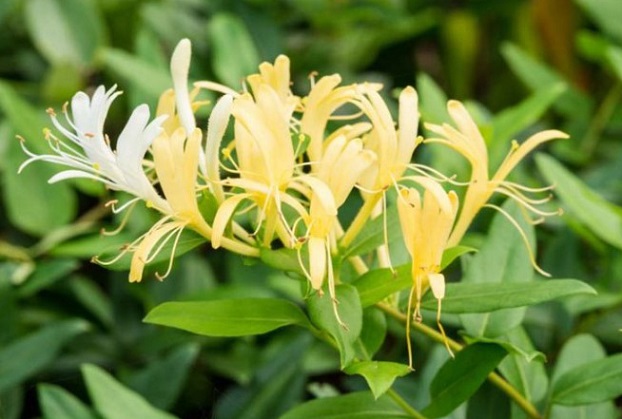 Honeysuckle compound chlorogenic acid stops flu viruses and reduces deadly lung damage in mice
What Is Chlorogenic Acid
Honeysuckle compound chlorogenic acid stops flu viruses and reduces deadly lung damage in mice
What Is Chlorogenic Acid
Chlorogenic acid is a plant chemical present in common herbs used in traditional Chinese medicine including honeysuckle (Lonicera japonica). Previous studies hinted that it may help against infections, but no one clearly understood how it blocks flu viruses such as H1N1 and H3N2 until now.
Tests in Cells Show Promising Results
Researchers infected laboratory cells with two major flu strains H1N1 and H3N2. Without treatment, the virus quickly killed the cells. But when chlorogenic acid was added:
-Cell survival increased sharply
-Flu virus growth dropped dramatically
-The compound worked even on strains already resistant to oseltamivir, the most widely used flu drug
At the highest lab-tested dose, chlorogenic acid blocked over 70% of H1N1 activity and more than 50% of H3N2, performing as well or better than the reference drug oseltamivir, and doing so safely at reasonable levels.
How the Compound Stops the Virus
Further experiments found chlorogenic acid interrupts the flu only after it enters the cell, which reveals its target step in the viral life cycle.
Using fluorescent markers, scientists saw fewer viral proteins inside treated cells. Instead of escaping and forming new virus particles, the viral protein became trapped in the nucleus.
The research also showed chlorogenic acid blocks neuraminidase, a key viral enzyme responsible for releasing newly made viruses from infected cells. Without neuraminidase activity, copies of the flu virus cannot spread to nearby tissue, and the infection fizzles out.
Mouse Experiments Confirm Real-World Protection
To test if the lab findings matter in living organisms, scientists infected mice with lethal doses of H1N1 and H3N2.
-Untreated animals died within a week
-Oseltamivir saved 70% of mice
-Chlorogenic acid at correct dosing saved 60% of H1N1-infected and 50% of H3N2-infected mice
The surviving animals gained weight again, had far fewer viruses in their lungs, and showed less swelling and inflammation. Lung flu
id also contained drastically lower levels of inflammatory chemicals such as IL-6 and TNF-alpha, showing the compound not only limits the virus but also calms the immune system.
Why This Matters
Influenza remains a fast-moving global threat, and many strains are becoming resistant to existing drugs. The study suggests that chlorogenic acid, a cheap and widely available natural molecule, may provide a second line of defense—particularly against drug-resistant versions of the flu.
Conclusion
Researchers concluded chlorogenic acid acts as a neuraminidase blocker that powerfully slows down flu virus spread inside the body, cuts the viral load, improves survival, and reduces life-threatening lung inflammation. If confirmed in future clinical trials and proven effective in humans, this simple plant-derived molecule from honeysuckle could help protect millions at low cost. This discovery adds valuable hope as influenza viruses continue mutating and outpacing many current treatments.
The study findings were published in the peer reviewed journal: Scientific Reports.
https://www.nature.com/articles/srep45723
For the latest on the H3N2 flu virus, keep on logging to Thailand
Medical News.
Read Also:
https://www.thailandmedical.news/articles/influenza-or-flu




 Share
Share
 Tweet
Tweet
 Share
Share