Ebola Outbreak in Democratic Republic of Congo Escalates with Official Figures Showing 177 Deaths and 750 Cases
Nikhil Prasad Fact checked by:Thailand Medical News Team May 23, 2026 3 months, 1 week, 3 days, 11 hours, 19 minutes ago
Medical News: The Ebola outbreak in the eastern regions of the Democratic Republic of Congo (DRC) is rapidly worsening, prompting the World Health Organization (WHO) to raise the country’s public health risk level from “high” to “very high.” Health authorities are now struggling to contain the spread of the rare Bundibugyo strain of Ebola amid armed conflict, mass displacement, fear, and growing mistrust among local communities.
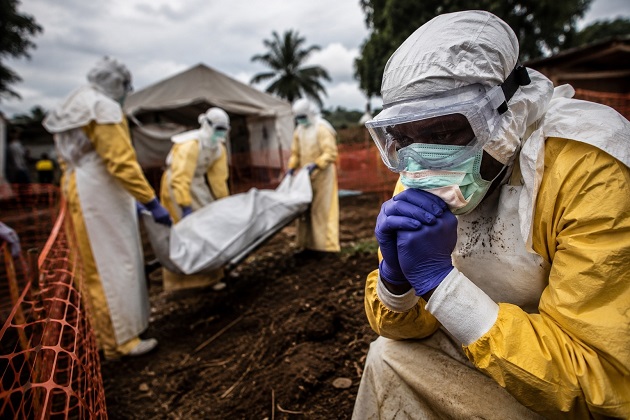 Health workers in eastern DR Congo battle a rapidly escalating Ebola outbreak amid violence, fear, and growing
humanitarian chaos
WHO Director-General Tedros Adhanom Ghebreyesus confirmed that while 82 cases and seven deaths have been officially verified through laboratory testing, the true scale of the epidemic is believed to be far more severe. Current estimates indicate nearly 750 suspected cases and 177 suspected deaths across affected regions, particularly in Ituri province and North Kivu.
Rare Ebola Strain Raises Alarm
Unlike the more common Zaire strain of Ebola, the Bundibugyo variant has no approved vaccine or established therapeutic treatment. Scientists note that the virus kills approximately one-third of infected individuals and has only caused two previous outbreaks in history, one in Uganda in 2007 and another in DRC in 2012.
The outbreak has already spread beyond Congo’s borders. Uganda has confirmed two imported cases linked to travel from DRC, including one fatality. Meanwhile, two American nationals exposed to the virus have reportedly been transferred to Europe for monitoring and treatment.
Oxford University researchers are now racing to develop a vaccine using technology similar to that employed in the AstraZeneca COVID-19 vaccine. Animal testing is already underway, and clinical trials could begin within two to three months if development progresses successfully. India’s Serum Institute of India is expected to mass produce the vaccine once viable medical-grade materials become available.
Another experimental Bundibugyo vaccine candidate is also under development and is being described by WHO advisers as highly promising, although human testing may still be six to nine months away.
Violence and Distrust Hamper Response Efforts
Containment operations are being severely disrupted by insecurity and public anger in affected communities. One of the most alarming incidents occurred at Rwampara General Hospital near Bunia, where angry relatives of an Ebola victim attacked the facility after authorities refused to release the contaminated body for burial.
Witnesses reported that crowds hurled projectiles at the hospital and set fire to isolation tents used for Ebola patients. Police were forced to fire warning shots to disperse the mob, while medical workers were placed under military protection. WHO officials warn that misinformation and distrust are now among the greatest obstacles to stopping the outbreak. Many residents reportedly believe Ebola is fabricated or exaggerated by authorities and aid groups. According to humanitarian agencies, trauma from previous Ebola epidemics continues to fuel suspicion
and resistance.
This
Medical News report highlights growing concerns that the outbreak is unfolding in one of the world’s most unstable humanitarian environments. Nearly four million people across eastern DRC require urgent aid, while two million have been displaced by ongoing violence and approximately ten million face acute hunger.
Women and Frontline Workers Face Greater Exposure
United Nations agencies have also warned that women are likely to bear the heaviest burden of infections. During previous Ebola outbreaks in Congo, women and girls accounted for nearly two-thirds of all reported cases due to caregiving roles, frontline health work, and involvement in traditional burial practices.
WHO has deployed 22 international experts to the region and released $3.9 million in emergency funds, while the United Nations has allocated an additional $60 million to strengthen containment efforts in Congo and neighboring countries.
The escalating outbreak demonstrates how deadly infectious diseases can rapidly spiral out of control when combined with conflict, fear, displacement, and weak healthcare systems. Without rapid international support, stronger community engagement, improved surveillance, and successful vaccine development, health experts warn that the Bundibugyo Ebola strain could spread further across central Africa, creating an even more dangerous regional health emergency.
References:
https://www.who.int/news-room/speeches/item/who-director-general-s-opening-remarks-at-the-member-state-information-session-on-outbreaks-of-ebola-and-hantavirus-22-may-2026
https://www.who.int/news-room/speeches/item/who-director-general-s-opening-remarks-at-the-media-briefing-on-outbreaks-of-ebola-and-hantavirus-22-may-2026
For the latest on the Ebola outbreak in DRC, keep on logging to Thailand
Medical News.
Read Also:
https://www.thailandmedical.news/articles/ebola




 Share
Share
 Tweet
Tweet
 Share
Share

































