Nikhil Prasad Fact checked by:Thailand Medical News Team Jun 18, 2026 3 months, 2 weeks, 1 day, 18 hours, 1 minute ago
Medical News: A troubling new study from Malaysia has revealed the emergence of several highly drug-resistant strains of Pseudomonas aeruginosa, a dangerous hospital-acquired bacterium that can cause severe infections in vulnerable patients. Researchers also identified a completely new genetic strain, raising fresh concerns about the future spread of antibiotic resistance in healthcare settings.
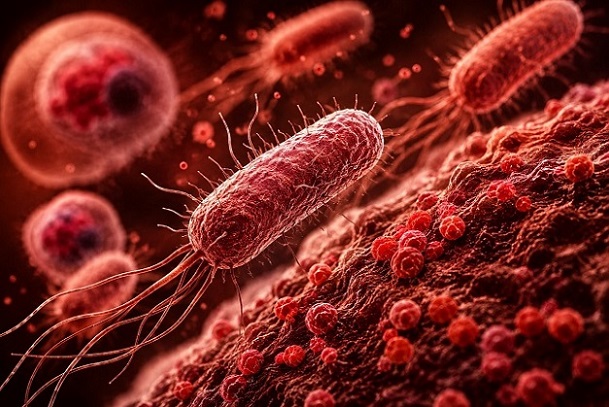 Malaysian researchers discover multiple powerful antibiotic-resistance genes and a new bacterial strain that
could complicate future hospital infections
The research was conducted by scientists from the Department of Medical Microbiology, Faculty of Medicine, Universiti Malaya; the Department of Medicine, Faculty of Medicine, Universiti Malaya; the Dean Office, Faculty of Medicine, Universiti Malaya; and the Center of Toxicology and Health Risk Studies (CORE), Faculty of Health Sciences, Universiti Kebangsaan Malaysia. The team analyzed multidrug-resistant bacterial samples collected from the University Malaya Medical Centre (UMMC), a major tertiary teaching hospital in Kuala Lumpur.
A Growing Threat Inside Hospitals
Pseudomonas aeruginosa is one of the most feared hospital pathogens because it primarily attacks people with weakened immune systems. It can cause pneumonia, bloodstream infections, wound infections, and urinary tract infections. What makes it particularly dangerous is its remarkable ability to survive antibiotic treatment.
The researchers examined 215 multidrug-resistant strains collected between 2015 and 2018. Alarmingly, more than 85 percent of the samples were resistant to imipenem, while more than 80 percent were resistant to meropenem, two critical antibiotics known as carbapenems that are often reserved as a last line of defense against severe bacterial infections.
Dangerous Resistance Genes Discovered
One of the study’s most concerning findings was the detection of multiple carbapenem-resistance genes. These genes produce enzymes capable of destroying powerful antibiotics before they can kill the bacteria.
Among the resistant strains, researchers identified NDM-1, IMP-7, IMP-26, IMP-62, IMP-76, VIM-4, and VIM-5. The IMP-26 variant was the most common. While some of these genetic variants have been reported before, the appearance of several rare forms indicates that resistance mechanisms continue to evolve.
The NDM-1 gene is especially worrisome because it has been linked to global outbreaks and can spread between different bacterial species. Its presence suggests that international transmission and genetic exchange may be contributing to the growing resistance problem in the region.
Biofilms Make the Bacteria Harder to Kill
The study also uncovered a strong link between antibiotic resistance and biofilm production. Biofilms are protective layers that bacteria create around themselves, allowing them to cling to medical devices and tissues while shielding themselves from antibiotics and the immune system.
More than 65 percent of the bacterial strains were classified as strong biofilm producers. Researchers found that strain
s with the highest resistance to carbapenem antibiotics were usually the same strains that produced the strongest biofilms.
The bacteria also demonstrated high levels of virulence. More than 95 percent produced tissue-damaging protease enzymes, while nearly three-quarters showed moderate to high production of pyocyanin, a toxic blue-green compound that helps bacteria damage cells and establish persistent infections. This
Medical News report highlights how these traits work together to make infections increasingly difficult to treat.
New Genetic Strain Identified
Using advanced genetic analysis, the team identified four sequence types among selected resistant strains. The internationally recognized high-risk clone ST235 was the most common. However, researchers also discovered a completely new sequence type, designated ST3891.
The emergence of ST3891 is significant because it may represent a newly evolving bacterial lineage within Malaysian healthcare settings. Although only one isolate carried this sequence type, its association with resistance and virulence characteristics suggests that close monitoring will be necessary to determine whether it spreads further.
Why These Findings Matter
The findings demonstrate that antibiotic resistance is not simply caused by individual resistance genes. The combination of powerful resistance mechanisms, aggressive virulence factors, and enhanced biofilm formation creates bacterial strains capable of surviving treatment and causing long-lasting infections. The discovery of multiple carbapenemase genes together with the emergence of the novel ST3891 strain suggests that Pseudomonas aeruginosa continues to evolve in ways that could challenge existing treatment options. Stronger infection-control measures, ongoing genetic surveillance, and the development of new antimicrobial strategies will be essential to prevent these dangerous strains from becoming more widespread in hospitals.
The study findings were published in the peer reviewed journal: PLOS One.
https://journals.plos.org/plosone/article?id=10.1371/journal.pone.0350200
For the latest on new Pseudomonas aeruginosa strains, keep on logging to Thailand
Medical News.
Read Also:
https://www.thailandmedical.news/news/parkinson-drug-found-to-be-able-to-inhibit-hospital-associated-bacterium-pseudomonas-aeruginosa
https://www.thailandmedical.news/news/thailand-medical-researchers-discover-peptide-from-scorpion-venom-to-treat-drug-resistant-pseudomonas-biofilm-infections
https://www.thailandmedical.news/news/researchers-warn-of-rising-threat-of-eye-infections-caused-by-pseudomonas-aeruginosa




 Share
Share
 Tweet
Tweet
 Share
Share

































