Nikhil Prasad Fact checked by:Thailand Medical News Team Jul 31, 2026 49 minutes ago
Medical News: Researchers are uncovering a hidden layer of biology that could explain why COVID-19 continues to damage the heart long after the initial infection has passed. A new scientific review suggests that tiny molecules known as non-coding RNAs (ncRNAs) may play a central role in triggering inflammation, blood clotting, heart muscle injury, and long-term cardiovascular complications following SARS-CoV-2 infection.
 Scientists identify tiny non-coding RNAs as key regulators of COVID-19-related heart damage and promising future
treatment targets
The research was conducted by scientists from the School of Medical Laboratory Science at Shandong Second Medical University, the Department of Basic Medical Sciences at The 960th Hospital of PLA, and the State Key Laboratory of Pathogen and Biosecurity at the Academy of Military Medical Sciences, Beijing, China.
Tiny Genetic Molecules May Control Heart Damage
Unlike ordinary RNA, which helps produce proteins, non-coding RNAs mainly regulate how genes function. The review explains that three major groups—microRNAs (miRNAs), long non-coding RNAs (lncRNAs), and circular RNAs (circRNAs)—become disrupted during COVID-19 infection.
These molecules appear to influence many of the biological events responsible for heart injury. They regulate inflammation, cell survival, blood vessel health, blood clot formation, and communication between different cells. When their normal balance is disturbed by SARS-CoV-2, the resulting chain reaction can significantly increase cardiovascular damage.
Researchers noted that COVID-19 affects the heart both directly, by infecting heart and blood vessel cells through ACE2 receptors, and indirectly through overwhelming inflammation, oxygen deprivation, abnormal blood clotting, and immune system overactivation.
Why Some Patients Develop Serious Heart Problems
According to the review, more than one in five hospitalized COVID-19 patients experiences measurable heart injury, greatly increasing the risk of severe illness and death. The virus can contribute to myocarditis, heart failure, irregular heart rhythms, heart attacks, and dangerous blood clots.
People already living with hypertension, diabetes, coronary artery disease, or heart failure may be especially vulnerable because these conditions already alter important ncRNAs before infection even occurs. This creates a biological environment that may make it easier for SARS-CoV-2 to trigger severe cardiovascular complications.
The researchers describe how certain miRNAs suppress protective genes such as ACE2 while increasing inflammation and oxidative stress, making heart tissue even more susceptible to damage.
Key RNA Molecules Drive Inflammation and Clotting
One of the major findings is that several ncRNAs appear to directly fuel the excessive immune response seen in severe COVID-19.
For example, increased levels of miR-155-5p may intensify the dangerous cytokine storm by suppressing protective immune regulators. Other molecules, including miR-16-5p and miR-27a-3p, appear to promote blood clot formation by altering
genes involved in coagulation.
Researchers also highlighted changes involving MALAT1, GAS5, and several circular RNAs that affect blood vessel function, increase oxidative stress, and weaken natural anti-inflammatory defenses.
Importantly, this
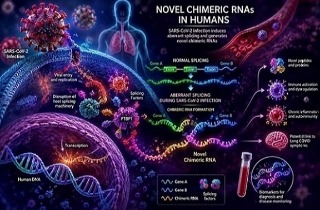
Medical News report highlights that the review also discusses viral circular RNAs produced by SARS-CoV-2 itself. These viral molecules may interfere with normal human gene regulation, increasing inflammation and damaging the lining of blood vessels, although many of these findings still require confirmation in larger clinical studies.
New Hope for Earlier Diagnosis and Better Treatments
The review suggests that measuring ncRNAs in blood samples may eventually help doctors identify patients at greatest risk of developing heart complications before permanent damage occurs.
Some ncRNAs could also serve as long-term markers for monitoring patients suffering from Long COVID. Because circular RNAs remain stable in blood much longer than many other molecules, they may prove particularly useful for tracking persistent cardiovascular disease months after infection.
Researchers are also exploring therapies that directly target harmful ncRNAs. Experimental strategies include synthetic RNA molecules, RNA-blocking drugs, engineered circular RNAs, and exosome-based delivery systems that could restore healthier gene regulation. However, these treatments remain largely experimental, and significant work is still needed before they can enter routine medical practice.
Conclusion
The growing evidence suggests that non-coding RNAs are far more than passive genetic material. They appear to orchestrate many of the inflammatory, immune, vascular, and clotting processes responsible for COVID-19-related heart disease. Although many discoveries are still based on laboratory studies or relatively small patient groups, the findings provide promising new directions for developing earlier diagnostic tests, improved risk prediction tools, and highly targeted therapies that could reduce both acute heart injury and the long-term cardiovascular burden of Long COVID.
The study findings were published in the peer reviewed journal: Frontiers in Cardiovascular Medicine.
https://www.frontiersin.org/journals/cardiovascular-medicine/articles/10.3389/fcvm.2026.1837477/full
For the latest COVID-19 news, keep on logging to Thailand
Medical News.
Read Also:
https://www.thailandmedical.news/articles/coronavirus
https://www.thailandmedical.news/articles/long-covid
https://www.thailandmedical.news/articles/cardiology




 Share
Share
 Tweet
Tweet
 Share
Share