Nikhil Prasad Fact checked by:Thailand Medical News Team Jul 01, 2026 1 month, 2 weeks, 4 days, 23 hours, 33 minutes ago
Medical News: Excess Iron May Quietly Disrupt the Heart and Blood Vessels Long Before Symptoms Appear
A new study has found that people with hereditary hemochromatosis, a genetic condition that causes the body to absorb too much iron, may experience early changes in how their heart and blood vessels work even before obvious heart disease develops. Researchers believe these subtle abnormalities could eventually contribute to cardiovascular aging and increase the risk of future heart complications.
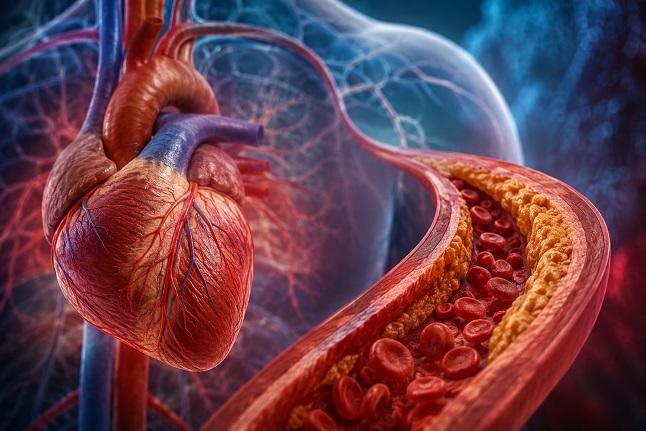 New research suggests excess iron may quietly disrupt heart and blood vessel function years before obvious
cardiovascular disease appears
The research was conducted by scientists from the Department of Radiology Informatics and Statistics and the Department of Cardiology and Electrotherapy at the Medical University of Gdansk, together with researchers from the Department of Biomedical Engineering at Gdansk University of Technology, all in Poland.
Looking Beyond Traditional Heart Tests
Hereditary hemochromatosis causes excessive iron to accumulate in different organs, including the liver, pancreas, and heart. While severe iron overload has long been linked to heart failure and rhythm disorders, detecting the earliest stages of cardiovascular damage has remained difficult.
To investigate this, the research team enrolled 30 adults with genetically confirmed hereditary hemochromatosis and compared them with two healthy groups consisting of younger and older adults. Participants underwent continuous electrocardiogram (ECG) and beat-by-beat blood pressure monitoring while resting. The researchers then applied sophisticated wavelet analysis to examine tiny fluctuations in heart rhythm and blood pressure that conventional testing may overlook.
Iron Overload Changed the Heart's Internal Communication
The analysis revealed a striking pattern. Patients with hereditary hemochromatosis consistently showed reduced electrical activity originating from the heart while simultaneously displaying stronger oscillations in blood pressure, suggesting that the heart and blood vessels were no longer working together as efficiently.
The researchers also discovered weaker synchronization between the heart's electrical signals and the body's blood pressure responses. This impaired coordination indicates that communication between the heart and the vascular system becomes disrupted in individuals carrying excessive iron.
Interestingly, these abnormalities were observed even though participants had no diagnosed cardiovascular disease and maintained normal heart pumping function. This suggests that cardiovascular dysfunction may begin much earlier than previously recognized.
This
Medical News report highlights that these hidden changes could serve as early warning signs before permanent structural heart damage becomes apparent.
Oxidative Stress May Be Driving Early Damage
The researchers believe e
xcess iron promotes the formation of reactive oxygen species, highly reactive molecules that damage cells through oxidative stress. This process can injure blood vessel linings, stiffen arteries, trigger inflammation, and gradually impair the heart muscle itself.
Their findings also suggest that iron overload may disturb the autonomic nervous system, the network that automatically controls heart rate and blood pressure. Reduced flexibility in heart rhythm together with exaggerated blood pressure fluctuations points toward a loss of normal cardiovascular regulation.
The study further showed altered interactions within cardiac and respiratory frequency bands, indicating that multiple regulatory systems involved in circulation may become affected simultaneously rather than through a single pathway.
Potential for Earlier Detection
Although the study was relatively small and cannot prove that iron overload directly caused every observed abnormality, it demonstrates that advanced signal analysis may detect cardiovascular changes long before conventional examinations identify disease.
The investigators emphasize that future research should include larger patient populations, direct measurements of iron inside the heart using cardiac MRI, respiratory assessments, and long-term follow-up to determine whether these early abnormalities predict heart failure, arrhythmias, or other cardiovascular complications.
Conclusion
The findings suggest that hereditary hemochromatosis may silently accelerate cardiovascular aging by disrupting the delicate coordination between the heart and blood vessels before obvious symptoms develop. Detecting these hidden physiological changes early could eventually help physicians identify patients at greater cardiovascular risk and intervene sooner, although larger studies are still needed to confirm these promising observations and establish their clinical value.
The study findings were published in the peer reviewed journal: Biomedicines.
https://www.mdpi.com/2227-9059/14/7/1487
For the latest on excess iron and heart issues, keep on logging to Thailand
Medical News.
Read also:
https://www.thailandmedical.news/articles/cardiology




 Share
Share
 Tweet
Tweet
 Share
Share