Nikhil Prasad Fact checked by:Thailand Medical News Team Jul 25, 2026 2 months, 1 week, 2 days, 19 hours, 21 minutes ago
Thailand Medical: Natural compound shows promise against acute kidney injury, but human studies are still needed
A team of Thailand Medical Researchers has uncovered encouraging evidence that alpha-mangostin, a phytochemical extracted from the rind of the tropical mangosteen fruit, could help protect the kidneys from acute kidney injury (AKI). Although the findings are currently based on laboratory and animal studies, researchers believe the compound has the potential to become part of future treatments aimed at reducing kidney damage caused by serious illnesses and certain medications.
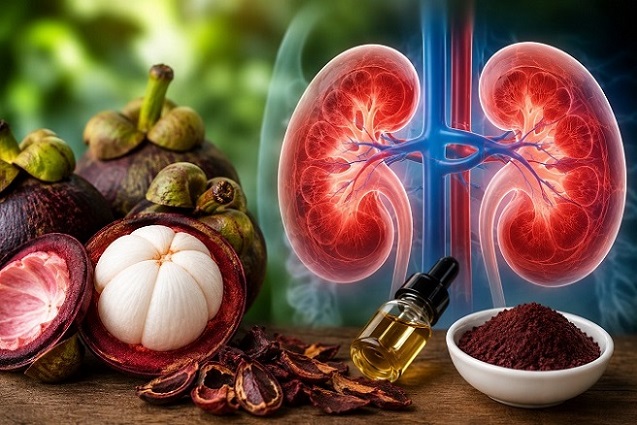 Researchers discover that alpha-mangostin from mangosteen may protect kidneys through multiple biological pathways,
offering hope for future AKI therapies
The research was conducted by
Thailand Medical scientists from Prince of Songkla University, Walailak University, Nakhon Phanom University, Mahasarakham University, and Kitasato University in Japan.
Why Acute Kidney Injury Matters
Acute kidney injury is a medical emergency in which the kidneys suddenly lose their ability to filter waste and maintain the body's fluid and chemical balance. It can develop within hours or days and affects millions of hospitalized patients worldwide. Severe cases may lead to long-term kidney disease, dialysis, or even death. Despite advances in medical care, there are still no approved drugs that directly stop or reverse the damage once AKI begins.
The condition can be triggered by infections, poor blood flow, muscle injury, or toxic drugs such as the chemotherapy medicine cisplatin. Scientists have discovered that several harmful processes occur at the same time, including excessive oxidative stress, inflammation, damage to mitochondria—the tiny energy-producing structures inside cells—and different forms of programmed cell death.
Mangosteen Compound Targets Multiple Harmful Pathways
Unlike many experimental treatments that focus on only one biological pathway, alpha-mangostin appears to work on several damaging processes simultaneously. The review found that the compound consistently reduced kidney damage in experimental models by lowering harmful free radicals, boosting the body's own antioxidant defenses through the Nrf2/HO-1 pathway, suppressing inflammatory NF-κB signaling, preserving mitochondrial function, and reducing the death of kidney cells.
Researchers also found evidence that alpha-mangostin improved kidney function by lowering blood creatinine and blood urea nitrogen levels, reducing tissue injury seen under the microscope, and restoring antioxidant enzymes that protect cells from damage.
In cisplatin-induced kidney injury models, the compound also helped maintain healthy mitochondrial activity, reduced harmful stress signals inside kidney cells, and limited activation of proteins involved in cell death. These combined actions suggest the natural molecule could interrupt the chain reaction that normally worsens kidney injury.
ong>New Possibilities but Important Challenges Remain
In this Medical News report, it is important to note that researchers emphasized alpha-mangostin is still far from becoming a treatment for patients. One of its biggest limitations is poor absorption when taken orally, meaning only a small amount reaches the bloodstream. Scientists are now exploring advanced delivery systems such as nanoparticles, liposomes, and other specialized formulations to improve its effectiveness.
The review also highlighted that promising mechanisms involving ferroptosis, pyroptosis, mitochondrial quality control, and kidney repair require much more investigation before their role can be confirmed. Furthermore, almost all available evidence comes from animal experiments, with no completed human clinical trials to demonstrate safety or effectiveness in patients suffering from acute kidney injury.
Conclusion
The findings suggest that alpha-mangostin is far more than a simple antioxidant. By simultaneously reducing oxidative stress, calming inflammation, preserving mitochondrial health, and limiting kidney cell death, it may offer a promising multi-target strategy for combating acute kidney injury. However, the researchers caution that significant hurdles remain, including poor bioavailability, limited safety data, and the complete absence of human clinical trials. Much larger preclinical studies and carefully designed clinical investigations will be essential before this natural compound can be considered a realistic treatment option for patients.
The study findings were published in the peer reviewed journal: Antioxidants.
https://www.mdpi.com/2076-3921/15/8/915
For the latest on herbs and phytochemicals, keep on logging to Thailand Medical News.
Read Also:
https://www.thailandmedical.news/articles/thailand-medical
https://www.thailandmedical.news/articles/herbs-and-phytochemicals
https://www.thailandmedical.news/articles/nephrology-(kidneys)




 Share
Share
 Tweet
Tweet
 Share
Share

































