Scientists Discover Novel Pathway by Which SARS-CoV-2 Spike Protein Destroys Immune and Metabolic Health
Nikhil Prasad Fact checked by:Thailand Medical News Team Dec 22, 2025 8 months, 1 week, 4 days, 18 hours, 41 minutes ago
Medical News: Spike Protein VSIR-ISX Pathway Harms Metabolism and Immunity
Scientists have discovered a new way that the SARS-CoV-2 spike protein messes up the body’s metabolism and weakens the immune system, which may help explain why some people get very sick from COVID-19 and why others struggle with long term problems after infection.
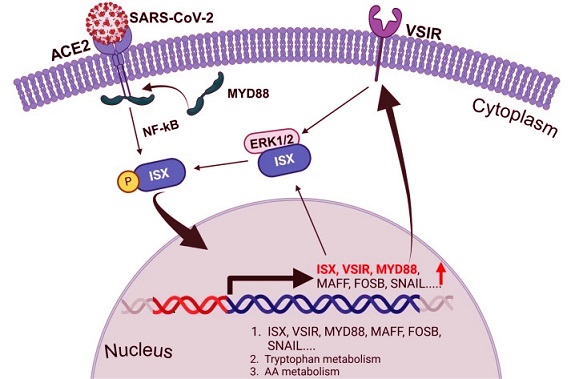 SARS-CoV-2 spike protein throws off body metabolism and weakens immunity via a newly identified VSIR–ISX signaling chain.
The study was done by researchers from National Taiwan Normal University, Kaohsiung Medical University, Kaohsiung Medical University Hospital, and Pingtung Hospital, Ministry of Health and Welfare, all in Taiwan.
How the spike protein tricks our cells
The spike protein is the part of the SARS-CoV-2 virus that lets it latch onto our cells, mainly through a doorway called ACE2, found in the lungs and many other organs. Once inside, the spike doesn’t just help the virus spread; it also sends confusing signals that throw off how our cells normally work.
In lab experiments, when lung cells were exposed to the spike protein, scientists saw big changes in two important body systems: how the body breaks down certain fats (arachidonic acid) and how it handles the amino acid tryptophan. These changes led to higher levels of powerful signaling molecules like kynurenine, prostaglandin E2 (PGE2), thromboxane B2 (TXB2), and leukotrienes, which control inflammation and immune responses.
A hidden chain reaction in the body
The researchers found that the spike protein turns on a chain of signals inside cells that involves three key players: ACE2, a protein called MyD88, and a pathway called NF κB. This chain then activates two molecules called VSIR and ISX, which act like “switches” for immune and metabolic activity.
VSIR is an immune checkpoint molecule, meaning it can calm down immune cells to prevent overreaction, but in COVID-19 it seems to be overused, leading to immune exhaustion. ISX is a gene regulator that, when turned on, boosts enzymes involved in fat metabolism and also increases kynurenine, a substance that can suppress immune function.
When this VSIR–ISX pathway is overactive, it creates a double problem: too much inflammation and too little effective immune defense, which may make it harder for the body to clear the virus and repair damaged tissues.
What this means for patients
In blood samples from real COVID-19 patients, the scientists confirmed that levels of kynurenine, PGE2, and TXB2 were significantly higher compared to healthy people, while levels of one type of leukotriene (LTA4) were lower. This pattern was seen in both mild and severe cases, suggesting that this metabolic disruption happens early in infection and is not just a side effect of very advanced disease.
Interestingly, blocking parts of this chain (for example, using inhibitors of NF κB or silencing the VSIR/ISX genes) reduced these harmful metabolic changes in the lab, which hints that future drugs could target this pat
hway to help control severe COVID-19 and possibly long COVID.
This
Medical News report explains how the spike protein does more than just help the virus enter cells; it actively reprograms the body’s metabolism and immune balance, which may be a key reason why some people have trouble recovering fully.
Why this discovery matters
Understanding this VSIR–ISX pathway gives scientists a new target for developing treatments that could calm down harmful inflammation while boosting the immune system’s ability to fight the virus. It also helps explain why some people, especially those with existing conditions like diabetes, might be more vulnerable to severe outcomes, since their metabolism is already under stress.
Conclusions
The study shows that the SARS-CoV-2 spike protein triggers a specific chain of signals (ACE2–MyD88–NF κB–VSIR–ISX) that disrupts normal fat and amino acid metabolism, leading to an imbalance of inflammatory and immune suppressive molecules in the body. This metabolic chaos likely contributes to both acute COVID-19 severity and long-term immune problems, and targeting this pathway could open new ways to treat or prevent serious complications from the virus.
The study findings were published in the peer reviewed journal: Cell Biology and Toxicology.
https://link.springer.com/article/10.1007/s10565-025-10119-2
For the latest COVID-19 News, keep on logging to Thailand
Medical News.
Read Also:
https://www.thailandmedical.news/articles/coronavirus




 Share
Share
 Tweet
Tweet
 Share
Share