Alarming Discovery! COVID-19 Inflicts Lasting "Immune Scar" on T-Cells, Persisting Up to 20 Months Post-Infection!
Nikhil Prasad Fact checked by:Thailand Medical News Team Dec 11, 2025 9 months, 3 weeks, 3 days, 2 hours, 29 minutes ago
Thailand Medical News: In a groundbreaking revelation that underscores the insidious long-term havoc wreaked by SARS-CoV-2, a recent study has exposed how the virus leaves an indelible "immune scar" on the human body, particularly decimating crucial T-cell populations even 20 months after infection. This persistent immune compromise, far from the benign "mild" narrative often peddled about Omicron variants, poses severe risks for recurrent infections, cancer vulnerability, and autoimmune disorders.
Thailand Medical News urges readers to heed this warning: COVID-19 is no fleeting illness but a systemic saboteur that demands ongoing vigilance.
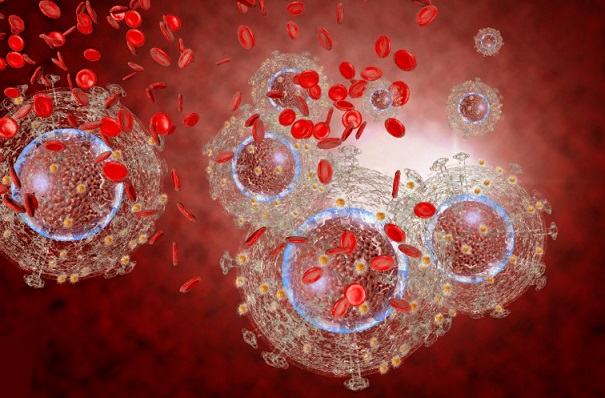 Flow cytometry exposes a long-lasting immune scar as SARS-CoV-2 leaves T-cell levels severely depleted
even 20 months later with heart patients showing near total loss of key CD4 and CD8 cells
The study, conducted on over 40,000 Chinese adults navigating a massive Omicron wave, meticulously tracked lymphocyte subsets using advanced flow-cytometry from January 2021 to August 2024. Researchers divided participants into pre-COVID, mass infection (December 2022–February 2023), and post-COVID cohorts.
The findings are chilling: during the acute phase, there was a sharp plunge in CD4+ T helper cells (vital for coordinating immune responses), CD8+ cytotoxic T cells (key virus-killers), total CD3+ T cells, B cells (antibody producers), and natural killer (NK) cells (innate defenders against tumors and viruses).
While partial recovery occurred post-wave, the damage lingered profoundly. By August 2024—nearly two years later—median CD8+ T cell counts remained 9.9% below baseline, total T cells 5.2% lower, and about 4.4% of CD4+ T cells diminished. Subnormal counts surged across subsets, with men and middle-aged to older adults (41–80 years) suffering the most. This "immune scar" manifests as exhausted T cells with poor proliferation, echoing patterns seen in chronic viral infections like HIV.
The most harrowing insights emerge for those with pre-existing cardiovascular disease (CVD), a demographic alarmingly prevalent globally due to rising hypertension and diabetes. In CVD patients, the immune fallout was catastrophic: from August 2023 onward, a biphasic decline ensued—initial partial rebound followed by relentless deterioration. Total T cells plummeted 72.9% below baseline, CD4+ cells 74.1%, CD8+ cells 68.6%, and NK cells 46.3%. This near-permanent weakening mimics immunodeficiency syndromes, heightening susceptibility to reactivated latent viruses such as Epstein-Barr (EBV, linked to mono and cancers), cytomegalovirus (CMV), and varicella-zoster (shingles).
For heart patients, it amplifies risks of recurrent infections, inflammatory heart events, and exacerbated Long COVID symptoms like fatigue, brain fog, and organ damage.
These revelations challenge the complacency surrounding SARS-CoV-2, where reinfections are rampant amid lax masking and ventilation. The "immune scar" explains why Long COVID a
fflicts millions globally, with exhausted T cells failing to mount robust defenses. It also signals broader societal threats: impaired cancer surveillance could spike malignancies, while autoimmune flares might surge. For CVD sufferers in certain geolocations where they are already battling pollution and heat stress—this equates to a ticking time bomb, necessitating antiviral prophylactics, and immune-boosting lifestyle interventions like antioxidant-rich herbs under medical guidance.
Thailand Medical News advises: prioritize N95 masks in crowds, monitor immune health via blood tests, and avoid dismissing post-COVID fatigue. This isn't just science—it's a survival imperative in our post-pandemic world.
The study findings were published in the peer reviewed International Journal of Infectious Diseases.
https://www.ijidonline.com/article/S1201-9712(25)00509-0/fulltext
An earlier paper published in the peer reviewed journal: Frontiers in Immunology also showed a distinct Long COVID immune signature with reduced T and B cells, underscoring low proliferative capacity.
https://www.frontiersin.org/journals/immunology/articles/10.3389/fimmu.2024.1502937/full
For the latest COVID-19 News, keep on logging to
Thailand Medical News.
Read Also:
https://www.thailandmedical.news/articles/coronavirus
https://www.thailandmedical.news/articles/long-covid




 Share
Share
 Tweet
Tweet
 Share
Share

































