Nikhil Prasad Fact checked by:Thailand Medical News Team Feb 01, 2026 7 months, 1 day, 15 hours, 4 minutes ago
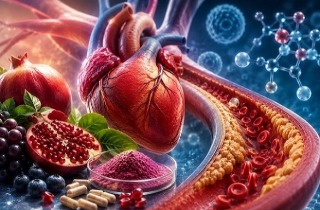
Medical News: Heart failure is one of the world’s fastest growing health problems, affecting tens of millions of people and placing enormous strain on healthcare systems. Despite advances in treatment, doctors still struggle to accurately detect early disease changes and predict which patients are at greatest risk. A new scientific review now suggests that two little known blood proteins may help close this dangerous gap.
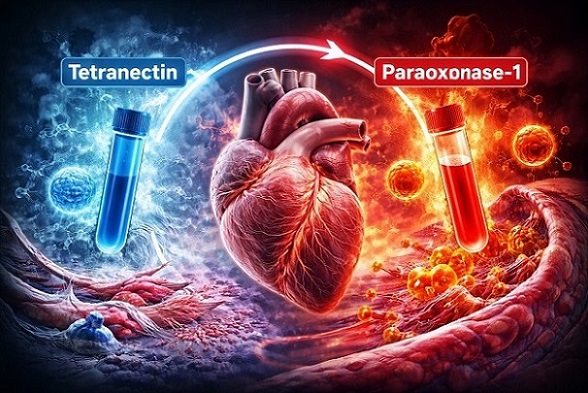 New research reveals how two blood proteins may expose hidden damage driving heart failure progression
A New Way to Look at Heart Failure
New research reveals how two blood proteins may expose hidden damage driving heart failure progression
A New Way to Look at Heart Failure
Researchers from multiple Romanian medical institutions, including Vasile Goldis Western University in Arad and Victor Babes University of Medicine and Pharmacy in Timisoara, reviewed existing scientific evidence on two biomarkers called Tetranectin and Paraoxonase-1. Their work proposes that these proteins reflect deeper biological damage long before the heart visibly weakens.
Current tests mainly measure pressure or strain inside the heart. While useful, they often miss the underlying damage caused by long term inflammation, oxidative stress, and scarring of heart tissue. This
Medical News report highlights how Tetranectin and Paraoxonase-1 may reveal these hidden processes.
Understanding Tetranectin
Tetranectin is a protein normally found in the blood and produced mainly by the liver. It also appears in tissues undergoing repair or scarring. In heart failure, excessive scarring makes the heart stiff and weak. Studies show that Tetranectin levels change when fibroblast cells become overactive and begin laying down excess connective tissue inside the heart. This makes Tetranectin a useful signal of structural damage that traditional tests do not capture.
Paraoxonase-1 And Oxidative Stress
Paraoxonase-1 works differently. It is attached to “good cholesterol” and acts as a natural antioxidant, helping neutralize harmful molecules created during inflammation. When Paraoxonase-1 activity drops, oxidative stress increases, blood vessels become damaged, and inflammation worsens. In heart failure patients, reduced Paraoxonase-1 activity has been linked to poorer outcomes and higher risk of complications.
Two Markers One Dangerous Cycle
The researchers describe a “fibrosis oxidative axis” where oxidative stress triggers scarring, and scarring further worsens oxidative damage. Paraoxonase-1 reflects the metabolic and inflammatory side of this cycle, while Tetranectin reflects the physical scarring of heart tissue. Together, they offer a more complete picture of disease activity than pressure-based markers alone.
Why This Matters For Patients
This dual marker approach may help doctors identify patients who appear stable but still carry high biological risk. It could also be especially useful in people with obesity, diabetes, or kidney disease, where standard heart failure tests are less reliable. However, the a
uthors stress that larger clinical studies are still needed before these markers can be used routinely.
Conclusions
The combined measurement of Tetranectin and Paraoxonase-1 offers a promising new lens for understanding heart failure beyond symptoms and pumping ability alone. By capturing both tissue scarring and oxidative stress, this approach may improve early detection, risk prediction, and personalized treatment strategies. Careful validation is still required, but the concept represents a meaningful step toward biologically informed heart failure care.
The study findings were published in the peer reviewed journal: Medicina.
https://www.mdpi.com/1648-9144/62/2/284
For the latest on Heart Failure research, keep on logging to Thailand
Medical News.
Read Also:
https://www.thailandmedical.news/articles/cardiology




 Share
Share
 Tweet
Tweet
 Share
Share