COVID-19 Causes Axonal Degeneration Via TRPV1 Activation and also Infects Basal Stem Cells
Nikhil Prasad Fact checked by:Thailand Medical News Team May 26, 2026 3 months, 1 week, 19 hours, 51 minutes ago
Medical News: A new scientific study has uncovered alarming evidence that SARS-CoV-2, the virus responsible for COVID-19, can directly infect smell-related nerve cells and trigger axonal degeneration through activation of a pain and inflammation receptor known as TRPV1. The findings are helping scientists better understand why many COVID-19 patients continue to suffer from long-lasting smell loss, brain fog, and neurological complications long after the infection clears.
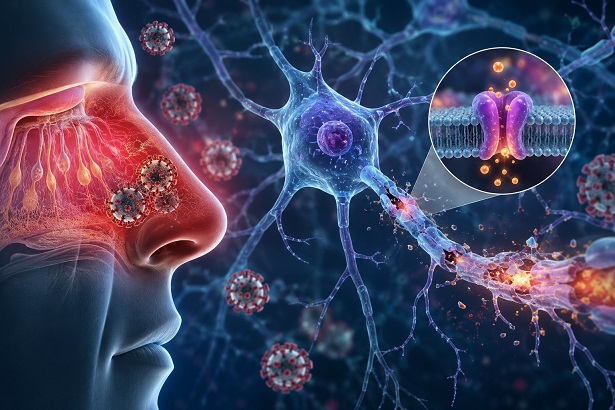 Scientists discover that COVID-19 directly damages smell neurons and triggers axonal degeneration through
dangerous TRPV1 activation
The research was conducted by scientists from the Centre for Virology, Vaccinology and Therapeutics and the State Key Laboratory for Emerging Infectious Diseases at The University of Hong Kong, Hong Kong SAR, China, together with researchers from the College of Veterinary Medicine at Western University of Health Sciences in Pomona, California, USA.
Virus Found Inside Smell Neurons
For years, scientists debated whether COVID-19 damaged smell through inflammation alone or whether the virus could directly attack sensory nerve cells. This new study now strongly suggests that the virus can indeed invade olfactory sensory neurons, the specialized nerve cells responsible for detecting odors.
Using human stem cell-derived sensory neurons and infected hamster models, researchers discovered that the Omicron BA.5 variant infected not only mature olfactory neurons but also basal stem cells that are essential for regenerating damaged smell tissue. The study found that roughly 5 percent of TRPV1-positive sensory neurons became directly infected after exposure to the virus.
More concerning was the discovery that infected neurons showed clear signs of injury, including shrinking nerve fibers and loss of axons. Axons are the long thread-like parts of nerve cells that transmit signals to the brain. Damage to these structures, known as axonal degeneration, can severely impair communication between the nose and brain.
Dangerous TRPV1 Activation Identified
The scientists identified TRPV1 as a central player in the neurological damage caused by SARS-CoV-2. TRPV1 is commonly known as the receptor activated by chili peppers and heat. It normally helps the body detect pain and harmful stimuli. However, after exposure to the BA.5 virus or even just the viral spike protein, TRPV1 became abnormally activated and moved from inside the cell nucleus to the cell surface membrane. This abnormal redistribution triggered major cellular stress and degeneration of nerve projections.
Researchers observed enlarged neuronal cell bodies, severe axonal damage, and increased signs of programmed cell death. The study also showed that the virus increased ACE2 receptor levels in sensory neurons, potentially making them even more vulnerable to infection over time.
This
Medical News report highlights that the virus may be capable of creating a vicious cycle in which infection boosts ACE2
expression, allowing repeated viral attacks that progressively worsen neurological injury.
Stem Cells That Repair Smell Tissue Also Damaged
One of the study’s most worrying findings was that SARS-CoV-2 also infected basal stem cells located beneath the olfactory epithelium. These cells are responsible for replacing damaged smell neurons throughout life.
The researchers found abnormal increases in a protein called EBF3, which is involved in nerve development and regeneration. Damage to these progenitor stem cells may explain why some COVID-19 patients continue suffering from smell dysfunction for months or even years.
The hamster experiments showed extensive destruction inside the olfactory epithelium, with infected tissue displaying structural breakdown and elevated TRPV1 activity.
Possible Treatment May Already Exist
The study also delivered encouraging findings. Researchers tested capsazepine, a TRPV1-blocking drug, and discovered that it significantly reduced nerve injury and preserved axonal structures in infected neurons.
Neurons treated with the TRPV1 inhibitor maintained healthier nerve projections and showed lower levels of degeneration compared to untreated infected cells.
The findings suggest that drugs targeting TRPV1 could potentially become future therapies for COVID-related neurological damage and chronic smell disorders.
Conclusions
The study provides some of the strongest evidence yet that SARS-CoV-2 directly attacks the nervous system through multiple mechanisms involving sensory neurons, stem cells, and inflammatory TRPV1 signaling. The discovery that axonal degeneration is closely tied to TRPV1 activation may finally explain why many patients experience persistent smell loss, nerve dysfunction, headaches, and cognitive symptoms after COVID-19 infection. Importantly, the identification of TRPV1 blockers as potential protective therapies opens a promising new direction for treating long COVID neurological complications and restoring damaged sensory pathways.
The study findings were published in the peer reviewed journal: iScience.
https://www.sciencedirect.com/science/article/pii/S2589004226014732
For the latest COVID-19 news, keep on logging to Thailand
Medical News.
Read Also:
https://www.thailandmedical.news/articles/coronavirus
https://www.thailandmedical.news/articles/long-covid




 Share
Share
 Tweet
Tweet
 Share
Share

































