Nikhil Prasad Fact checked by:Thailand Medical News Team Jan 28, 2026 8 months, 1 week, 6 hours, 36 minutes ago
Medical News: Researchers from the Department of Endocrinology and Metabolism, The Affiliated Hospital of Jiangsu University, and the Institute of Endocrine and Metabolic Diseases, Jiangsu University, Zhenjiang, China, have released an important scientific review that sheds new light on a little-known group of genes that may quietly influence some of the world’s most serious health problems, including diabetes, obesity, fatty liver disease, and several forms of cancer.
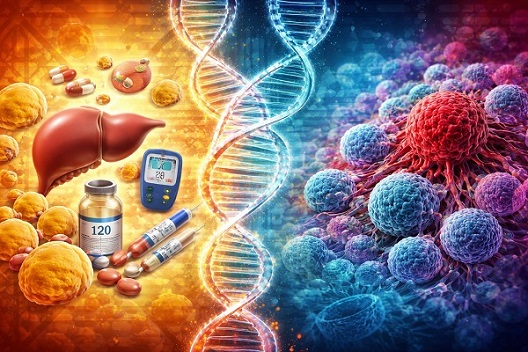 New research reveals how hidden genes quietly shape obesity diabetes and cancer risk.
This
Medical News report explains why these genes matter and how they could change future medical treatments
Understanding The TSC22D Gene Family
The study focuses on a group of genes called the TSC22D family. These genes act like molecular switches that help control how cells grow, store fat, respond to insulin, and react to stress. There are four main members in this family, named TSC22D1 through TSC22D4. Each plays a slightly different role in the body, but together they help maintain balance in metabolism and cell behavior.
Earlier research mainly linked these genes to basic cell survival and stress responses. However, scientists now understand that these genes also have strong effects on how the body manages sugar and fat, as well as how certain cancers grow or slow down.
How These Genes Affect Fat and Weight
The review explains that TSC22D1 and TSC22D4 are deeply involved in how the liver and fat tissue handle lipids. TSC22D1 helps regulate good cholesterol and fatty acid balance, especially when the body has excess energy. On the other hand, TSC22D4 controls how the liver releases fats into the bloodstream. When this gene is too active, fat can build up in the liver, raising the risk of fatty liver disease.
Another gene, TSC22D3, acts as a brake on fat cell formation. It slows down the process that turns immature cells into fat storing cells and also reduces inflammation in fat tissue, which is a key problem in obesity.
A Critical Role in Blood Sugar Control
The review highlights TSC22D4 as a key regulator of insulin sensitivity. When this gene interacts with insulin signaling pathways, it can either worsen or improve how well cells respond to insulin. Reducing TSC22D4 activity in the liver has been shown to improve blood sugar control without causing dangerous drops in glucose levels. This makes it a promising target for future diabetes treatments.
A Double-Edged Sword in Cancer
One of the most striking findings is that TSC22D genes can either suppress or support cancer, depending on the type of tumor and its environment. In many cancers, these genes help slow cell growth and encourage damaged cells to die. However, in certain cancers, specific versions of these genes may help tumors survive or spread. This dual role makes them complex but valuable targets for personalized cancer therapies.
Conclusions
/>
Overall, the findings reveal that the TSC22D gene family sits at a critical crossroads between metabolism and cancer. By controlling fat storage, insulin sensitivity, inflammation, and cell growth, these genes influence multiple diseases at once. Understanding how each gene behaves in different tissues and conditions could lead to safer and more precise treatments for diabetes, obesity, fatty liver disease, and cancer. Continued research may turn these genes into powerful tools for future medicine, offering hope for millions affected by metabolic and cancer related illnesses.
The study findings were published in the peer reviewed journal: Biomolecules.
https://www.mdpi.com/2218-273X/16/1/179
For the latest on genes affecting metabolism and cancer, keep on logging to Thailand Medical News.
Read Also:
https://www.thailandmedical.news/articles/cancer
https://www.thailandmedical.news/articles/diabetes




 Share
Share
 Tweet
Tweet
 Share
Share

































