Nikhil Prasad Fact checked by:Thailand Medical News Team Jul 26, 2026 2 months, 1 week, 1 day, 21 hours, 45 minutes ago
Medical News: A new study has uncovered surprising clues about how Long COVID may be affecting the body—by looking deep into the eyes. Researchers found that subtle changes in the retina, the light-sensitive layer at the back of the eye, could reflect ongoing damage linked to persistent symptoms after COVID-19 infection.
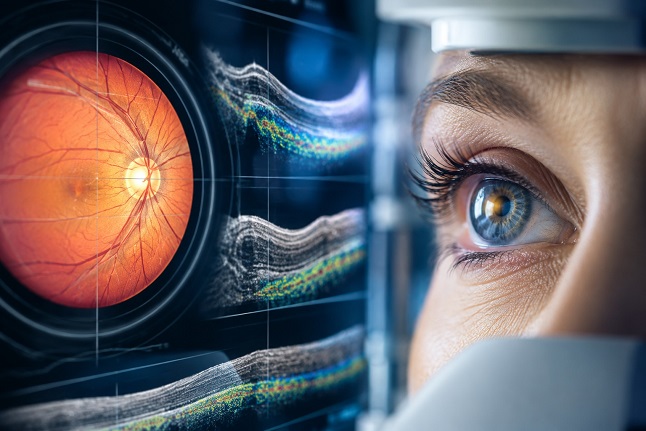 New research shows eye scans can detect subtle nerve damage linked to Long COVID symptoms
Looking Into the Eye to Understand Long COVID
New research shows eye scans can detect subtle nerve damage linked to Long COVID symptoms
Looking Into the Eye to Understand Long COVID
Scientists from several leading institutions—including the Technical University of Munich (TUM) School of Medicine and Health, TUM University Hospital, LMU University Hospital Munich, the German Centre for Infection Research (DZIF), and Imperial College London—conducted the study.
They used advanced imaging techniques to examine the eyes of people suffering from Post-COVID-19 Syndrome (PCS), commonly known as Long COVID. These techniques, called optical coherence tomography (OCT) and OCT angiography (OCTA), allow doctors to see tiny structures and blood vessels in the retina without surgery.
The retina is closely connected to the brain and nervous system, making it a useful “window” into what may be happening inside the body.
Study Design and Who Was Involved
The research included 80 Long COVID patients and 48 individuals who had recovered from COVID-19 without lingering symptoms. Participants were carefully assessed using symptom questionnaires covering fatigue, mental health, and overall quality of life.
Researchers also analyzed blood samples to measure markers of inflammation and immune system activity, helping them understand what might be driving the changes seen in the eye.
Key Finding: Structural Damage, Not Blood Flow Issues
One of the most striking findings was that Long COVID patients showed thinning in important retinal layers, including the nerve fiber layer and other structures linked to brain function.
However, blood flow in the retina appeared largely normal. This suggests that the problem may not be reduced circulation, but rather damage or changes in nerve-related tissues.
Patients with more severe symptoms consistently showed greater thinning in these retinal layers. This means the worse a person felt, the more noticeable the structural changes in their eyes.
What This Means for Patients
This
Medical News report highlights that these eye changes could be a sign of ongoing inflammation or even early nerve-related damage caused by Long COVID.
Interestingly, the study also found links between these retinal changes and certain immune markers in the blood. For example, higher levels of MCP-1—a chemical involved in inflammation—were associated with thinner retinal layers.
gt;
This strengthens the idea that chronic inflammation may be driving Long COVID symptoms.
Why This Discovery Matters
The findings suggest that simple, non-invasive eye scans could one day help doctors:
-Detect Long COVID more objectively
-Monitor how severe the condition is
-Track how patients respond to treatment
Unlike many current methods, which rely heavily on patient-reported symptoms, retinal imaging could provide measurable biological evidence of the disease.
A Closer Link Between Eyes and Brain
The retina is considered part of the central nervous system. Because of this, changes seen in the eye may reflect similar processes happening in the brain.
Researchers noted that similar retinal thinning has been observed in neurological diseases like multiple sclerosis and Parkinson’s disease. While it is too early to draw direct comparisons, the overlap raises important questions about the long-term effects of COVID-19 on the nervous system.
Conclusion
Overall, the study shows that Long COVID is not just a vague collection of symptoms, but a condition with measurable biological changes. The consistent thinning of retinal layers, especially in patients with more severe symptoms, suggests that ongoing inflammation and possible nerve-related damage may play a central role. While blood flow in the eye remains mostly unaffected, the structural changes provide important clues that could help doctors better understand, diagnose, and monitor this complex condition in the future.
The study findings were published in the peer reviewed journal: Brain, Behavior, & Immunity - Health.
https://www.sciencedirect.com/science/article/pii/S2666354626001481
For the latest on Long COVID, keep on logging to Thailand
Medical News.
Read Also:
https://www.thailandmedical.news/articles/long-covid




 Share
Share
 Tweet
Tweet
 Share
Share

































