Nikhil Prasad Fact checked by:Thailand Medical News Team Mar 15, 2026 6 months, 2 weeks, 5 days, 16 hours, 10 minutes ago
Medical News: The global COVID-19 pandemic has primarily been viewed through the lens of acute respiratory disease and post-viral complications such as long COVID. However, a growing body of scientific research is raising new and unsettling questions about whether infection with SARS-CoV-2 could be contributing to the development or progression of certain cancers.
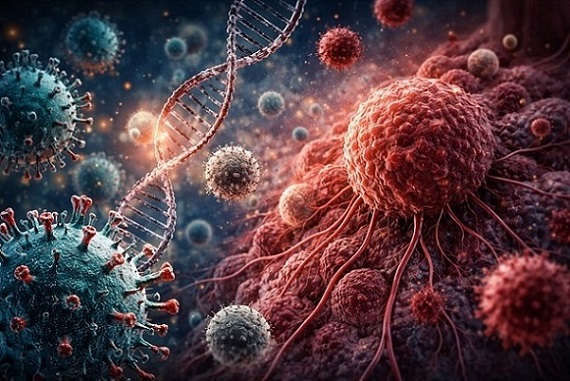 Emerging research suggests COVID-19 infection may influence cancer risk and metastasis through
complex immune and inflammatory pathways.
Over the past few years, researchers analyzing genetic data, population studies, and laboratory models have reported signals suggesting that COVID-19 may influence cancer risk, tumor progression, and metastatic spread. While the evidence remains preliminary and scientists caution that the relationship is not yet definitively proven, several recent studies have identified statistical associations between COVID-19 infection and increased risks for multiple cancer types.
Genetic Studies Reveal Possible Links Between Severe COVID-19 and Cancer Risk
One of the most compelling pieces of research exploring the potential connection between COVID-19 and cancer was published in 2023 using a method known as Mendelian randomization. This approach allows scientists to examine whether genetic susceptibility to one disease may influence the likelihood of developing another condition.
Using genome-wide association study (GWAS) data, researchers evaluated whether genetic predisposition to severe or critical COVID-19 illness was associated with increased cancer risk.
The analysis revealed statistically significant associations with several malignancies. Individuals genetically predisposed to severe COVID-19 were found to have higher odds of developing
stomach cancer, with an odds ratio (OR) of 1.2394 and a 95% confidence interval (CI) of 1.0173–1.5099.
The same genetic susceptibility was also associated with
HER2-positive breast cancer, with an odds ratio of 1.0924 and a 95% CI of 1.0200–1.1699.
Other cancers linked to genetic risk factors for severe COVID-19 included:
-Esophageal cancer (OR 1.0004; 95% CI 1.0001–1.0007)
-Colorectal cancer (OR 1.0010; 95% CI 1.0001–1.0018)
-Colon cancer (OR 1.0006; 95% CI 1.0000–1.0011)
Although some of these odds ratios appear small, researchers emphasized that even modest statistical increases can be important at a population level when millions of people have been infected globally.
Evidence Linking SARS-CoV-2 Infection to Blood Cancers
Another Mendelian randomization study published in 2024 further strengthened concerns about a possible relationship between COVID-19 and cancer. In that research, scientists investigated whether SARS-CoV-2 infection and hospitalization due to COVID-19 were associated with an increased risk of
multiple myeloma, a can
cer of plasma cells in the bone marrow.
The study found genetic evidence supporting such an association and identified several genes potentially involved in the mechanism. Among them were LZTFL1, MUC4, OAS1, HLA-C, SLC22A31, FDX2, and MAPT.
Many of these genes are closely involved in immune responses, glycosylation processes, and antiviral defense pathways. Their involvement suggests that the immune disruptions triggered by SARS-CoV-2 infection may create biological conditions that favor malignant transformation or accelerate disease development.
Case Reports Raise Early Warning Signals
Individual clinical observations have also fueled scientific interest in the COVID-19–cancer connection.
A case series published in 2022 described three previously healthy young adults in Brazil who developed
hematologic malignancies shortly after recovering from COVID-19 infection.
Approximately two months after SARS-CoV-2 infection, a 35-year-old man was diagnosed with
T-cell acute lymphoblastic leukemia, while a 36-year-old man was diagnosed with myelodysplastic syndrome with excess blasts type 1.
A third case involved a 31-year-old woman who developed
acute myeloid leukemia roughly three months after recovering from COVID-19.
Although such cases do not prove causation, they highlight a temporal association that researchers believe warrants further investigation.
Population Studies Reveal Higher Cancer Detection After Severe COVID-19
Large population-based studies have also revealed intriguing trends. In a major 2023 investigation, scientists examined the health outcomes of 41,302 individuals who had been hospitalized in intensive care units (ICUs) due to COVID-19. These patients were compared to 713,670 matched individuals who had not required ICU hospitalization for SARS-CoV-2 infection.
During follow-up, 2.2 percent of patients in the ICU group were diagnosed with cancer, compared with 1.5 percent in the control group.
After adjusting for multiple variables, researchers found that ICU patients had a 31 percent higher risk of receiving a cancer diagnosis after hospital discharge, with an adjusted hazard ratio (aHR) of 1.31.
The risk was particularly elevated for several cancer types:
-Renal (kidney) cancer – aHR 3.16
-Hematologic cancers – aHR 2.54
-Colon cancer – aHR 1.72
-Lung cancer – aHR 1.70
The increase in cancer diagnoses was most pronounced within the first three months following hospitalization, suggesting that severe COVID-19 may sometimes reveal underlying cancers that were previously undiagnosed.
COVID-19 May Promote Metastasis in Cancer Survivors
Perhaps one of the most concerning findings emerged from research presented at a special conference of the American Association for Cancer Research in 2024. Scientists reported evidence suggesting that SARS-CoV-2 infection may trigger metastatic progression, particularly in cancer survivors.
Experimental studies in mice revealed that infection with the virus increased the number of dormant disseminated breast cancer cells in the lungs. These cells are known to remain inactive for long periods before reactivating and forming metastatic tumors.
Observational human data also indicated that cancer patients who contracted COVID-19 faced higher risks of lung metastasis and cancer-related death compared to those who did not become infected.
These findings suggest that SARS-CoV-2 may influence the tumor microenvironment in ways that allow dormant cancer cells to awaken and spread.
Proposed Biological Mechanisms Behind the COVID-19–Cancer Connection
Scientists have proposed several biological pathways that could explain how COVID-19 might influence cancer development.
One major factor is
inflammation. Severe SARS-CoV-2 infection often triggers a powerful immune reaction known as a cytokine storm, which involves the release of large quantities of inflammatory signaling molecules.
This intense inflammatory environment may contribute to genetic instability, a key driver of cancer development.
Researchers have suggested that the cytokine storm could also promote the formation of cancer stem cells, which possess the ability to initiate tumor growth and resist treatment.
Other proposed mechanisms include:
-Dysregulation of the renin-angiotensin-aldosterone system (RAAS) caused by viral interaction with ACE2 receptors
-Viral mutagenicity, in which viral activity indirectly increases mutation rates in host cells
-Disruption of cell-cell adhesion molecules, potentially facilitating metastasis
Fibrotic tissue remodeling, particularly in the lungs
-Alterations in the gut microbiome, which may influence colorectal cancer risk
In addition, SARS-CoV-2 proteins and certain antiviral drugs used during COVID-19 treatment have been reported to reactivate
Kaposi’s sarcoma–associated herpesvirus (KSHV), a virus known to cause cancer in immunocompromised individuals.
Another possible pathway involves the formation of neutrophil extracellular traps (NETs), inflammatory structures produced by immune cells that have been linked to cancer progression and metastasis.
Unexpected Findings Suggest Possible Anti-Cancer Effects
Interestingly, not all research points toward a cancer-promoting role for SARS-CoV-2.
A Mendelian randomization study published in 2024 examining laryngeal cancer found no causal association between genetically predicted COVID-19 infection and the disease.
More surprisingly, the study identified inverse associations between COVID-19 hospitalization and laryngeal cancer risk. Gene-predicted hospitalization due to COVID-19 showed an odds ratio of 0.51, while severe respiratory symptoms had an odds ratio of 0.62.
These results suggest that certain immune responses triggered by SARS-CoV-2 infection might potentially offer protection against specific cancer types.
Further research has also identified genetic markers such as rs13050728, which influence the expression of interferon alpha receptor 2 (IFNAR2). This receptor plays a crucial role in antiviral immunity and may also influence cancer-related immune pathways.
Immune Responses May Trigger Tumor Regression in Rare Cases
Another intriguing line of research suggests that COVID-19 infection could sometimes stimulate anti-tumor immune responses.
A 2024 study reported that SARS-CoV-2 infection can expand a rare group of immune cells known as CCR2-expressing nonclassical monocytes during inflammatory states.
These cells were found to infiltrate metastatic tumor sites in experimental models of melanoma and cancers of the lung, breast, and colon.
Once inside tumor colonies, the cells released CCL6, a signaling molecule that recruits natural killer (NK) cells, which then attacked tumor cells and triggered tumor regression.
Scientists believe this mechanism may help explain anecdotal reports of spontaneous cancer regression following COVID-19 infection.
In fact, a 2023 report documented 14 cases of spontaneous tumor regression after SARS-CoV-2 infection and two additional cases following COVID-19 vaccination.
Broader Cancer Trends Observed During the Pandemic
Beyond biological mechanisms, researchers have also examined how the pandemic itself may have influenced cancer trends.
COVID-19 infections may alter the tumor microenvironment, suppress immune surveillance, or trigger inflammation that accelerates cancer development.
Organs with high levels of ACE2 receptors, such as the lungs and gastrointestinal tract, may be particularly vulnerable.
Studies have reported elevated risks for several cancer types following COVID-19 infection, including:
-
Lung cancer, with some research indicating a 24 percent increased risk after severe infection
-Colorectal cancer, with odds ratios ranging from 1.28 to 1.72
-
Gastric cancer, with odds ratios around 1.24 to 1.34
-
Breast cancer, with reported increases between 1.09 and 1.20
-
Renal cancer, with hazard ratios reaching 3.16
Hematologic cancers have also shown concerning trends, with some analyses indicating that 2.5 to 7.4 percent of deaths among these patients involved COVID-19 as an underlying cause.
The Road Ahead for Research
As scientists continue to investigate the possible relationship between COVID-19 and cancer, experts stress that definitive conclusions cannot yet be drawn. Cancer development is a complex and often slow process that may take many years to fully manifest.
Nevertheless, the accumulating research has highlighted a number of important scientific questions that require urgent investigation.
Understanding whether SARS-CoV-2 infection directly contributes to cancer development, accelerates tumor progression, or simply reveals previously undiagnosed malignancies will be critical for long-term public health planning.
This
Medical News report highlights how early scientific signals are pointing toward a complex and multifaceted relationship between COVID-19 and cancer biology.
The evidence gathered so far suggests that SARS-CoV-2 infection may influence cancer risk through several overlapping mechanisms, including immune dysregulation, chronic inflammation, genetic instability, and changes in the tumor microenvironment. Severe COVID-19 appears to be particularly important in this context, as the intense inflammatory responses and tissue damage associated with critical illness could create biological conditions that favor tumor initiation or metastasis.
Another key issue involves the impact of repeated infections and long COVID. With billions of people infected worldwide and many experiencing lingering immune abnormalities months or years after infection, researchers are increasingly concerned that the long-term cancer burden could rise in ways that are not yet fully visible.
Equally important is the possibility that COVID-19 infection may awaken dormant cancer cells that had previously remained inactive. The experimental findings showing increased lung metastasis after SARS-CoV-2 infection suggest that survivors of cancer may face unique risks following infection.
At the same time, the research landscape also reveals unexpected complexities. Some studies suggest that immune responses triggered by the virus might occasionally stimulate anti-tumor immunity, leading to rare cases of tumor regression. These observations highlight the intricate relationship between viral infection and immune-mediated cancer control.
Ultimately, much longer follow-up studies will be required to determine whether the statistical signals observed so far translate into measurable increases in cancer incidence over time. Large longitudinal studies tracking cancer rates among COVID-19 survivors, combined with laboratory investigations into viral-induced cellular changes, will be essential for answering these questions.
In the coming years, the scientific community will likely focus heavily on the intersection between infectious diseases and cancer biology. Understanding how SARS-CoV-2 interacts with immune pathways, genetic susceptibility factors, and tissue microenvironments may reveal entirely new insights into both viral disease and oncogenesis.
If a causal relationship is confirmed, it could have profound implications for cancer screening strategies, surveillance of COVID-19 survivors, and the development of therapies targeting shared biological pathways between viral infection and tumor growth.
For now, the emerging research serves as a reminder that the long-term consequences of the COVID-19 pandemic may extend far beyond respiratory illness, potentially reshaping our understanding of cancer risk in the years ahead.
References:
https://onlinelibrary.wiley.com/doi/10.1002/jmv.28722
https://www.sciencedirect.com/science/article/pii/S2531137922000050
https://link.springer.com/article/10.1007/s10238-024-01299-y
https://www.sciencedirect.com/science/article/pii/S0300908423001360
https://www.nature.com/articles/s41598-023-36013-7
https://aacrjournals.org/cancerres/article/84/22_Supplement/IA007/749811/Abstract-IA007-Respiratory-viral-infection
https://www.biorxiv.org/content/10.1101/2020.10.02.324228v1
https://link.springer.com/article/10.1186/s13058-020-01360-0
https://www.frontiersin.org/journals/immunology/articles/10.3389/fimmu.2024.1380982/full
https://www.jci.org/articles/view/179527
https://news.feinberg.northwestern.edu/2024/11/18/new-research-sheds-light-on-a-surprising-connection-between-covid-19-and-cancer-regression/
https://link.springer.com/article/10.1186/s12967-023-04110-w
https://www.nature.com/articles/s41467-022-34065-3
https://www.sciencedirect.com/science/article/pii/S147655862200063X
https://link.springer.com/article/10.1186/s13578-024-01297-3
https://www.cell.com/cell/abstract/S0092-8674(26)00220-5
https://www.oncotarget.com/article/28824/text/
https://ecancer.org/en/news/27900-severe-covid-19-flu-facilitate-lung-cancer-months-or-years-later-new-research-shows
https://link.springer.com/article/10.1186/s40364-025-00831-w
For the latest on COVID-19, keep on logging to Thailand
Medical News.
Read Also:
https://www.thailandmedical.news/articles/coronavirus
https://www.thailandmedical.news/articles/long-covid




 Share
Share
 Tweet
Tweet
 Share
Share

































