Nikhil Prasad Fact checked by:Thailand Medical News Team Jun 17, 2026 3 months, 2 weeks, 3 days, 3 hours, 29 minutes ago
Medical News: A new study has uncovered compelling evidence that some individuals who experience prolonged symptoms after COVID-19 may develop a temporary but significant form of immune dysfunction involving one of the body's most important immune cell populations. Researchers found that a subset of patients recovering from SARS-CoV-2 infection showed persistent CD4+ T cell hyporesponsiveness, a condition in which critical immune cells become less responsive to stimulation, potentially affecting the body's ability to mount normal immune responses for months after infection.
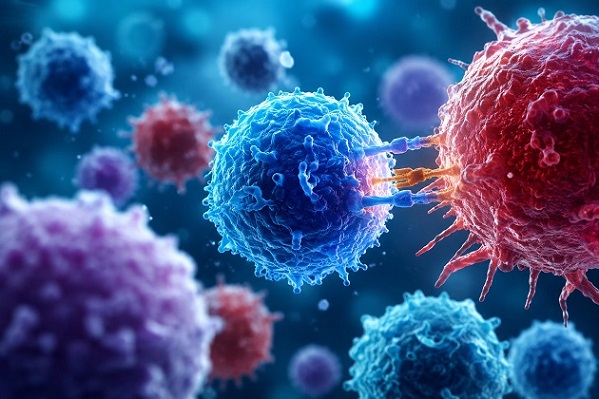 Researchers found that some long COVID patients develop persistent helper T-cell dysfunction that can last for
months after infection and impair normal immune responses.
The study was conducted by researchers from the Arthritis and Clinical Immunology Program, the Center for Biomedical Data Sciences, and the Cell Cycle and Cancer Biology Program at the Oklahoma Medical Research Foundation (OMRF), along with scientists from the Department of Microbiology and Immunology, the Department of Pathology, and the Department of Cell Biology at the University of Oklahoma Health Sciences Center in Oklahoma City, United States.
Long Recovery Times Associated with Unexpected Immune Changes
While most people recover from COVID-19 within days or weeks, some continue to experience symptoms for extended periods. To better understand the biological mechanisms behind prolonged recovery, researchers examined blood samples from 17 individuals who had recovered from mild to moderate COVID-19 without requiring hospitalization.
The participants were divided into two groups based on symptom duration. One group experienced symptoms for a median of 30 days, while the other recovered much more rapidly, with symptoms lasting a median of only five days.
Among those with prolonged symptoms, five individuals displayed unusually low levels of the CD4 protein on the surface of helper T cells. CD4 molecules play a vital role in helping T cells recognize threats and coordinate immune responses throughout the body.
Critical Immune Cells Became Hyporesponsive
The researchers then tested how effectively these T cells responded to stimulation using a powerful immune activator known as Staphylococcal enterotoxin B (SEB).
Normally, healthy T cells rapidly become activated and express markers associated with a robust immune response. However, T cells from individuals with reduced CD4 expression responded very poorly. Key activation markers including CD69, CD134, CD25, and CD279 were significantly reduced compared to healthy individuals and compared to patients whose CD4 levels had returned to normal.
The findings suggest that these immune cells had entered a hyporesponsive state, making them far less capable of responding to immune challenges.
Importantly, the severity of the hyporesponsiveness closely tracked with the amount of CD4 present on the cell surface. The lower the CD4 levels, the weaker the immune response.
Signs Of Ongoing Inflammation
Researchers also analyzed dozens of inflammatory molecules ci
rculating in the blood.
Three molecules stood out. Individuals with reduced CD4 expression showed elevated levels of IL-1RA, IL-7, and VEGF. Previous studies have linked VEGF to severe COVID-19 and long COVID, suggesting that ongoing inflammatory activity may contribute to the immune abnormalities observed in these patients.
Interestingly, the researchers found no relationship between antibody levels against the SARS-CoV-2 spike protein and T-cell dysfunction. This finding indicates that the problem was not related to the body's ability to produce antibodies but instead involved deeper disturbances within cellular immunity.
This
Medical News report highlights that persistent immune dysfunction following COVID-19 may be occurring even in individuals who were never hospitalized and whose initial illness was considered relatively mild.
Gene Sequencing Revealed Profound Immune Suppression
To understand what was happening inside the affected cells, the research team performed extensive RNA sequencing analyses.
The results were striking. T cells from affected individuals showed more than a 50 percent reduction in the number of genes that responded to stimulation compared to healthy controls. This massive decrease revealed a widespread failure of normal immune activation pathways.
The dysfunctional cells showed evidence of previous exposure to powerful antiviral interferon signals. At the same time, they displayed reduced activity in pathways responsible for T-cell activation, cellular metabolism, energy production, differentiation, and immune signaling.
Genes involved in glycolysis, a critical energy-producing process required for activated immune cells, were significantly suppressed. The cells also exhibited increased expression of genes linked to immune regulation and suppression, suggesting a shift toward a less active immune state.
Researchers additionally identified molecular signatures indicating impaired T-cell receptor signaling, which may explain why these cells failed to respond normally when stimulated.
Recovery Was Possible but Could Take Months
One encouraging finding was that the abnormalities were not permanent in most cases. Four of the five affected participants gradually regained normal CD4 expression and improved T-cell responsiveness over periods ranging from three to twelve months.
However, one participant continued to show evidence of immune dysfunction nearly a year after infection, suggesting that recovery timelines may vary considerably between individuals.
Conclusions
The study provides important new evidence that prolonged COVID-19 symptoms can be accompanied by measurable and biologically significant immune abnormalities. Persistent CD4+ T cell hyporesponsiveness appears to be associated with inflammatory signaling, interferon exposure, impaired cellular metabolism, and weakened immune activation pathways. Although the study involved a relatively small number of participants, the findings raise important questions about how long these immune alterations may persist and whether they contribute directly to long COVID symptoms. Larger studies are now needed to determine how widespread this phenomenon is and what impact it may have on susceptibility to infections, vaccine responses, and long-term immune health.
The study findings were published in the peer reviewed journal: Cellular Immunology.
https://www.sciencedirect.com/science/article/pii/S0008874926000675
For the latest on Long COVID, keep on logging to Thailand
Medical News.
Read Also:
https://www.thailandmedical.news/articles/long-covid
https://www.thailandmedical.news/articles/coronavirus




 Share
Share
 Tweet
Tweet
 Share
Share

































