Nikhil Prasad Fact checked by:Thailand Medical News Team Jun 16, 2026 3 months, 2 weeks, 4 days, 3 hours, 11 minutes ago
Medical News: A humble vegetable commonly found on dining tables across East and Southeast Asia may possess remarkable heart-protective properties, according to a new study. Researchers have discovered that water dropwort, scientifically known as Oenanthe javanica, can suppress key biological signals that drive blood clot formation, raising the possibility that this traditional food could one day be recognized as a valuable functional food for cardiovascular health.
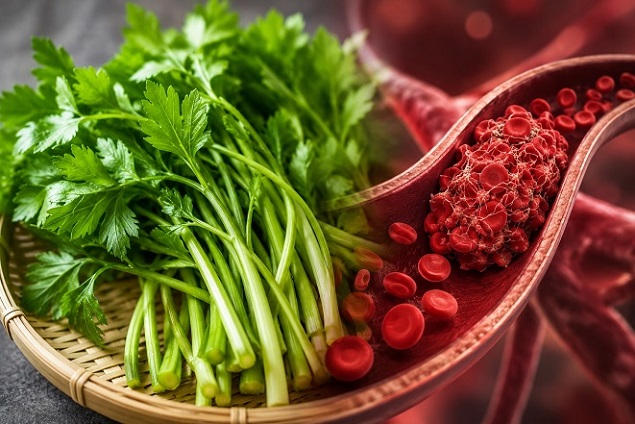 New research shows that water dropwort contains natural compounds that suppress key blood-clotting signals while
preserving normal coagulation.
The research was conducted by scientists from the Department of Applied Biosciences and the College of Pharmacology at Kyungpook National University, the KNU NGS Core Facility, Microbalance Inc., the Department of Biomedical Laboratory Science at Inje University, and the Cardiovascular Laboratory at the Medical Center of Dong-A University, all in South Korea.
A Common Vegetable with Uncommon Benefits
Blood clots are a major cause of heart attacks and strokes. While platelets are essential for stopping bleeding after an injury, excessive platelet activation can trigger the formation of dangerous clots inside blood vessels.
For decades, aspirin has been used to reduce this risk by limiting platelet activity. However, researchers are increasingly interested in identifying natural dietary compounds that may provide similar benefits.
Water dropwort, known as Minari in Korea, has long been valued as both a food and a traditional medicinal plant. Previous studies have linked it to antioxidant, anti-inflammatory, and liver-protective effects. Until now, however, its direct impact on platelet activation had not been fully investigated.
To better reflect real-world consumption, the researchers prepared a hot-water extract of water dropwort rather than using organic solvents.
Analysis revealed that the extract was rich in beneficial polyphenols, particularly chlorogenic acid, caffeic acid, and gallic acid.
Blocking the Earliest Stages of Clot Formation
The study focused on collagen-induced platelet activation. Collagen becomes exposed when blood vessels are damaged and acts as a powerful trigger that causes platelets to become sticky and clump together.
Laboratory experiments showed that water dropwort extract significantly reduced platelet aggregation in a dose-dependent manner. As the concentration of the extract increased, platelet clumping decreased dramatically.
The researchers found that one of the extract’s most important actions involved suppressing calcium mobilization inside platelets.
Calcium functions as a crucial signaling molecule that tells platelets to activate. When calcium levels rise, platelets rapidly change shape, release chemical messengers, and begin forming clots.
The extract reduced intracellular calcium levels by as much as 80 percent in some experiments, effectively interrupting one of the earliest and most important steps in the clotting process.
Shutting
Down a Powerful Clot-Promoting Molecule
The benefits did not stop there. The researchers also discovered that the extract reduced production of thromboxane A2, a potent chemical that amplifies platelet activation and constricts blood vessels.
When platelets were stimulated with collagen, thromboxane A2 production surged dramatically. Treatment with water dropwort extract significantly lowered these levels, indicating that the plant was interfering with another critical pathway involved in blood clot formation.
Further investigation revealed that chlorogenic acid and caffeic acid, two major compounds found in the plant, enhanced the clot-blocking effects of aspirin. When combined with aspirin, both compounds produced greater reductions in thromboxane A2 than aspirin alone.
In some experiments, these natural compounds boosted aspirin’s inhibitory effects by approximately 9 to 11 percent, suggesting that they may work through complementary mechanisms.
This
Medical News report notes that the findings are particularly intriguing because they suggest that commonly consumed foods may contain compounds capable of targeting the same biological pathways affected by established cardiovascular medications.
Animal Studies Produced Similar Results
The researchers also tested the extract in rats that received daily doses for 30 days. Platelets collected from these animals were less likely to aggregate when exposed to collagen, confirming that the antiplatelet effects extended beyond laboratory test tubes.
Although the reductions were more modest than those observed in isolated platelet experiments, the findings suggest that dietary consumption of water dropwort may influence platelet behavior under physiological conditions.
No Signs of Increased Bleeding Risk
One of the most encouraging aspects of the study was the safety profile. Many antiplatelet medications can increase bleeding risk because they interfere with the body's normal clotting processes. However, the researchers found that water dropwort extract did not significantly alter prothrombin time or activated partial thromboplastin time, two key measures of blood coagulation.
This indicates that the extract reduced excessive platelet activation without disrupting the broader coagulation system responsible for maintaining normal hemostasis.
Conclusion
The new findings suggest that water dropwort may be far more than a nutritious vegetable. By suppressing intracellular calcium signaling and reducing thromboxane A2 production, the plant targets two of the most important pathways involved in platelet activation and blood clot formation. The discovery that its natural compounds can enhance aspirin's effects further strengthens its potential cardiovascular relevance. Equally important, the extract achieved these benefits without significantly affecting normal blood coagulation, suggesting a lower risk of bleeding complications. While human clinical trials are still needed, the study provides compelling evidence that regular consumption of water dropwort could one day play a role in supporting heart health and reducing the risk of clot-related cardiovascular disease.
The study findings were published in the peer reviewed International Journal of Molecular Sciences.
https://www.mdpi.com/1422-0067/27/12/5326
For the latest on herbs and phytochemicals, keep on logging to Thailand
Medical News.
Read Also:
https://www.thailandmedical.news/articles/herbs-and-phytochemicals
Medical Disclaimer: All content published by Thailand Medical News is based on scientific research and is intended for informational and educational purposes only. It is not medical advice, diagnosis, or treatment. Readers must not attempt to use, apply, or experiment with any protocols, compounds, or therapies mentioned without first consulting a qualified and licensed medical doctor. Many findings discussed are experimental or preliminary, and only a licensed healthcare professional can determine what is safe and appropriate for an individual’s specific medical condition.




 Share
Share
 Tweet
Tweet
 Share
Share

































