German Scientists Discover That a Mysterious Brain Pigment Called Neuromelanin Plays a Role in Parkinson’s Disease
Nikhil Prasad Fact checked by:Thailand Medical News Team Dec 13, 2025 9 months, 3 weeks, 23 hours, 42 minutes ago
Medical News: Animal Models Help Solve the Neuromelanin Mystery
In a major scientific breakthrough, researchers from the Ruhr University Bochum in Germany have shown how a mysterious brain pigment called neuromelanin may be connected to Parkinson’s disease. Neuromelanin is the dark brown pigment that gives the substantia nigra in the brain its color. In people with Parkinson’s, these pigmented brain areas become paler, indicating the death of nerve cells.
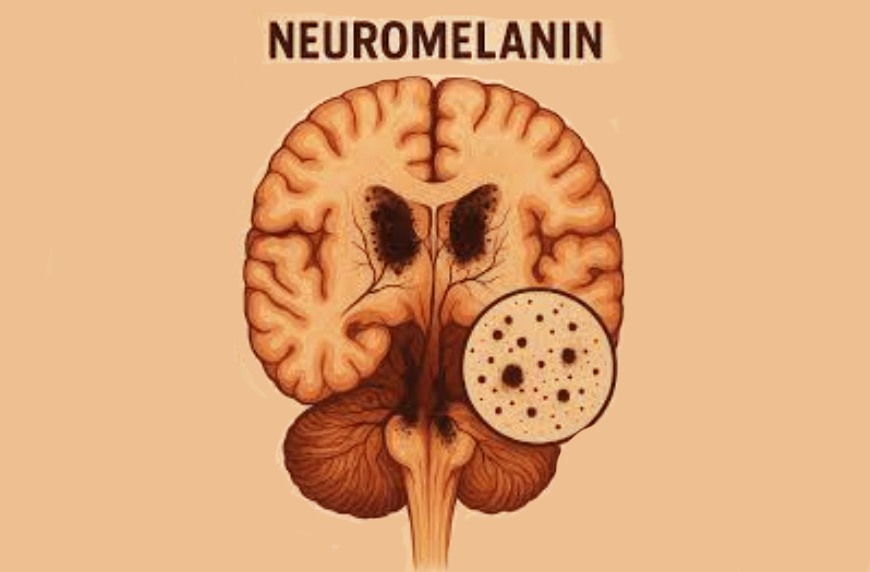 New animal models now allow scientists to see how brain pigment buildup might trigger Parkinson’s disease
But until now, scientists struggled to understand whether neuromelanin protects brain cells or harms them. This was because common lab animals like mice and rats don’t naturally produce neuromelanin, making it hard to study. Thanks to new genetic and experimental models, scientists can now mimic human neuromelanin in animals—unlocking important clues into how it forms and what it does.
This
Medical News report highlights how these new animal models are helping answer long-standing questions about the role of neuromelanin in Parkinson’s and point to potential new treatments
What Is Neuromelanin and Why It Matters
Neuromelanin is a dark pigment found inside special granules in certain brain cells, mostly in the substantia nigra. These pigment granules, known as neuromelanin granules (NMGs), are full of fats, iron-binding proteins, and other molecules. In Parkinson’s disease, the brain cells that contain these granules tend to die off faster.
Some researchers believe neuromelanin acts like a sponge, safely soaking up toxic metals and other harmful substances. But when too much neuromelanin builds up, it may overload the cell’s waste-disposal system, leading to stress and cell death. To understand which of these roles neuromelanin plays, scientists needed a way to study it in live animals—not just in slices of brain tissue from deceased patients.
New Tools to Study Neuromelanin in Action
German researchers at the Medizinisches Proteom-Center and the Center for Proteindiagnostics (PRODI) at Ruhr University Bochum developed groundbreaking animal models that now make it possible to investigate neuromelanin. In one major method, they injected a gene from human skin cells called TYR (tyrosinase) into the brains of rats and mice. This gene triggered the animals' brain cells to start producing neuromelanin for the first time.
As the pigment built up over time, the animals began showing signs similar to Parkinson’s: dying dopamine-producing brain cells, loss of movement control, and inflammation. One key discovery was that when the amount of neuromelanin in a cell passed a certain threshold, the cell became sick and started dying. This supports a new idea that neuromelanin is only harmful once it builds up too much.
Other Key Findings from These Animal
Studies
MRI imaging in rats mirrored changes seen in Parkinson’s patients, showing that neuromelanin might be a useful early disease marker.
Overactive immune cells, like microglia and astrocytes, were found near dying pigmented neurons, showing how neuromelanin may trigger brain inflammation.
New treatments such as dexamethasone (an anti-inflammatory drug) and VMAT2 gene therapy (to control dopamine storage) showed promise in reducing symptoms and slowing disease progression.
Sex differences were observed, with male and female animals showing different patterns of neuromelanin buildup and brain damage—suggesting that men and women may need tailored treatments.
What Comes Next
Although this new research has opened many doors, some big questions still remain. Scientists still don’t know how neuromelanin is made in the human brain. The TYR gene used in the models might not actually exist in large amounts in human neurons. That’s why human stem-cell brain organoids—mini brains grown in the lab—are also being explored as an alternative research method.
These findings bring researchers one step closer to understanding how Parkinson’s develops. By focusing on how and why neuromelanin builds up—and learning how to control it—future therapies might prevent nerve damage before symptoms begin.
The study findings were published in the peer reviewed journal: Biomedicines.
https://www.mdpi.com/2227-9059/13/12/3048
For the latest on Parkinson’s Disease, keep on logging to Thailand
Medical News.
Read Also:
https://www.thailandmedical.news/articles/alzheimer,-dementia-




 Share
Share
 Tweet
Tweet
 Share
Share

































