American Study Finds That Persistent COVID-19 Spike Protein Causes Lasting Blood Vessel Damage
Nikhil Prasad Fact checked by:Thailand Medical News Team Oct 23, 2026 1 hour, 4 minutes ago
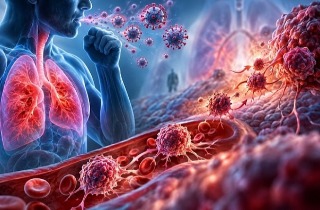
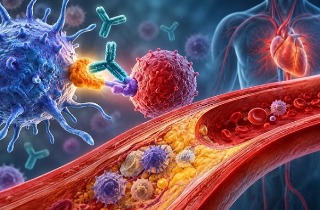
A new study has uncovered concerning evidence that proteins left behind by the COVID-19 virus may remain in the body's smallest blood vessels for years, potentially contributing to the persistent inflammation and tissue damage seen in people suffering from long COVID. Researchers found that the SARS-CoV-2 spike protein was associated with abnormal changes in blood vessels, including the buildup of scar-like material that could interfere with normal blood circulation.
 New research links lingering SARS-CoV-2 spike proteins to inflammation and scarring in tiny blood vessels,
potentially helping explain some long COVID complications
The research, conducted by scientists from Weill Cornell Medicine in New York, The Ohio State University College of Medicine and Wexner Medical Center, and Albert Einstein College of Medicine in New York, examined human tissue samples alongside laboratory experiments involving mice.
The findings offer new insights into why some people continue experiencing debilitating symptoms long after their initial coronavirus infection has ended.
Why Long COVID May Affect So Many Organs
Long COVID remains a challenging medical condition because its symptoms vary considerably between patients. Some individuals experience overwhelming fatigue, memory difficulties, and brain fog, while others develop dizziness, cardiovascular problems, or persistent neurological complaints.
Scientists have proposed several explanations, including immune system abnormalities, lingering viral material, and damage to the cells lining blood vessels.
This
Thailand Medical News report highlights research examining whether persistent spike proteins could contribute to these problems by maintaining inflammation and encouraging scarring within tiny blood vessels.
These vessels, known as the microvasculature, deliver oxygen and nutrients throughout the body. When they become damaged or restricted, surrounding tissues may struggle to function normally.
Researchers Examined Patients and Laboratory Mice
The investigators studied tissue samples from three groups of people. The first included individuals who died from COVID-19, whose brain and central nervous system tissues were compared with those of age-matched controls.
The second involved people experiencing long COVID symptoms for one to five years, compared with individuals who had recovered from their infections.
The third component involved laboratory mice exposed to the SARS-CoV-2 spike protein. Researchers examined the animals five days after exposure and again after approximately six weeks.
The scientists specifically investigated blood vessels containing ACE2, a protein that the coronavirus uses to attach to susceptible cells.
They also measured the presence of viral spike proteins and collagen type I, a structural protein associated with tissue scarring.
Dramatic Increase in ACE2-Positive Blood Vessels
/>
One of the most striking findings involved the number of small blood vessels showing ACE2 expression.
In mice examined approximately six weeks after spike protein exposure, the density of ACE2-positive microvessels in the central nervous system increased approximately 19-fold.
Human tissue samples revealed similarly concerning differences.
Among individuals who died from COVID-19, the measured ACE2-positive microvessel density averaged 13.2, compared with just 2.1 among controls.
In people with long COVID, the corresponding measurement averaged 11.9, compared with 3.5 among individuals who had recovered.
These differences were statistically significant, with reported p-values below 0.001.
However, increased ACE2-positive vessel density does not necessarily mean that entirely new blood vessels formed. Existing vessels may instead have increased their ACE2 expression in response to injury or inflammation.
The findings nevertheless suggest substantial changes in the microvascular environment following prolonged exposure to viral proteins.
Spike Proteins Remained Detectable Long After Infection
Another important discovery concerned the persistence of spike proteins in blood vessels.
Researchers measured spike-associated microvascular density at approximately 6.9 in brain tissues from fatal COVID-19 cases and 7.0 in the experimental mice.
Skin samples from long COVID patients showed a corresponding value of 6.0. By comparison, individuals who had recovered from COVID-19 showed a substantially lower measurement of 0.9.
The differences were statistically significant.
These observations suggest that spike protein may remain associated with small blood vessels long after the initial infection.
Importantly, detecting spike protein does not establish that infectious coronavirus remains present. Residual viral proteins can potentially persist without active viral replication.
The study also could not definitively establish whether all detected proteins originated from the initial infection or from continuing low-level production.
Evidence of Scarring Raises Further Concerns
Perhaps the most clinically important finding involved collagen type I deposition around small blood vessels.
Collagen is normally essential for maintaining tissue strength and structure. However, excessive collagen accumulation can cause fibrosis, a process in which tissues become abnormally thickened or scarred.
The researchers detected this abnormal collagen deposition in fatal COVID-19 cases, long COVID patients, and mice examined six weeks after spike protein exposure.
It was not observed in the recovered control group or during the shorter mouse observation period.
This pattern suggests that prolonged spike protein exposure may be associated with progressive changes in blood vessel structure.
The investigators described the condition as restrictive fibrosing microangiopathy, meaning scarring-related damage affecting the body's smallest blood vessels.
Such changes could potentially interfere with the delivery of oxygen and nutrients to surrounding tissues, although the study did not directly demonstrate reduced blood flow.
What These Findings Mean for Long COVID Treatment
The findings support further investigation into treatments targeting persistent viral proteins, vascular inflammation, and abnormal tissue scarring.
However, the research does not establish that removing spike proteins would reverse long COVID symptoms.
The mouse experiments involved administered spike protein rather than natural coronavirus infection, meaning their results cannot automatically be applied to patients.
Larger human studies are also needed to determine whether the observed vascular abnormalities directly explain particular symptoms, how frequently they occur, and whether their severity changes over time.
Conclusion
The study provides important evidence linking persistent SARS-CoV-2 spike proteins with inflammation-associated blood vessel changes and abnormal collagen deposition in long COVID. Although the findings do not prove that these abnormalities cause persistent symptoms, they identify a potentially significant disease mechanism deserving further investigation. Understanding whether such vascular damage can be prevented or reversed could eventually help researchers develop more targeted treatments for affected patients.
The study findings were published in the peer reviewed journal: The American Journal of Pathology.
https://ajp.amjpathol.org/article/S0002-9440(26)00296-8/abstract
Read Also:
https://www.thailandmedical.news/articles/long-covid
https://www.thailandmedical.news/articles/coronavirus




 Share
 Tweet
 Share