Nikhil Prasad Fact checked by:Thailand Medical News Team Mar 16, 2026 4 months, 2 weeks, 4 days, 18 hours, 28 minutes ago
Medical News: A growing body of research is suggesting that a natural compound found in grapes and several plants may help protect the brain from aging-related memory loss. Scientists have now discovered that resveratrol, a plant-derived antioxidant, can slow processes in the brain that are strongly linked to cognitive decline and neuroinflammation.
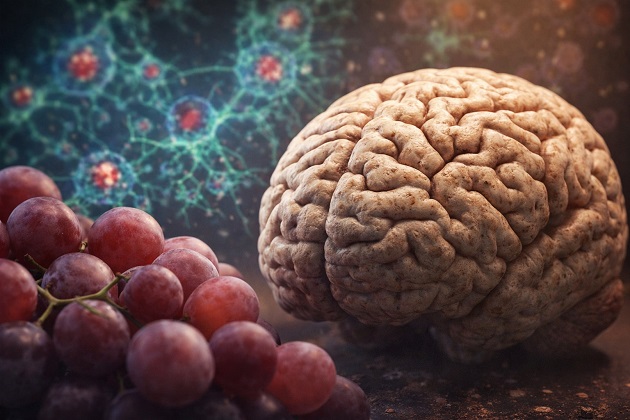 Natural compound resveratrol shown to reduce brain inflammation and improve memory in aging models
Researchers from the School of Food Science and Engineering, South China University of Technology, Guangzhou, China, conducted a new study exploring how resveratrol affects aging brain cells and the biological pathways that trigger inflammation and memory problems. Their findings reveal that the compound may directly interfere with a key immune signaling pathway that drives brain aging.
Why Brain Aging Leads to Memory Problems
As people grow older, the brain gradually becomes more vulnerable to inflammation, oxidative stress, and cellular damage. These processes can impair memory, learning ability, and overall cognitive performance.
One important factor behind this decline involves microglia, the brain’s immune cells. When these cells age or become overactive, they release inflammatory molecules that damage nearby neurons and disrupt normal brain function.
In aging brains, damaged DNA fragments can accumulate inside microglial cells.
These fragments trigger an immune alarm system known as the cGAS-STING pathway, which activates inflammatory responses. While this system is useful for fighting infections, chronic activation in the aging brain can cause harmful inflammation and accelerate cognitive decline.
The researchers wanted to see whether resveratrol could interrupt this process and protect the brain from these age-related changes.
Testing Resveratrol in Aging Mice
To investigate, the scientists created an accelerated aging model using laboratory mice. The animals were treated with a compound that mimics aging-related stress in the body, leading to memory problems and increased brain inflammation.
Some of the mice were then given resveratrol daily for three weeks.
Behavioral tests showed striking differences between the groups. Mice that received resveratrol performed significantly better in tasks designed to measure learning, spatial memory, and coordination.
For example, when placed in a maze with a new path to explore, resveratrol-treated mice were far more likely to recognize and enter the unfamiliar path. This indicated improved memory and cognitive flexibility compared to untreated aging mice.
The treated animals also demonstrated better balance and motor coordination in physical tests.
This
Medical News report highlights that these improvements were not due to increased physical activity alone, but rather to protective changes occurring inside the brain.
Resv
eratrol Reduces Brain Cell Aging and Inflammation
The researchers then examined brain tissue to understand what was happening at the cellular level.
They discovered that resveratrol significantly reduced markers of cellular aging in microglia. Normally, aging microglia show clear signs of senescence, meaning they stop functioning properly and release inflammatory chemicals.
However, mice treated with resveratrol had fewer senescent microglial cells and lower levels of inflammatory molecules such as IL-1β and other cytokines that contribute to brain damage.
Importantly, resveratrol also lowered oxidative DNA damage, a major driver of cellular aging.
Blocking A Key Aging Pathway in The Brain
Further analysis revealed that resveratrol strongly suppressed activation of the cGAS-STING pathway.
When this pathway is triggered, it activates downstream proteins such as STING and TBK1 that promote inflammation and immune signaling in the brain. In aging mice, these proteins were highly activated.
But resveratrol dramatically reduced this activation, preventing the chain reaction that leads to chronic neuroinflammation.
Laboratory experiments on microglial cells confirmed the same effect. When the pathway was artificially activated, resveratrol blocked the signaling process and reduced inflammatory responses.
A Promising Strategy Against Cognitive Decline
The findings suggest that targeting the cGAS-STING pathway could become a powerful strategy for slowing brain aging and preventing neurodegenerative diseases.
While more research is needed before resveratrol can be widely recommended as a therapy, the results highlight its potential as a natural compound capable of protecting brain cells from age-related damage.
Overall, the study demonstrates that resveratrol can reduce microglial aging, suppress harmful inflammation, and improve memory performance by interrupting one of the central biological mechanisms behind brain aging. These insights could pave the way for new preventive approaches against conditions such as Alzheimer’s disease and other neurodegenerative disorders.
The study findings were published in the peer reviewed journal: Cells.
https://www.mdpi.com/2073-4409/15/6/523
For the latest on preventing or slowing brain aging, keep on logging to Thailand
Medical News.
Read Also:
https://www.thailandmedical.news/articles/supplements
https://www.thailandmedical.news/articles/herbs-and-phytochemicals
https://www.thailandmedical.news/articles/health-news




 Share
Share
 Tweet
Tweet
 Share
Share