Nikhil Prasad Fact checked by:Thailand Medical News Team Jun 16, 2026 3 months, 2 weeks, 4 days, 13 minutes ago
Medical News: Researchers are increasingly finding that naturally occurring plant compounds known as flavonoids may play a much bigger role in protecting human health than previously believed. A new scientific review has highlighted how several well-known flavonoids found in fruits, vegetables, tea, and other plant-based foods could help combat inflammatory diseases affecting the liver, lungs, and nervous system.
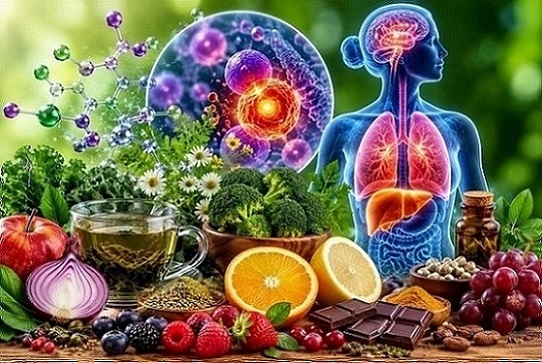 Researchers find that naturally occurring flavonoids may help protect the liver, lungs, and brain by
reducing inflammation and oxidative stress
The study was conducted by researchers from the Laboratory of Pain, Inflammation, Neuropathy and Cancer, Department of Immunology, Parasitology, and General Pathology, Londrina State University, Brazil; the Department of Pharmaceutical Sciences, Center of Health Science, Londrina State University, Brazil; the Department of Biochemistry and Biotechnology, Center of Exact Sciences, Londrina State University, Brazil; and the School of Pharmaceutical Sciences of Ribeirão Preto, University of São Paulo, Brazil.
Why Inflammation Matters
Inflammation is a natural defense mechanism that helps the body fight infections and injuries. However, when inflammation becomes chronic, it can contribute to a wide range of serious health problems including liver disease, respiratory disorders, cardiovascular disease, diabetes, obesity, and neurodegenerative conditions.
Scientists have long searched for safer ways to control excessive inflammation. Flavonoids, a large family of natural compounds found in many foods, are attracting growing attention because of their anti-inflammatory and antioxidant properties.
Five Flavonoids Stand Out
The review analyzed the five most extensively studied flavonoids between 2020 and 2025: quercetin, kaempferol, luteolin, apigenin, and epicatechin.
Among them, quercetin emerged as the most researched compound, appearing in more than 1,700 scientific studies. It is commonly found in onions, apples, berries, kale, capers, and coriander. Kaempferol is abundant in broccoli, spinach, tea, and beans, while luteolin and apigenin occur in various fruits, vegetables, herbs, and spices. Epicatechin is found in cocoa, chocolate, green tea, grapes, and berries.
How These Compounds Protect the Body
Researchers found that these flavonoids act on multiple biological pathways involved in inflammation and oxidative stress. They help suppress the activity of NF-kB, a major molecular trigger of inflammation, while activating Nrf2, a protective pathway that boosts the body's natural antioxidant defenses.
By influencing these pathways, flavonoids reduce the production of inflammatory molecules such as TNF-alpha, IL-1 beta, and IL-6. They also increase the activity of protective enzymes including superoxide dismutase, catalase, glutathione peroxidase, and heme oxygenase-1.
This
Medical News report notes that the compounds function as multi-t
arget agents, meaning they can simultaneously reduce inflammation, limit oxidative damage, and support cellular repair processes.
Benefits Seen in Liver, Lung, and Brain Disorders
The review revealed that liver diseases represented the most studied area for flavonoid therapy, followed closely by disorders of the nervous system and lungs.
In liver disease models, flavonoids consistently reduced tissue damage, oxidative stress markers, and inflammatory responses. Quercetin was especially effective in protecting the liver from drug-induced toxicity and reducing harmful biochemical changes associated with liver injury.
For neurological conditions, several flavonoids demonstrated the ability to lower neuroinflammation, protect nerve cells, improve antioxidant defenses, and support brain function. Some studies even reported improvements in memory-related outcomes.
In lung-related diseases, flavonoids helped reduce inflammatory damage and oxidative stress, suggesting potential value in respiratory disorders where excessive immune responses play a key role.
Human Studies Deliver Encouraging Results
Although most evidence still comes from laboratory and animal studies, some human trials have produced promising findings. Researchers highlighted evidence showing quercetin supplementation reduced fat accumulation in patients with non-alcoholic fatty liver disease. Other clinical studies reported faster viral clearance in COVID-19 patients receiving quercetin phytosome formulations.
Scientists also noted that advanced delivery technologies, including phytosomes and nanoformulations, can dramatically improve flavonoid absorption, addressing one of the biggest challenges limiting their medical use.
Conclusions
The growing body of evidence suggests that flavonoids could become valuable nutraceutical tools for preventing and managing chronic inflammatory diseases. Their ability to target multiple disease pathways while maintaining a favorable safety profile makes them particularly attractive. However, researchers caution that larger and better-controlled human clinical trials are still needed before these compounds can be widely adopted as standardized medical therapies. Future studies will determine whether these naturally occurring substances can successfully bridge the gap between nutritional supplements and mainstream clinical treatment.
The study findings were published in the peer reviewed journal: Foods.
https://www.mdpi.com/2304-8158/15/12/2159
For the latest on herbs and phytochemicals, keep on logging to Thailand
Medical News.
Read Also:
https://www.thailandmedical.news/articles/herbs-and-phytochemicals
https://www.thailandmedical.news/articles/thai-herbs-and-supplements
https://www.thailandmedical.news/articles/covid-19-herbs
Medical Disclaimer: All content published by Thailand Medical News is based on scientific research and is intended for informational and educational purposes only. It is not medical advice, diagnosis, or treatment. Readers must not attempt to use, apply, or experiment with any protocols, compounds, or therapies mentioned without first consulting a qualified and licensed medical doctor. Many findings discussed are experimental or preliminary, and only a licensed healthcare professional can determine what is safe and appropriate for an individual’s specific medical condition.




 Share
Share
 Tweet
Tweet
 Share
Share