Nikhil Prasad Fact checked by:Thailand Medical News Team May 28, 2026 3 months, 5 days, 12 hours, 57 minutes ago
Medical News: Glaucoma has long been viewed as an eye disease caused mainly by high pressure inside the eye. But scientists are now uncovering a far more complex story. New research suggests that the body’s own immune system may quietly fuel damage to the optic nerve, even in patients whose eye pressure appears normal.
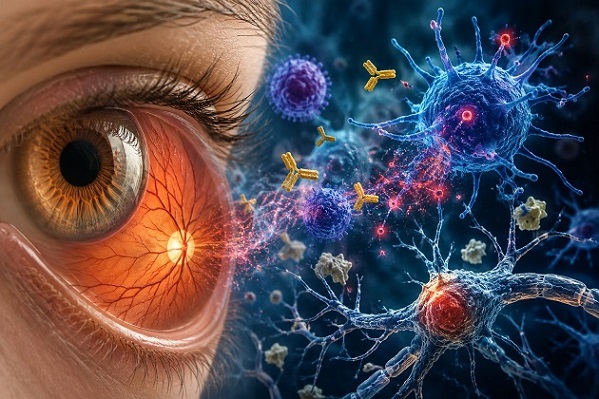 Scientists discover that hidden immune system inflammation may silently worsen glaucoma and accelerate blindness
Researchers from the Department of Ophthalmology at West China Hospital of Sichuan University in Chengdu, China, reviewed mounting evidence showing that immune dysfunction and autoimmune reactions may play a major role in glaucoma progression. Their findings are raising hopes that future treatments may go beyond simply lowering eye pressure and instead target harmful inflammation directly.
Glaucoma May Be More Than Just Eye Pressure
Glaucoma is one of the world’s leading causes of irreversible blindness. It damages retinal ganglion cells, the nerve cells responsible for sending visual information from the eye to the brain. Traditionally, doctors have focused on reducing intraocular pressure because it remains the biggest known risk factor.
However, many patients continue losing vision despite successful pressure control. Some individuals even develop glaucoma while maintaining normal eye pressure, a condition called normal-tension glaucoma. This mystery pushed scientists to investigate other possible causes.
The new review found strong evidence linking glaucoma with immune system abnormalities. Around 30 percent of patients with normal-tension glaucoma were also found to have autoimmune diseases such as rheumatoid arthritis. Higher rates of psoriasis, vitiligo, and uveitis were also seen among glaucoma patients.
Researchers caution that these links do not prove the immune system directly causes glaucoma in every case. Still, the evidence suggests that chronic immune imbalance may create conditions that make the optic nerve more vulnerable to injury.
Harmful Antibodies and Inflammation Found in Patients
The study revealed that glaucoma patients often carry unusual antibodies in their blood. These antibodies target stress-related proteins called heat shock proteins, which become elevated when retinal cells are under strain.
Scientists also discovered major changes in inflammatory signaling molecules known as cytokines. Certain immune cells that normally help control inflammation, called regulatory T cells, were found to be reduced in many glaucoma patients. At the same time, more aggressive inflammatory immune cells appeared increased.
This
Medical News report highlights how the immune system may slowly amplify nerve damage over time, creating ongoing inflammation that continues harming vision even after eye pressure is lowered.
Another alarming finding involved the complement system, a powerful immune defense mechanism normally used to destroy harmful microbes. In glaucoma patients, complement
proteins were found deposited directly inside retinal tissue and around nerve cells. Researchers believe this process may accidentally attack healthy retinal structures, accelerating nerve cell death.
Brain Immune Cells Become Overactive
The review described how specialized immune cells inside the eye and brain, called microglia, may become dangerously overactivated during glaucoma.
Under healthy conditions, microglia help clean up debris and protect neurons. But prolonged eye stress appears to transform them into inflammatory cells that release toxic chemicals including TNF-alpha and IL-1 beta. These substances directly damage retinal ganglion cells.
Scientists also found that elevated eye pressure can activate inflammatory pathways involving receptors known as TLR2 and TLR4. These receptors trigger further inflammation and may contribute to scarring inside the eye, worsening fluid drainage and increasing pressure even more.
Animal studies showed that immune-related damage sometimes continued long after eye pressure returned to normal, suggesting inflammation itself may become self-sustaining.
New Treatments Could Change Glaucoma Care
One of the most exciting aspects of the review involves emerging immunomodulatory therapies designed to calm harmful inflammation.
Several experimental drugs showed encouraging results in animal studies. Etanercept and adalimumab, both TNF-alpha blockers already used for autoimmune diseases, helped protect retinal nerve cells from degeneration. Minocycline, an antibiotic with anti-inflammatory properties, reduced harmful microglial activation and preserved optic nerve function.
Researchers also explored therapies targeting complement proteins, T-cell responses, and inflammatory receptors such as TLR4. Early-stage treatments like ANX007, an anti-C1q antibody, have already entered clinical testing.
Although most findings remain experimental, scientists believe these therapies may eventually offer personalized treatment options for patients whose glaucoma is strongly linked to immune dysfunction.
Conclusion
The growing evidence connecting glaucoma with immune dysfunction may fundamentally reshape how the disease is understood and treated in the future. Instead of viewing glaucoma purely as a pressure-related condition, researchers now believe chronic inflammation, autoimmune reactions, and overactive immune pathways may silently contribute to ongoing optic nerve destruction.
While current therapies still focus mainly on lowering eye pressure, future treatments could combine pressure reduction with targeted immune therapies to better protect vision. Much more research is needed before these treatments become routine, but the findings offer new hope for millions facing progressive blindness worldwide.
The study findings were published in the peer reviewed journal: Biomedicines.
https://www.mdpi.com/2227-9059/14/6/1209
For the latest on Glaucoma, keep on logging to Thailand
Medical News.
Read Also:
https://www.thailandmedical.news/articles/glaucoma-news




 Share
Share
 Tweet
Tweet
 Share
Share