Nikhil Prasad Fact checked by:Thailand Medical News Team Jul 06, 2026 1 month, 3 weeks, 6 days, 20 hours, 12 minutes ago
Medical News: Bladder problems affect millions of women worldwide, causing frequent urination, urgency, discomfort, and interrupted sleep. While current medications can help some patients, they often come with unwanted side effects such as dry mouth, constipation, and blurred vision. Now, researchers have found that a traditional medicinal plant, Quisqualis indica, may offer a new approach by targeting the underlying damage inside the bladder rather than simply masking symptoms.
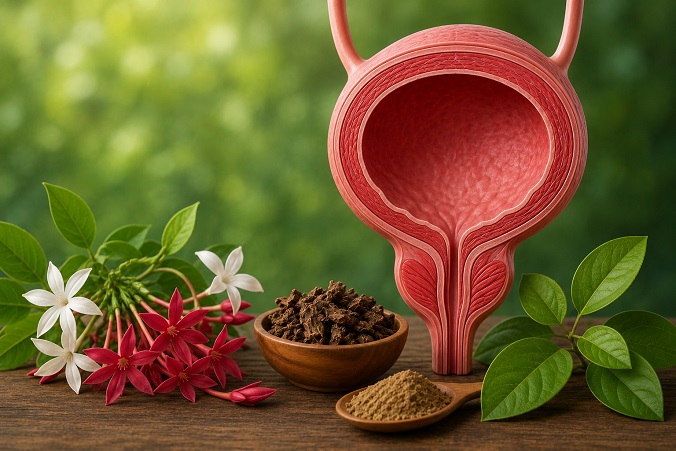 Researchers found that Quisqualis indica extract improved bladder function while reducing inflammation, scarring, and
abnormal muscle activity in a female bladder disease model
Scientists from the Department of Veterinary Physiology, College of Veterinary Medicine, Chungnam National University, Republic of Korea, the Department of Veterinary Pathology, College of Veterinary Medicine, Chungnam National University, Republic of Korea, and the Huons Dongam R&D Center, Huons Co., Ltd., Republic of Korea, investigated whether an extract from Quisqualis indica could improve bladder dysfunction in female rats.
Why Female Bladder Disorders Need Better Treatments
Many existing treatments were originally developed for bladder problems linked to enlarged prostates in men. Female bladder dysfunction is different because it can develop due to childbirth, menopause, hormonal changes, pelvic floor weakness, or long-term inflammation. As a result, many women continue to struggle despite available medications.
The researchers wanted to determine whether Quisqualis indica extract could protect the bladder itself by reducing inflammation, scarring, and abnormal muscle activity.
Testing the Herbal Extract
The team created a bladder outlet obstruction model in female rats that closely mimics chronic bladder dysfunction. The animals received the herbal extract daily for seven weeks while researchers monitored urination patterns, bladder pressure, tissue damage, inflammation, fibrosis, and muscle contractions. The extract underwent quality testing before use to ensure consistent levels of its active compounds.
Bladder Function Improved Significantly
The treated animals showed major improvements in bladder performance. Compared to untreated animals, those receiving the extract developed more normal urination patterns, lower bladder pressure during urination, and shorter intervals between bladder contractions. The highest dose produced results that closely resembled healthy animals.
The enlarged bladder size caused by obstruction was also significantly reduced, suggesting the treatment helped prevent the organ from becoming overstretched and overworked.
This
Medical News report highlights that the benefits extended well beyond symptom relief, with the herbal extract appearing to protect bladder tissues from ongoing damage.
Less Inflammation and Scarring
One of the most striking findings was the reduction
in inflammation throughout the bladder.
The researchers found lower activity of several inflammatory molecules, including TNF-alpha, IL-1 beta, IL-6, and MCP-1. These molecules are known to drive chronic inflammation and gradually damage bladder tissue.
The extract also reduced the activity of important fibrosis-related markers such as TGF-beta, collagen type I, collagen type III, TIMP-1, and MMP-9. These proteins contribute to scar tissue formation that makes the bladder less flexible and less able to store urine normally.
Microscopic examination confirmed much less collagen buildup and reduced thickening of the bladder wall, indicating that the extract slowed or reversed structural damage.
Calming Overactive Bladder Muscles
Healthy bladder function depends on carefully controlled muscle contractions. In bladder disease, muscarinic receptors become overactive, causing excessive muscle contractions that contribute to urgency and frequent urination.
The study showed that Quisqualis indica extract lowered the expression of both M2 and M3 muscarinic receptors. Laboratory testing also demonstrated that bladder muscle strips became less hyperactive when exposed to muscarinic stimulation, suggesting the herb directly helped normalize bladder muscle behavior.
The researchers additionally tested quisqualic acid, one of the extract's major active compounds, in human bladder cells. It successfully reduced inflammatory and tissue-remodeling genes triggered by inflammatory stimulation, providing further evidence that components of the plant possess genuine biological activity.
Conclusion
Although these findings come from animal research and further clinical studies in humans are still needed, the results are encouraging. Rather than acting only as a symptom-relieving medicine, Quisqualis indica extract appeared to improve multiple disease processes simultaneously by reducing inflammation, limiting scar formation, protecting bladder tissue, and restoring healthier muscle contractions. If future human studies confirm these benefits and safety, this traditional medicinal plant could become an important natural therapeutic option for women suffering from chronic bladder dysfunction, particularly those who receive limited benefit or experience side effects from current medications.
The study findings were published in the peer reviewed journal: Pharmaceuticals.
https://www.mdpi.com/1424-8247/19/7/1040
For the latest on herbs and phytochemicals, keep on logging to Thailand
Medical News.
Read Also:
https://www.thailandmedical.news/articles/herbs-and-phytochemicals




 Share
Share
 Tweet
Tweet
 Share
Share