Wastewater Monitoring Reveals High and Rising SARS-CoV-2 Levels Across Multiple American States
Nikhil Prasad Fact checked by:Thailand Medical News Team Jul 23, 2026 2 months, 1 week, 5 days, 4 hours, 23 minutes ago
Medical News: Independent Surveillance Detects Growing Viral Activity
Independent wastewater surveillance programs are detecting a concerning rise in SARS-CoV-2 levels across multiple American states, suggesting that community transmission may already be increasing ahead of any noticeable surge in reported clinical cases. Data collected in July through WastewaterSCAN, which compiles results from hundreds of monitoring sites nationwide, indicates medium to high viral concentrations across parts of the South and West. California, Florida, Texas, Hawaii, Idaho, Louisiana, Nevada, Oregon, and South Carolina are among the states reporting elevated readings, with some Bay Area locations recording increases of 100 percent or more compared to mid-June.
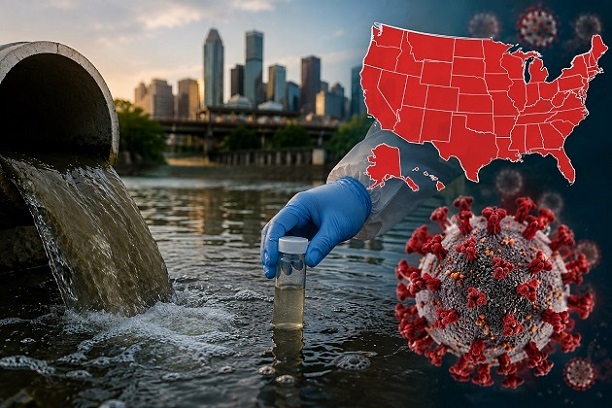 Wastewater surveillance shows SARS-CoV-2 levels climbing across several U.S. states,signaling a possible
early summer COVID-19 wave
Sewage Data Provides an Early Warning Signal
Wastewater monitoring remains one of the most reliable early-warning tools because infected individuals shed viral particles before many develop symptoms or seek testing. Unlike hospital admissions or diagnostic testing, which capture only a portion of infections, sewage surveillance reflects virus circulation across entire communities, including asymptomatic cases. Multiple sewersheds in Florida and Texas currently rank among the highest nationally, while localized spikes in California mirror seasonal patterns previously observed during summer travel, social gatherings, and increased reliance on indoor air-conditioned environments.
Diverging Messages Raise Public Health Concerns
Despite these findings, the U.S. Centers for Disease Control and Prevention continues to present a far more cautious national picture. The agency's latest wastewater activity maps classify most states as having very low viral activity, with only isolated moderate signals in places such as Texas. National respiratory illness indicators also remain relatively subdued. Critics argue that standardized national metrics may overlook rapidly emerging regional hotspots and that uncertainty surrounding surveillance funding beyond fall 2026 could further weaken early detection efforts. This
Medical News report highlights the widening gap between independent surveillance systems and federal assessments.
Calls for Greater Vigilance
Public health experts emphasize that independent monitoring networks and academic partners provide far greater geographic detail, enabling earlier recognition of localized outbreaks. They continue urging sustained investment in wastewater surveillance, improved public communication, better ventilation practices, expanded testing, and timely uptake of updated vaccines, particularly among older adults and individuals with weakened immune systems.
With immunity continuing to wane and new SARS-CoV-2 variants still emerging, these wastewater findings reinforce the importance of maintaining robust surveillance and responding promptly to localized increases rather than relying solely on broad national averages. Early recognition of rising
viral activity can provide valuable time for communities and healthcare systems to prepare before widespread transmission accelerates.
Reference:
https://data.wastewaterscan.org/?charts=CjIQACABSABaBk4gR2VuZXIKMjAyNi0wNi0xMXIKMjAyNi0wNy0yM4oBBjE5YzQxY8ABAQ%3D%3D&selectedChartId=19c41c
For the latest COVID-19 news, keep on logging to Thailand
Medical News.
Read Also:
https://www.thailandmedical.news/articles/coronavirus
https://www.thailandmedical.news/articles/u-s--medical-news




 Share
Share
 Tweet
Tweet
 Share
Share

































