Nikhil Prasad Fact checked by:Thailand Medical News Team Oct 27, 2026 1 hour, 5 minutes ago
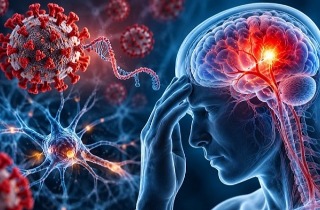
Long COVID may trigger persistent alterations in the central nervous system, affecting memory, concentration, neural communication, and the body's ability to regulate fatigue. A comprehensive scientific review has uncovered evidence that neurological abnormalities can remain detectable months or even years after the initial coronavirus infection, potentially explaining why millions of patients struggle with debilitating symptoms long after recovering from COVID-19.
 A comprehensive review of 42 studies reveals that long COVID is associated with persistent central nervous
system abnormalities affecting memory, neural communication, cognitive performance, and fatigue, with some
alterations lasting up to two years
Researchers from Universidade Nove de Julho (UNINOVE), São Paulo, Brazil, examined 42 scientific studies investigating structural, functional, and neurophysiological changes associated with long COVID.
The findings suggest that persistent neurological symptoms may reflect measurable disturbances involving multiple interconnected regions of the central nervous system.
Major Review Identifies Widespread Neurological Abnormalities
The researchers systematically reviewed scientific literature published through April 2026, initially identifying 597 records before selecting 42 eligible studies.
These investigations included 39 adult cohorts and three pediatric cohorts, with approximately 88% incorporating healthy control groups.
Researchers examined evidence from magnetic resonance imaging (MRI), electroencephalography (EEG), transcranial magnetic stimulation, brain metabolism assessments, cerebral blood flow measurements, and neurological biomarkers.
The findings revealed recurring abnormalities involving cortical excitability, neural oscillations, functional connectivity, and structural integrity.
Importantly, this
Thailand Medical News report highlights that these neurological changes were frequently associated with persistent fatigue, cognitive dysfunction, and brain fog.
Structural Changes Affect Memory and Cognitive Processing
One particularly concerning discovery involved reduced cortical thickness in regions associated with memory, emotional regulation, and sensory processing.
Several studies documented reduced hippocampal volume, potentially affecting memory formation and learning.
Other investigations identified abnormalities involving the olfactory bulb, which processes smell-related information and may contribute to prolonged olfactory disturbances.
Researchers also reported changes in white matter, the communication pathways connecting different neurological regions.
Abnormalities were detected in the corpus callosum, corona radiata, and other important nerve fiber networks.
These structural disturbances could interfere with information transmission and contribute to slower cognitive processing.
However,
some investigations involving individuals recovering from mild or moderate COVID-19 found no detectable structural abnormalities.
Brain Fog Associated with Disrupted Neural Networks
Functional imaging investigations revealed altered communication between networks responsible for attention, working memory, and executive functioning.
Some patients experiencing brain fog demonstrated increased connectivity within the default mode network but reduced connectivity in the dorsal attention network.
The default mode network supports internally focused mental activity, while the dorsal attention network helps maintain concentration on external tasks.
Disruptions involving these networks may explain difficulties concentrating, multitasking, remembering information, and completing mentally demanding activities.
Interestingly, some individuals maintained normal cognitive performance despite increased activation in frontal regions.
Researchers suggested that additional neural recruitment might represent a compensatory mechanism, allowing patients to maintain performance despite underlying neurological dysfunction.
Persistent Fatigue Linked to Abnormal Electrical Activity
Persistent fatigue was strongly associated with disturbances in neural signaling and functional connectivity.
Several investigations identified altered communication involving the thalamus, motor regions, basal ganglia, and brainstem.
Electrophysiological assessments also revealed abnormalities in cortical excitability and electrical oscillations across multiple frequency bands.
These disturbances could affect how efficiently the central nervous system processes information and coordinates movement.
Additional investigations identified possible imbalances involving glutamate and gamma-aminobutyric acid (GABA), neurotransmitters responsible for regulating excitatory and inhibitory signaling.
Such abnormalities may contribute to persistent exhaustion and difficulties sustaining physical or cognitive activity.
Inflammation and Neurological Injury May Play Important Roles
Biomarker investigations provided additional evidence of possible neurological injury and persistent immune activation.
Researchers identified elevated concentrations of neurofilament light chain, glial fibrillary acidic protein, and inflammatory markers in certain patient groups.
These substances may indicate nerve fiber injury, changes involving supporting neural cells, and ongoing inflammatory activity.
Some biomarkers remained elevated three months after infection, although concentrations declined over time.
Nevertheless, the findings do not establish whether these abnormalities directly cause long COVID symptoms.
Neurological Alterations May Persist for Two Years
Longitudinal investigations documented structural and functional abnormalities extending up to two years after infection.
Some patients demonstrated partial improvements in cerebral blood flow, neural connectivity, and regional brain structure.
Others continued exhibiting white matter abnormalities and reduced tissue volume despite improvements in clinical symptoms.
These contrasting findings suggest that neurological recovery varies considerably between individuals.
Conclusions and Implications for Long COVID Patients
The review provides important evidence that long COVID can involve persistent, multifactorial central nervous system dysfunction rather than a single neurological abnormality. However, substantial differences between studies and their observational designs prevent definitive conclusions about causation.
Researchers emphasize the need for standardized long-term investigations to identify neurological recovery patterns and develop more effective, individualized rehabilitation strategies for affected patients.
The study findings were published in the peer reviewed journal: Revista da Sociedade Brasileira de Medicina Tropical (Journal of the Brazilian Society of Tropical Medicine).
https://www.scielo.br/j/rsbmt/a/DdfLPCSq6sQtNY8BXvyVrhF/?format=pdf&lang=en&ilang=en
https://pubmed.ncbi.nlm.nih.gov/42912090/
Read Also:
https://www.thailandmedical.news/articles/long-covid




 Share
 Tweet
 Share