Nikhil Prasad Fact checked by:Thailand Medical News Team Jun 24, 2026 3 months, 1 week, 2 days, 13 hours, 26 minutes ago
Medical News: Liver cancer remains one of the deadliest forms of cancer worldwide, with many patients facing limited treatment options and poor long-term survival. Now, scientists in China have identified a promising natural compound from a traditional medicinal mushroom that may help slow the growth and spread of liver cancer by targeting a key cancer-driving protein.
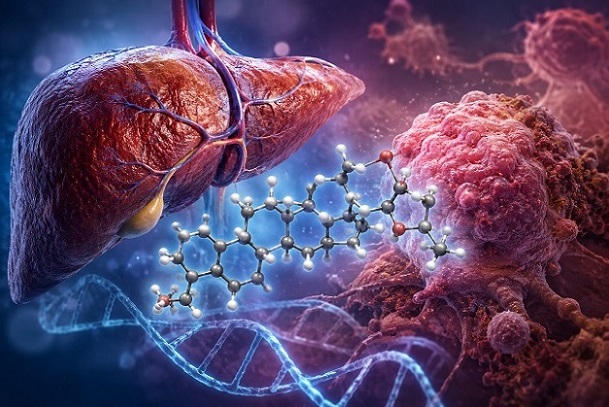 Scientists discover that polyporusterone E from the medicinal mushroom Polyporus umbellatus can suppress
the cancer-promoting CHEK1 protein in liver cancer cells
Researchers from the Department of Pharmaceutical Analysis and Analytical Chemistry, College of Pharmacy, Harbin Medical University, Harbin, China, and the Department of Medicinal Chemistry and Natural Medicine Chemistry, College of Pharmacy, Harbin Medical University, Harbin, China, investigated compounds found in the medicinal fungus Polyporus umbellatus and discovered that one ingredient, known as polyporusterone E, may play a significant role in suppressing liver cancer.
Searching for the Most Active Anti-Cancer Ingredient
The research team used a combination of advanced computational analysis, bioinformatics, molecular simulations, and laboratory experiments to determine which compounds within Polyporus umbellatus might be responsible for its long-observed anti-tumor properties.
After screening the mushroom's chemical constituents, the scientists identified 11 potentially active compounds. Further analysis revealed 63 important biological targets linked to liver cancer. Among these, a protein called CHEK1 emerged as a particularly important target.
CHEK1 acts as a cellular checkpoint regulator that helps damaged cells survive and continue dividing. In many cancers, including hepatocellular carcinoma—the most common type of liver cancer—CHEK1 is often overproduced. Patients with higher levels of CHEK1 were found to have significantly poorer survival outcomes.
Why CHEK1 Matters
The study showed that CHEK1 is not just associated with liver cancer but appears to actively drive disease progression.
Laboratory experiments using HepG2 and HuH-7 liver cancer cells revealed that increasing CHEK1 levels caused cancer cells to grow faster, migrate more aggressively, and invade surrounding tissues more easily. When researchers reduced CHEK1 levels, these dangerous behaviors were significantly diminished.
The findings suggest that CHEK1 functions as a powerful cancer-promoting factor that helps liver tumors expand and spread.
Polyporusterone E Shows Strong Binding to CHEK1
One of the most exciting discoveries came from molecular simulations examining how polyporusterone E interacts with cancer-related proteins.
Among several possible targets, CHEK1 demonstrated the strongest and most stable interaction with polyporusterone E. Simulations lasting 100 nanoseconds showed that the compound formed a highly stable molecular complex with CHEK1 through persistent hydrogen-bond interactions and favorable binding energy.
Additional laboratory testing u
sing surface plasmon resonance technology confirmed that polyporusterone E physically binds to CHEK1, providing real-world evidence supporting the computer predictions.
Blocking Cancer Cell Growth
To determine whether these interactions translated into biological effects, the researchers exposed liver cancer cells to both Polyporus umbellatus extract and purified polyporusterone E.
The results were striking. Both treatments significantly reduced cancer cell viability, with purified polyporusterone E proving approximately four times more potent than the crude mushroom extract.
Importantly, treatment caused dramatic reductions in CHEK1 activity at both the gene and protein levels. The compound effectively suppressed the production of CHEK1 inside cancer cells, which corresponded with reduced cell growth and survival.
This
Medical News report highlights how natural compounds from traditional medicinal sources are increasingly being validated through modern molecular science, opening new avenues for future cancer therapies.
Multiple Cancer Pathways Also Affected
The researchers found that the mushroom compounds may influence several major cancer-related signaling networks, including the PI3K-Akt and MAPK pathways. These pathways are known to regulate cell survival, growth, metastasis, and resistance to treatment.
By potentially affecting several pathways simultaneously, polyporusterone E may offer advantages over therapies that target only a single mechanism.
Conclusions
The study provides compelling evidence that polyporusterone E, a natural compound derived from Polyporus umbellatus, may help suppress liver cancer by targeting the cancer-promoting protein CHEK1. The findings indicate that reducing CHEK1 levels can slow cancer cell growth, migration, and invasion while weakening important survival pathways used by tumors. Although further animal studies and human clinical trials are still needed, the research establishes a strong scientific foundation for developing polyporusterone E as a future complementary therapeutic approach for hepatocellular carcinoma.
The study findings were published in the peer reviewed International Journal of Molecular Sciences.
https://www.mdpi.com/1422-0067/27/13/5694
For the latest on herbs and phytochemicals, keep on logging to Thailand
Medical News.
Read Also:
https://www.thailandmedical.news/articles/cancer
https://www.thailandmedical.news/articles/herbs-and-phytochemicals




 Share
Share
 Tweet
Tweet
 Share
Share

































