American Study Finds That Exercise May Play a Crucial Role in Long COVID Recovery
Nikhil Prasad Fact checked by:Thailand Medical News Team Jan 28, 2026 7 months, 5 days, 12 hours, 28 minutes ago
Medical News: Exercise Training Uncovers Molecular Clues in Long COVID Recovery
Long COVID continues to affect millions worldwide, leaving many people with lingering fatigue, brain fog, breathing difficulties, and exercise intolerance long after the initial infection has passed. Scientists have been searching for biological clues that might explain why these symptoms persist and how recovery can be supported. A new study now offers fresh insight into how structured exercise may quietly help the body reset itself at a molecular level.
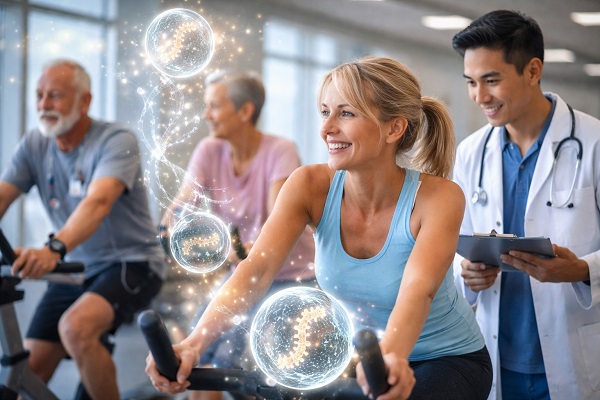 New research shows exercise helps calm inflammation signals in long COVID patients while boosting fitness and recovery
Why Researchers Looked at Tiny Blood Particles
New research shows exercise helps calm inflammation signals in long COVID patients while boosting fitness and recovery
Why Researchers Looked at Tiny Blood Particles
The study was conducted by researchers from The Lundquist Institute for Biomedical Innovation at Harbor-UCLA Medical Center in California, the Cancer and Cell Biology Division of the Translational Genomics Research Institute in Phoenix, and the Translational Genomics Research Institute itself. The team focused on extracellular vesicles, which are microscopic particles released by cells into the bloodstream. These particles act like messengers, carrying genetic instructions that reflect what is happening inside the body.
Scientists suspected that if long COVID symptoms were driven by lingering virus fragments or abnormal immune activity, these vesicles might reveal important signals.
The Exercise Program and Who Took Part
Fourteen adults suffering from long COVID took part in a carefully supervised ten-week aerobic exercise program. Participants exercised twice a week using stationary bikes and treadmills, with intensity adjusted to avoid worsening symptoms. Blood samples were collected before and after the program, both at rest and during peak exercise.
This
Medical News report highlights that advanced genetic sequencing was used to analyze the RNA carried inside the extracellular vesicles, allowing researchers to see how the body responded at a molecular level.
No Evidence of Lingering Virus in Blood Signals
One important finding was that no SARS-CoV-2 viral RNA was detected in the extracellular vesicles at any time point. This suggests that, at least in the bloodstream, persistent virus fragments are unlikely to be driving ongoing symptoms in these patients.
Exercise Triggers Beneficial Molecular Changes
While exercise training did not significantly change these vesicle signals at rest, it dramatically altered how the body responded during physical exertion. After completing the program, participants showed changes in 53 key genes during peak exercise. Most of these genes were turned down rather than up, especially those linked to inflammation, immune activation, and energy stress.
Several of the suppressed genes are known to play roles in immune overreaction, blood vessel inflammation, and even neurological stress, which may help explain improvements in fatigue, brain fog, and ex
ercise tolerance seen in long COVID rehabilitation programs.
Improved Fitness with Reduced Inflammatory Stress
Participants also experienced measurable physical benefits. Oxygen uptake improved by over seven percent, and peak exercise capacity increased by sixteen percent. These gains occurred without signs of excessive immune activation, suggesting that exercise helped restore balance rather than trigger harmful stress responses.
Why These Findings Matter
The researchers believe that exercise training improves the body’s adaptability. Instead of changing how the body behaves at rest, it trains the system to respond more efficiently under stress, reducing unnecessary inflammation and immune strain.
Conclusion
This study provides reassuring evidence that structured aerobic exercise does not worsen long COVID at a molecular level and may instead promote healthier immune and metabolic responses during physical activity. By dampening inflammatory signals and improving physiological resilience, exercise training may play a crucial role in long COVID recovery. These findings also open the door to future blood-based biomarkers that could track recovery progress and guide personalized rehabilitation strategies.
The study findings were published in the peer reviewed journal: Scientific Reports.
https://link.springer.com/article/10.1038/s41598-025-23760-y
For the latest news, keep on logging to Thailand
Medical News.
Read Also:
https://www.thailandmedical.news/articles/coronavirus
https://www.thailandmedical.news/articles/long-covid




 Share
Share
 Tweet
Tweet
 Share
Share