Nikhil Prasad Fact checked by:Thailand Medical News Team Jan 21, 2026 8 months, 2 weeks, 1 hour, 28 minutes ago
Medical News: Acute respiratory infections such as influenza A and COVID-19 are often viewed as short-term illnesses that mainly affect the lungs. However, new scientific evidence shows that their impact may extend far beyond fever and cough, quietly influencing mental health long after the infection appears to have resolved. This
Medical News report highlights a major scientific review that explored how influenza A virus and SARS-CoV-2 infections are closely linked to anxiety and depression in many patients.
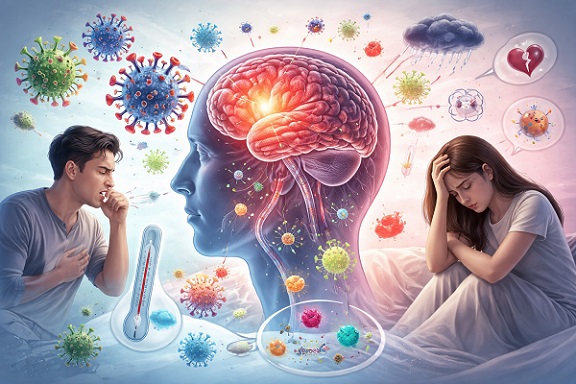 New research reveals how flu and COVID infections may silently affect the brain and increase risks of anxiety and depression long after recovery
Researchers And Institutions Behind the Study
New research reveals how flu and COVID infections may silently affect the brain and increase risks of anxiety and depression long after recovery
Researchers And Institutions Behind the Study
The research was conducted by scientists from several leading Chinese medical institutions. These include the State Key Laboratory of Respiratory Disease and the National Clinical Research Center for Respiratory Disease at the First Affiliated Hospital of Guangzhou Medical University, the Institute of Integration of Traditional and Western Medicine at the same hospital, the Department of Traditional Chinese Medicine at Hengqin Hospital, and the Guangdong Provincial Hospital of Chinese Medicine in Guangzhou, China.
How Common Viruses Affect the Brain
According to the researchers, influenza A and SARS-CoV-2 do more than attack the respiratory system. Both viruses can trigger inflammation that reaches the brain, either directly or indirectly. This inflammation may disturb normal brain signaling, especially in areas that control mood, sleep, energy, and motivation. Over time, this disruption can lead to symptoms such as persistent sadness, anxiety, fatigue, poor concentration, and loss of interest in daily activities.
Stress And Infection Create a Dangerous Cycle
The study explains that mood problems linked to these infections arise through two main pathways. The first is intense psychological stress. Isolation, fear of illness, financial worries, and social disruption during outbreaks can strongly affect mental well-being. Even people who are not severely ill may experience anxiety and low mood simply due to the stress surrounding infection.
The second pathway is biological. Viral infections can overstimulate the immune system, leading to prolonged inflammation. This immune response may damage protective barriers around the brain, activate brain immune cells, and interfere with chemicals such as serotonin that regulate mood. Importantly, people with existing anxiety or depression may be more vulnerable to infection and may also experience more severe illness, creating a harmful two-way relationship.
Long Lasting Effects After Recovery
The researchers also warn that mood symptoms often appear weeks or months after the virus has cleared. Many patients recovering from COVID-19 or influenza report ongoing fatigue, sleep problems, brain fog, and emotional changes. These symptoms are not simply psychological reactions but are linked to measurable changes in brain activity and immune signaling. D
isruptions in gut bacteria caused by infection may further worsen inflammation and mood by affecting the gut-brain connection.
Why These Findings Matter
This review makes it clear that mood disorders linked to viral infections are not rare or imaginary. They represent a real and growing public health issue. Recognizing whether symptoms are driven by stress, biological damage, or both is essential for proper treatment and long-term care.
Conclusion
The study highlights that influenza A and SARS-CoV-2 infections can leave a lasting mental health footprint that persists long after physical recovery. By clearly separating stress-related symptoms from infection-driven brain changes, the findings stress the need for better screening, early mental health support, and targeted treatments to prevent long-term emotional suffering following common viral illnesses.
The study findings were published in the peer reviewed journal: Brain Behavior and Immunity Health.
https://www.sciencedirect.com/science/article/pii/S2666354626000153
For the latest on mood disorders, keep on logging to Thailand
Medical News.
Read Also:
https://www.thailandmedical.news/articles/mental-health
https://www.thailandmedical.news/articles/influenza-or-flu
https://www.thailandmedical.news/articles/coronavirus




 Share
Share
 Tweet
Tweet
 Share
Share

































