Nikhil Prasad Fact checked by:Thailand Medical News Team Apr 12, 2026 5 months, 3 weeks, 1 day, 5 hours, 12 minutes ago
Medical News: A groundbreaking new study has uncovered how the Epstein-Barr virus (EBV) remains hidden inside the human body for years - and what precisely causes it to suddenly reactivate. The findings provide a deeper understanding of viral behavior at the molecular level and may open new pathways for preventing EBV-associated cancers and chronic illnesses.
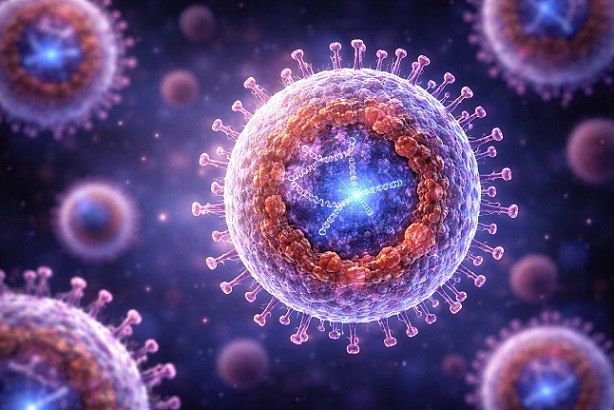 Scientists uncover molecular locks and triggers controlling EBV reactivation inside human cells
A Virus That Quietly Persists in Most Humans
Scientists uncover molecular locks and triggers controlling EBV reactivation inside human cells
A Virus That Quietly Persists in Most Humans
EBV is one of the most common viruses worldwide, infecting over 90 percent of the global population. After initial infection, the virus establishes a lifelong presence inside B cells, a type of immune cell. In this latent state, the virus produces very few proteins, allowing it to evade immune detection.
However, EBV is not harmless. It has been strongly linked to several cancers, including Hodgkin lymphoma, Burkitt lymphoma, nasopharyngeal carcinoma, and certain gastric cancers. The danger lies in its ability to switch from a dormant phase to an active “lytic” phase, where it begins replicating and spreading.
The Master Switch That Controls Viral Awakening
At the center of this transition is a viral gene known as BZLF1. This gene acts as the master trigger for reactivation. When BZLF1 is turned on, it initiates a cascade of viral gene activity that leads to full viral replication.
To understand how this critical gene is controlled, researchers used a specialized technique called locus-specific proteomics. This allowed them to identify proteins directly attached to the BZLF1 promoter - the region of DNA that regulates its activity.
The analysis revealed more than 30 proteins associated with this region. Among them, two major regulatory systems stood out: the nucleosome remodeling protein CHD4 and the Polycomb PRC1 complex. These molecules act as powerful suppressors, effectively locking the BZLF1 gene in an “off” state.
Molecular Locks That Maintain Viral Silence
CHD4 is part of a larger protein complex that modifies how DNA is packaged inside the cell. By tightening the structure of chromatin, it prevents genes from being accessed and activated. Meanwhile, the PRC1 complex modifies histones - proteins around which DNA is wrapped - by adding a chemical tag known as H2AK119Ub. This tag signals that the gene should remain inactive.
Experiments showed that removing CHD4 or components of PRC1 caused a significant increase in BZLF1 activity. In some cases, the virus began reactivating spontaneously, even without external stimulation. This demonstrates that these proteins are essential for maintaining EBV latency and preventing uncontrolled viral activation.
A Global Reset of Cellular Gene Control
One of the most surprising discoveries was what happens during viral reactivation. The researchers observed a rapid and widespread loss of the H2AK119Ub marker - not only from viral DNA but also from human genes across the cell.
This finding
suggests that EBV does not simply activate its own genes. Instead, it reshapes the entire cellular environment to favor viral replication. The loss of this repressive marker effectively removes barriers that normally keep gene activity tightly controlled.
This
Medical News report highlights that such a global epigenetic reset could have broader implications, potentially affecting normal cellular functions and contributing to disease development.
USP17 Identified as A Key Driver of Reactivation
Further investigation revealed that a cellular enzyme called USP17 plays a crucial role in this process. USP17 belongs to a family of de-ubiquitinating enzymes that remove chemical tags from proteins.
During EBV reactivation, levels of USP17 increased dramatically - up to 300-fold at the RNA level. This enzyme appears to remove the H2AK119Ub marker, effectively unlocking previously silenced genes.
Importantly, this increase was only observed when the virus entered its active phase. Stimulating the immune cells alone did not trigger USP17, indicating that the virus itself drives this change. The data also suggest that early viral proteins are responsible for activating USP17, reinforcing the idea that EBV actively manipulates host cell machinery.
Advanced Techniques Reveal Hidden Interactions
To achieve these insights, researchers employed a combination of cutting-edge methods. These included chromatin isolation techniques, mass spectrometry, CRISPR gene editing, and proteomic analysis. For example, CRISPR was used to selectively remove specific proteins like CHD4, confirming their direct role in suppressing viral activation.
Additionally, specialized cell-sorting systems allowed scientists to isolate cells actively undergoing viral reactivation. This enabled precise measurement of changes in histone markers and protein expression during different stages of the viral life cycle.
Institutions Behind the Research
The study was conducted by an international team of scientists from the University of Cambridge, the Wellcome Sanger Institute, the University of Toronto, Université de Paris, and other leading research centers focused on virology, genomics, and epigenetics.
Conclusion
This study provides a detailed and compelling picture of how Epstein-Barr virus carefully balances between dormancy and activation. The identification of CHD4 and PRC1 as essential repressors highlights the importance of epigenetic control in maintaining viral latency. At the same time, the discovery of USP17 as a key driver of reactivation reveals how the virus can rapidly override these controls when conditions favor its replication. These findings not only deepen scientific understanding of EBV biology but also point toward promising therapeutic strategies aimed at preventing viral reactivation. By targeting these newly identified mechanisms, future treatments could potentially reduce the risk of EBV-associated cancers and improve outcomes for affected individuals worldwide.
The study findings were published in the peer reviewed Journal of Virology
https://journals.asm.org/doi/10.1128/jvi.01408-25
For the latest research on EBV, keep on logging to Thailand
Medical News.
Read Also:
https://www.thailandmedical.news/news/epicatechin-identified-as-potential-inhibitor-of-epstein-barr-virus-s-cancer-causing-protein-called-lmp1
https://www.thailandmedical.news/news/post-covid-era-reveals-hidden-dangers-of-ebv-virus
https://www.thailandmedical.news/news/covid-19-including-mild-infections,-raises-the-risk-of-infectious-mononucleosis
https://www.thailandmedical.news/news/epstein-barr-virus-(a-type-of-herpes-virus)-linked-to-schizophrenia.
https://www.thailandmedical.news/news/medical-researchers-in-thailand-discover-that-ebv-induced-linc00944-plays-a-key-role-in-oral-cancer-progression
https://www.thailandmedical.news/news/hidden-genetic-flaw-behind-long-covid-lung-damage-exposed-by-dormant-epstein-barr-virus-reactivation




 Share
Share
 Tweet
Tweet
 Share
Share

































