Russian scientists uncover why SARS-CoV-2 does not form cytoplasmic condensates readily unlike other coronaviruses
Niikhil Prasad Fact checked by:Thailand Medical News Team Nov 23, 2024 1 year, 10 months, 1 week, 4 days, 5 hours, 43 minutes ago
Medical News: Recent research led by scientists from the Koltzov Institute of Developmental Biology, Belozersky Institute of Physico-Chemical Biology, and Lomonosov Moscow State University has shed light on a fascinating aspect of how SARS-CoV-2, the virus responsible for COVID-19, interacts with human cells. Their study delves into the nucleocapsid (N) proteins of various human coronaviruses and their ability to form cytoplasmic condensates - structures within cells that can influence disease progression.
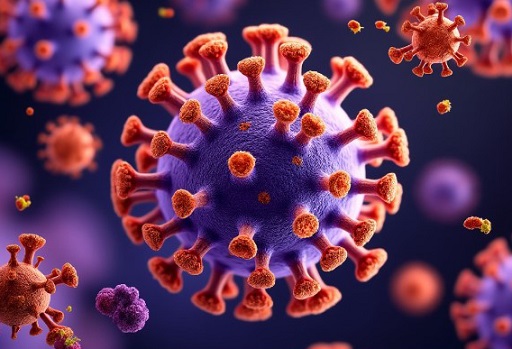 Russian scientists uncover why SARS-CoV-2 does not form cytoplasmic condensates readily
unlike other coronaviruses
Image: AI-Generated
While many human coronaviruses cause mild respiratory illnesses, others like SARS-CoV-2 and SARS-CoV have shown lethal potential. This
Medical News report reveals how specific viral proteins may contribute to these differences and explores the unique behavior of SARS-CoV-2's N proteins in host cells.
What Are Cytoplasmic Condensates?
Cytoplasmic condensates are dynamic, membraneless structures formed within cells through a process called liquid-liquid phase separation (LLPS). These condensates play critical roles in organizing cellular activities and responding to stress. However, viruses can exploit these structures, potentially interfering with the cell’s natural defense mechanisms.
In this study, researchers investigated the formation of cytoplasmic condensates by expressing N proteins from seven human coronaviruses, including SARS-CoV-2. They found that while most N proteins readily induced condensates, those from SARS-CoV and SARS-CoV-2 exhibited a surprisingly low propensity for such formation.
Findings from the Study
-A Unique Behavior in SARS-CoV and SARS-CoV-2
Unlike other coronaviruses, the N proteins of SARS-CoV and SARS-CoV-2 resisted forming cytoplasmic condensates in laboratory conditions. This resistance wasn't due to protein overexpression - often a factor in inducing LLPS - but rather an intrinsic property of the proteins themselves. Interestingly, these N proteins were integrated into existing cellular structures known as stress granules (SGs).
-Linking Stress Granules to Viral Pathogenicity
Stress granules are part of the cell's innate immune response, helping to mitigate damage during stress. However, the SARS-CoV-2 N protein seems to remodel these granules, preventing their normal function and possibly aiding the virus's ability to evade immune detection. The researchers observed that this interaction could suppress protein synthesis in host cells, a mechanism previously linked to severe disease outcomes.
-Comparing N Protein Behavior Across Coronaviruses
The study revealed a spectrum of N protein behavior:
High Condensate Formation: N proteins from less pathogenic coronaviruses like HCo
V-229E and HCoV-NL63.
Moderate Formation: HCoV-OC43.
Minimal Formation: SARS-CoV and SARS-CoV-2.
This distinction suggests that the inability of SARS-CoV-2 N proteins to induce typical stress responses could be a key factor in its pathogenicity.
Transient Nature of Condensates
Another intriguing discovery was the transient nature of these condensates. In most cases, they dissolved within 48 hours, either due to cellular recovery or cell death through apoptosis. Cells expressing the N proteins of SARS-CoV and SARS-CoV-2, however, showed a higher tendency to undergo apoptosis, further highlighting their unique behavior.
The study also demonstrated that increasing the concentration of N proteins did not enhance condensate formation. This finding debunked earlier theories that overexpression might drive LLPS, reinforcing the hypothesis that SARS-CoV-2 actively suppresses these processes.
Implications for Understanding COVID-19
The researchers propose that the differences in condensate formation between SARS-CoV-2 and other coronaviruses could explain its severe clinical manifestations. By interfering with stress granule assembly and innate immune responses, the virus might gain a survival advantage, leading to more severe disease outcomes.
Moreover, the study's findings point to the potential of targeting these mechanisms for therapeutic intervention. Drugs that restore normal stress granule function or prevent the remodeling caused by SARS-CoV-2 could offer a novel approach to combating COVID-19.
Conclusion
This groundbreaking study provides valuable insights into the molecular mechanisms underlying the pathogenicity of SARS-CoV-2. By exploring how its nucleocapsid protein interacts with cellular structures, scientists are unraveling the complex interplay between the virus and its host. The findings suggest that SARS-CoV-2's ability to evade immune defenses by suppressing stress granule formation is a crucial factor in its success as a pathogen.
Further research is needed to confirm these findings in more complex models and to explore their therapeutic implications. However, this work lays a strong foundation for understanding how SARS-CoV-2 manipulates cellular processes to its advantage.
The study findings were published on a preprint server and are currently being peer reviewed.
https://www.biorxiv.org/content/10.1101/2024.11.20.624003v1
For the latest COVID-19 News, keep on logging to Thailand
Medical News.
Read Also:
https://www.thailandmedical.news/news/coronavirus-s-protein-alters-dsrna-accumulation-and-stress-granule-formation-by-regulating-adari1
https://www.thailandmedical.news/news/covid-19-news-sars-cov-2-nsp3-hijacks-fragile-x-mental-retardation-proteins-for-efficient-infection-while-modulating-stress-granule-function
https://www.thailandmedical.news/news/covid-19-news-scientists-discover-yet-an-additional-mechanism-by-which-sars-cov-2-disarms-host-immune-responses,-nsp-inhibits-stress-granule-formation
https://www.thailandmedical.news/news/study-uncovers-that-sars-cov-2-n-proteins-are-able-to-enter-stress-granules-and-cause-amyloid-aggregation,-leading-to-various-neurodegenerative-issues




 Share
Share
 Tweet
Tweet
 Share
Share