Nikhil Prasad Fact checked by:Thailand Medical News Team May 22, 2026 3 months, 1 week, 4 days, 14 hours, 37 minutes ago
Medical News: A major new study from Japan is raising fresh concerns about the long-term effects of COVID-19 on the heart. Researchers have found that people who recovered from COVID-19 were significantly more likely to later develop dangerous heart rhythm problems serious enough to require pacemakers, defibrillators, and other cardiac procedures.
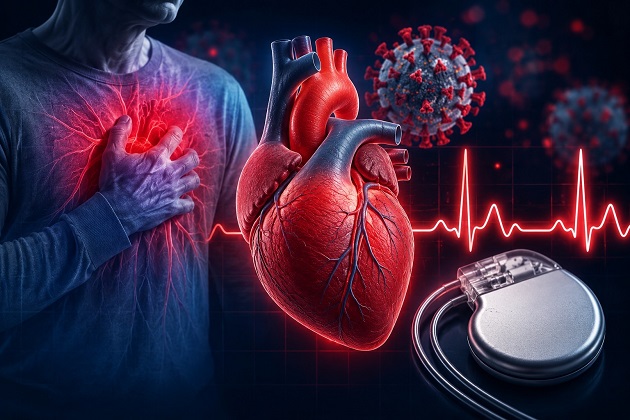 Large Japanese study finds COVID-19 survivors face significantly higher risks of dangerous long-term heart rhythm
disorders and cardiac device implantation.
The study, conducted by scientists from the Department of General Internal Medicine at Hiroshima University Hospital in Japan, analyzed medical data from more than 6 million people and discovered that the risk of major heart rhythm complications remained elevated for as long as two years after infection.
COVID-19’s Hidden Cardiac Legacy
While COVID-19 was initially viewed mainly as a respiratory disease, doctors are increasingly recognizing that the virus can quietly damage many organs, including the heart. This latest research suggests that even after the acute infection has passed, the virus may continue affecting the heart’s electrical system.
The Japanese team compared 3,077,758 people who had COVID-19 with an equal number of matched individuals who had never been infected. Over a two-year follow-up period, patients who previously had COVID-19 showed a dramatically higher need for cardiac device implantation and arrhythmia-related treatments.
The researchers found that the overall rate of pacemaker implantation, implantable cardioverter-defibrillator (ICD) placement, and cardiac resynchronization therapy (CRT) procedures was nearly twice as high among COVID-19 survivors compared to non-infected individuals.
Pacemakers and Defibrillators Needed More Often
One of the most alarming findings involved permanent pacemakers. These devices are used when the heart beats too slowly or irregularly due to electrical conduction problems.
COVID-19 survivors had an 86 percent higher risk of needing a pacemaker. The risk for ICD implantation, devices designed to stop life-threatening abnormal heart rhythms, was even more concerning, showing more than double the risk compared to healthy controls.
CRT implantation, a specialized therapy often used in advanced heart failure patients, showed the largest relative increase, with infected individuals facing more than three times the risk.
Researchers believe several biological mechanisms may explain these complications. SARS-CoV-2 may directly invade heart tissue and damage the electrical conduction system. Persistent inflammation, microscopic blood clots, immune dysfunction, and scarring of heart tissue may also contribute to long-term rhythm abnormalities.
Dangerous Arrhythmias Continued Long After Recovery
The study also found increases in other heart rhythm interventions. COVID-19 survivors were more likely to undergo catheter ablation procedures used to correct abnormal heart rhythms and were more frequently started on antiarrhythmic medications.
gt;
Particularly striking was the sharp rise in the use of Class III antiarrhythmic drugs, which are typically reserved for serious rhythm disorders. Anticoagulant medications, commonly used to reduce stroke risk in patients with atrial fibrillation, were also prescribed far more often in the COVID-19 group.
This
Medical News report highlights how the virus may continue silently affecting the cardiovascular system even after apparent recovery, especially in older adults and those with existing heart conditions.
Older Adults and Heart Patients Faced Greater Risks
The risks were highest among individuals aged 65 and older, as well as those with pre-existing cardiovascular diseases such as cardiomyopathy, conduction disorders, and atrial arrhythmias.
Interestingly, patients already taking anticoagulants or calcium channel blockers showed even stronger associations with post-COVID arrhythmia complications. Researchers believe these medications may identify individuals who already had underlying heart vulnerabilities before infection.
The investigators also noted that even patients who were not hospitalized for COVID-19 still demonstrated increased long-term cardiac risks, suggesting that mild infections may also leave lingering damage.
Why These Findings Matter
The researchers stressed that many COVID-19 survivors may require ongoing cardiovascular monitoring long after the infection resolves. Symptoms such as dizziness, fainting, palpitations, chest discomfort, unusual fatigue, or shortness of breath should not be ignored.
The findings also add to growing evidence that long COVID is not merely a temporary condition but may involve progressive and persistent injury to important organs.
Although the study relied on healthcare insurance databases and lacked detailed heart imaging or ECG data, its enormous sample size and two-year follow-up provide some of the strongest evidence so far linking COVID-19 to prolonged arrhythmia risks.
Conclusion
The study provides compelling evidence that COVID-19 may trigger long-lasting damage to the heart’s electrical system, increasing the likelihood of serious rhythm disorders for years after infection. The significantly higher rates of pacemaker implantation, defibrillator placement, antiarrhythmic medication use, and ablation procedures strongly suggest that SARS-CoV-2 may leave behind persistent cardiovascular injury even in patients who initially appeared to recover fully. The findings reinforce the urgent need for long-term cardiac monitoring, especially among older adults and individuals with underlying cardiovascular disease, as the full long-term burden of post-COVID heart complications may only now be emerging.
The study findings were published in the peer reviewed Journal of Arrhythmia.
https://onlinelibrary.wiley.com/doi/10.1002/joa3.70363
For the latest COVID-19 News, keep on logging to Thailand
Medical News.
Read Also:
https://www.thailandmedical.news/articles/coronavirus
https://www.thailandmedical.news/articles/long-covid




 Share
Share
 Tweet
Tweet
 Share
Share