COVID-19 Causes Long-Lasting Changes in The Brain That Resemble the Early Stages of Alzheimer’s Disease
Nikhil Prasad Fact checked by:Thailand Medical News Team Jul 19, 2026 1 month, 2 weeks, 18 hours, 30 minutes ago
Medical News: Researchers Find Lasting Brain Damage Even After the Virus Disappears
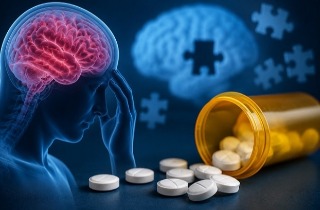
A new study has uncovered troubling evidence that SARS-CoV-2, the virus responsible for COVID-19, may leave behind long-lasting changes in the brain that resemble the early stages of Alzheimer’s disease. Although the research was conducted in mice, the findings provide fresh clues about why some people continue to experience memory problems and cognitive difficulties long after recovering from COVID-19.
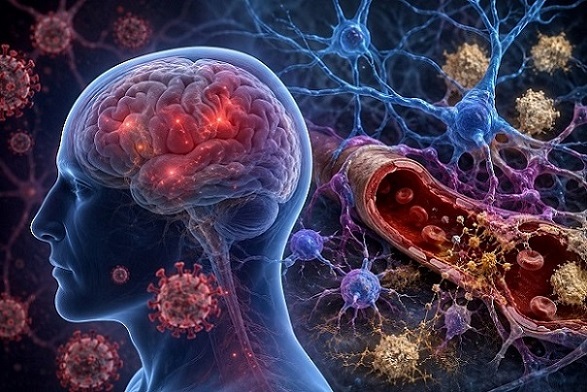 New research shows SARS-CoV-2 infection triggered lasting brain inflammation, blood-brain barrier damage,
and Alzheimer's-related changes in mice even after the virus was cleared.
The research was led by scientists from the Department of Surgery, Department of Microbiology and Immunology, and Department of Neurology at SUNY Upstate Medical University in Syracuse, New York, along with collaborators from the Department of Pathology and Laboratory Medicine at the Medical University of South Carolina, Charleston, USA.
COVID-19 Leaves a Lasting Mark on the Brain
The researchers infected specially bred mice that are susceptible to SARS-CoV-2 and examined their brains over a period of 30 days. While the virus was largely cleared from the brain by the end of the study, the damage it left behind continued to worsen.
The team found that inflammatory molecules remained unusually high long after the virus had disappeared. Two particularly important inflammatory proteins, TNF-α and IFN-γ, stayed elevated throughout the study, suggesting that the immune system remained activated even after infection had resolved. Persistent inflammation is already recognized as an important contributor to many neurodegenerative diseases.
Damage to Critical Brain Support Cells
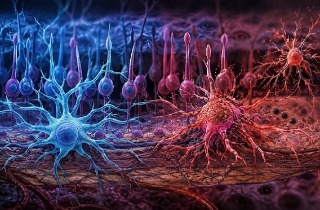
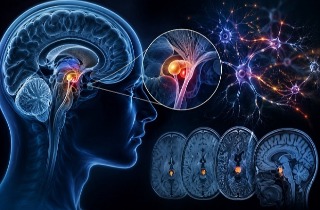
One of the most striking discoveries involved specialized cells called pericytes. These cells wrap around tiny blood vessels in the brain and help maintain the blood-brain barrier, which acts as a protective shield that prevents harmful substances from entering brain tissue.
The researchers observed a significant loss of these pericytes beginning two weeks after infection. Evidence also showed that many of these cells were dying through programmed cell death. At the same time, levels of a protein known as FLI-1, which promotes pericyte death, increased substantially.
This
Medical News report highlights an important finding because the loss of pericytes weakens the blood-brain barrier, making the brain more vulnerable to inflammation and injury.
Blood-Brain Barrier Begins to Fail
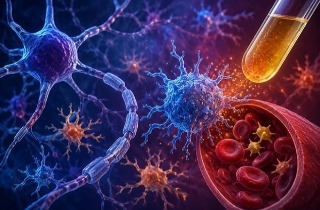
As pericytes disappeared, the researchers found clear evidence that the blood-brain barrier itself had become damaged.
Levels of claudin-5, a protein that helps seal blood vessels inside the brain, dropped significantly. The team also detected fibrin deposits within brain tissue. Fibrin is normally confined to
the bloodstream, so its presence inside the brain strongly suggests that the protective barrier had become leaky.
Such blood-brain barrier disruption has been linked in previous research to memory decline, dementia, and Alzheimer's disease.
Alzheimer’s-Related Changes Increase
Perhaps the most concerning findings involved changes commonly associated with Alzheimer's disease.
The scientists detected increased production of amyloid precursor protein (APP) along with persistent accumulation of amyloid-beta 1-42, the sticky protein fragment that forms plaques in Alzheimer's disease.
In addition, mature neurons within the hippocampus—the brain region responsible for learning and memory—were significantly reduced after infection.
This loss of nerve cells was accompanied by increased activity of several Alzheimer's-related genes, including APP, BACE1, and PSEN1, all of which play important roles in amyloid production.
The researchers also identified activation of multiple molecular pathways linked to neurodegeneration, suggesting that COVID-19 may trigger several biological processes associated with dementia rather than a single isolated mechanism.
Why These Findings Matter
Although this investigation was performed in mice rather than humans, the findings closely match growing clinical observations showing that some COVID-19 survivors develop persistent brain fog, memory impairment, and an increased risk of cognitive decline.
The study suggests that SARS-CoV-2 infection may set off a chain reaction involving chronic inflammation, loss of protective brain cells, weakening of the blood-brain barrier, buildup of amyloid proteins, and activation of Alzheimer's-related genes. Even after the virus itself is eliminated, these harmful biological processes may continue, potentially increasing the risk of future neurological disease.
Conclusion
The findings add compelling experimental evidence that COVID-19 may have lasting effects on brain health that extend well beyond the initial infection. While further studies in humans are essential before firm conclusions can be drawn, the research identifies several biological mechanisms that could help explain persistent neurological symptoms and the possible increased risk of Alzheimer's disease following COVID-19. These discoveries may also open new opportunities for therapies aimed at reducing inflammation, protecting the blood-brain barrier, and preserving brain function after infection.
The study findings were published in the peer reviewed journal: Viruses.
https://www.mdpi.com/1999-4915/18/7/783
For the latest COVID-19 news, keep on logging to Thailand
Medical News.
Read Also:
https://www.thailandmedical.news/articles/coronavirus
https://www.thailandmedical.news/articles/long-covid
https://www.thailandmedical.news/articles/alzheimer,-dementia-




 Share
Share
 Tweet
Tweet
 Share
Share