Nikhil Prasad Fact checked by:Thailand Medical News Team Jun 04, 2026 3 months, 4 weeks, 1 day, 21 hours, 52 minutes ago
Medical News: Researchers Discover BPC-157-Based Peptides Can Block a Key Alzheimer’s Enzyme
A new scientific study has revealed an unexpected property of the widely discussed peptide BPC-157. Researchers have discovered that BPC-157 and two newly engineered versions of the peptide can inhibit acetylcholinesterase, an enzyme that plays a critical role in Alzheimer’s disease and other neurodegenerative conditions. While the compounds are still far from becoming treatments, the findings open an intriguing new avenue for peptide-based therapies targeting brain disorders.
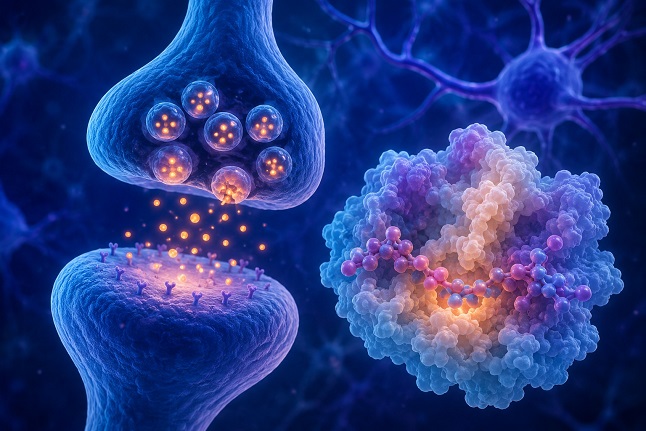 Scientists discover that BPC-157-derived peptides can block a key Alzheimer’s-related enzyme, with the hybrid molecule
CIARA-1 showing the strongest activity
The study was conducted by scientists from the Department of Biochemistry and Pharmacogenomics at the Medical University of Warsaw, the Maria Skłodowska-Curie Medical Academy in Warsaw, the Department of Organic and Physical Chemistry at the Medical University of Warsaw, the Department of Inorganic Chemistry at the Medical University of Gdansk, the Department of Nursing and Other Health Professions at the Center of Postgraduate Medical Education in Warsaw, and the Department of Toxicology and Bromatology at the L. Rydygier Collegium Medicum in Bydgoszcz of Nicolaus Copernicus University in Torun, Poland.
Why Acetylcholinesterase Matters
Acetylcholinesterase, often abbreviated as AChE, is an enzyme responsible for breaking down acetylcholine, a neurotransmitter that helps nerve cells communicate. In Alzheimer’s disease, levels of acetylcholine fall dramatically, contributing to memory loss and cognitive decline.
Many of the drugs currently prescribed for Alzheimer’s disease work by inhibiting AChE, allowing acetylcholine to remain active in the brain for longer periods. However, currently available medications can produce side effects and often provide only limited long-term benefits, creating a need for new therapeutic approaches.
Looking at BPC-157 in a New Way
BPC-157 has gained attention in recent years because of its reported regenerative, anti-inflammatory, and tissue-healing properties. It has also been linked to protection of nerve function and stabilization of structures involved in cholinergic signaling.
Despite these observations, scientists had never directly investigated whether BPC-157 could inhibit acetylcholinesterase itself.
To explore this possibility, researchers tested BPC-157 alongside two newly designed hybrid peptides called CIARA-1 and CIARA-2. These modified molecules were engineered by combining parts of BPC-157 with an arginine-rich sequence intended to strengthen interactions with the target enzyme.
All Three Peptides Blocked the Enzyme
Laboratory testing showed that all three compounds successfully inhibited acetylcholinesterase. Importantly, they acted through what scientists call a competitive inhibition mechanism.
In simple terms, the peptides compete directly with the enzyme’s natural substrate for access to the enzyme’s active si
te. When the peptide occupies that site, the enzyme becomes less capable of breaking down acetylcholine.
Researchers observed that the enzyme’s maximum operating capacity remained unchanged, while its ability to bind its normal substrate was reduced. This pattern is considered a hallmark of competitive inhibition and strongly supported the conclusion that all three peptides directly interfere with enzyme activity.
CIARA-1 Emerged as the Strongest Candidate
Although all three compounds inhibited acetylcholinesterase, clear differences emerged.
CIARA-1 demonstrated the greatest inhibitory strength, followed by CIARA-2 and then BPC-157 itself.
The researchers measured several key parameters used to evaluate enzyme inhibition. CIARA-1 consistently produced the lowest inhibition constant and the lowest IC50 value, meaning it required the smallest concentration to reduce enzyme activity by half. These results suggest that subtle structural modifications can significantly improve the ability of BPC-157-derived molecules to interact with acetylcholinesterase.
Computer-based molecular modeling further reinforced these findings. Docking studies showed that CIARA-1 formed the strongest and most extensive interaction network within the enzyme’s binding region, providing a structural explanation for its superior performance.
Not Ready to Compete with Existing Drugs
Despite the encouraging findings, the researchers emphasized that these peptides remain much weaker than approved Alzheimer’s medications such as donepezil, rivastigmine, and physostigmine.
The concentrations required to inhibit the enzyme were thousands to millions of times higher than those needed for established drugs. For that reason, the study should be viewed primarily as proof that BPC-157-derived peptides can influence acetylcholinesterase activity rather than as evidence that they are ready for clinical use.
The scientists also noted that biological effectiveness depends on far more than enzyme inhibition alone. Factors such as stability in the body, ability to cross the blood-brain barrier, metabolism, and potential anti-inflammatory or neuroprotective properties could all influence future therapeutic value.
Conclusions
The study provides the first direct evidence that BPC-157 and its engineered derivatives can act as reversible competitive inhibitors of acetylcholinesterase. While the inhibitory effects are relatively weak compared with approved Alzheimer’s drugs, the findings are significant because they reveal a previously unknown biological activity for BPC-157. This
Medical News report highlights how rational modification of peptide structures can dramatically alter their interaction with important neurological targets. The superior performance of CIARA-1 suggests that further optimization could yield more potent compounds in the future. Researchers stress that much more work is needed, including studies on stability, brain penetration, safety, pharmacokinetics, and effectiveness in living organisms. Nevertheless, these findings establish a valuable starting point for developing multifunctional peptide-based molecules that may one day contribute to new treatment strategies for Alzheimer’s disease and other neurodegenerative disorders.
The study findings were published in the peer reviewed International Journal of Molecular Sciences.
https://www.mdpi.com/1422-0067/27/11/4984
For the latest on peptides to prevent or treat Alzheimer’s Disease, keep on logging to Thailand
Medical News.
Read Also:
https://www.thailandmedical.news/articles/peptides
https://www.thailandmedical.news/articles/alzheimer,-dementia-




 Share
Share
 Tweet
Tweet
 Share
Share

































