Nikhil Prasad Fact checked by:Thailand Medical News Team Jan 05, 2026 8 months, 4 weeks, 2 days, 26 minutes ago
Medical News: A Breakthrough That Could Change Joint Health Forever
Scientists have made a discovery that could completely transform how joint damage and arthritis are treated in the future. Instead of simply managing pain or replacing worn out joints with artificial ones, researchers have found a way to help the body regrow its own knee cartilage. This breakthrough focuses on stopping a specific age-related protein that quietly damages joints over time.
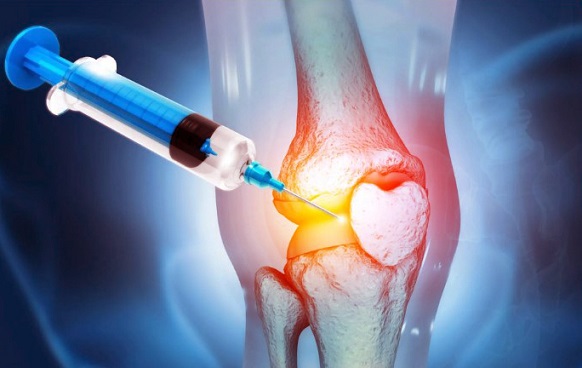 A new injection helps aging joints regrow healthy cartilage and stop arthritis before it starts
This
Medical News report highlights research showing that an injectable treatment was able to restore lost cartilage in older animals and even prevent arthritis after serious knee injuries. The findings suggest that joint damage once thought permanent may not be so permanent after all.
The research was carried out by scientists from Stanford Medicine at Stanford University in the United States. The senior researchers included Professor Helen Blau from the Baxter Laboratory for Stem Cell Biology and Associate Professor Nidhi Bhutani from the Department of Orthopaedic Surgery. Other contributors came from Stanford University and the Sanford Burnham Institute in San Diego.
Why Cartilage Loss Is Such a Big Problem
Cartilage is the smooth cushioning tissue that allows joints to move easily. In the knee it prevents bones from rubbing against each other. As people age or experience joint injuries, this cartilage slowly wears away. When that happens pain swelling stiffness and eventually osteoarthritis follow.
Osteoarthritis affects roughly one in five adults and costs health systems billions of dollars every year. At present there is no drug that can reverse cartilage loss. Most treatments focus on reducing pain or inflammation. When damage becomes severe joint replacement surgery is often the only option.
Targeting Aging at Its Source
Instead of treating symptoms this new approach targets the root cause of cartilage breakdown. Researchers focused on a protein called 15-PGDH (15-hydroxy prostaglandin dehydrogenase) which increases naturally as the body ages. This protein belongs to a group known as gerozymes which play a role in age related tissue decline.
Previous studies showed that high levels of 15-PGDH weaken muscles in older animals. When scientists blocked this protein muscle strength and endurance improved. This raised an important question could the same approach work for aging joints
How the Treatment Works
The treatment uses a small molecule drug that blocks 15-PGDH. When researchers injected this inhibitor into older mice something remarkable happened. The thin worn cartilage in their knees thickened and regained its normal smooth structure. Even more surprising was that the new cartilage was healthy hyaline cartilage not weaker scar like tissue.
The treatment worked whether the drug was injected into the body or directly into the knee joint. This showed that cartilage regeneration could be triggered without surge
ry or stem cell transplants.
Preventing Arthritis After Injury
The researchers also tested the treatment in mice with knee injuries similar to ACL (Anterior Cruciate Ligament) tears commonly seen in athletes. These injuries often lead to arthritis years later even after surgical repair.
Mice treated with the 15-PGDH inhibitor shortly after injury were far less likely to develop arthritis. They moved more naturally showed less pain and placed more weight on the injured leg. In contrast untreated animals developed arthritis quickly and showed clear signs of discomfort.
A New Way to Regrow Tissue
One of the most exciting findings was how the cartilage regenerated. Instead of relying on stem cells the existing cartilage cells called chondrocytes were reprogrammed. Blocking 15-PGDH changed how these cells behaved at the genetic level.
Cells linked to inflammation and cartilage breakdown decreased while cells responsible for building healthy cartilage increased. This shift created a more youthful cartilage environment without adding new cells to the joint.
Evidence From Human Cartilage
To see if the findings could apply to people researchers tested the treatment on human knee cartilage taken from patients undergoing knee replacement surgery. Within just one week the treated tissue showed reduced damage signals and began forming new functional cartilage.
This suggests that human joints may also respond positively to the same approach.
What This Means for the Future
If these results can be repeated in clinical trials the implications are enormous. A simple injection or pill could one day restore worn cartilage prevent arthritis after injury and delay or eliminate the need for joint replacement surgery.
Phase one trials of the drug for age related muscle weakness have already shown it to be safe in humans. Researchers are hopeful that similar trials for joint regeneration will begin soon.
Conclusion
This study represents a major shift in how scientists think about aging joints and tissue repair. By targeting an age-related protein and reprogramming existing cartilage cells researchers have shown that true regeneration may be possible even in older or injured joints. If confirmed in humans this approach could dramatically reduce pain disability and the need for invasive surgeries for millions of people worldwide.
The study findings were published in the peer reviewed journal: Science
https://www.science.org/doi/10.1126/science.adx6649
For the latest on joint regeneration, keep on logging to Thailand
Medical News.
Read Also:
https://www.thailandmedical.news/articles/arthritis




 Share
Share
 Tweet
Tweet
 Share
Share

































