Scientists Validate That SARS-CoV-2 Triggers Alzheimer-Like Damage in Human Neurons
Nikhil Prasad Fact checked by:Thailand Medical News Team Nov 12, 2025 10 months, 3 weeks, 20 hours, 20 minutes ago
Medical News: Virus shown to infect human brain cells and alter key stress and neurodegenerative proteins
A new international study led by scientists from the University of Helsinki and the University of Queensland has validated that SARS-CoV-2 can directly infect human neurons, causing abnormal stress responses and damage similar to that seen in Alzheimer’s disease. The research team included experts from the Helsinki Institute of Life Science (HiLIFE), the Australian Institute for Bioengineering and Nanotechnology, the University of Zurich, Hamad Bin Khalifa University in Qatar, and Assiut University in Egypt.
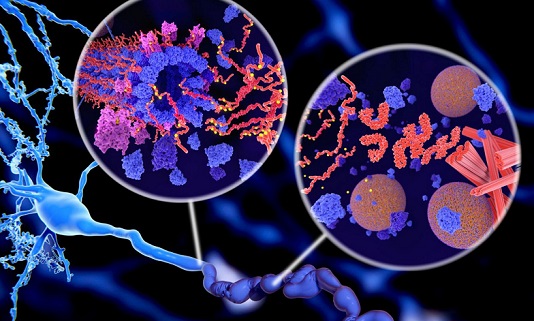 Scientists Validate That SARS-CoV-2 Triggers Alzheimer-Like Damage in Human Neurons
Using advanced human stem cell-derived brain cell models, the researchers demonstrated that both the original Wuhan strain and the Omicron XBB.1.5 variant of the virus were able to enter neurons through an enzyme pathway dependent on cathepsins—cellular proteases involved in protein breakdown. This
Medical News report found that blocking cathepsin B with a small molecule inhibitor called CA-074-ME significantly reduced viral infection in neurons, suggesting a potential therapeutic strategy against viral spread in the brain.
How the virus invades and alters neurons
The study showed that SARS-CoV-2 infects neurons through the endo-lysosomal compartment, bypassing the usual surface enzyme TMPRSS2. Once inside, the virus replicates and releases new viral particles, but their infectivity decreases after 24 hours, possibly due to an antiviral response by the neurons. Despite this, infected neurons exhibited striking changes: accumulation of hypoxia-inducible factor 1-alpha (HIF-1α), a stress-related protein that normally responds to low oxygen, and abnormal hyperphosphorylation of tau protein—a molecular event linked to neurodegenerative diseases such as Alzheimer’s.
The scientists found that in two-dimensional neuron cultures, tau protein became heavily phosphorylated at multiple sites and relocated from the neuron’s branches to its main body, a key early marker of cell dysfunction. Interestingly, this effect was absent in more complex three-dimensional brain organoids, suggesting that the level of viral exposure or model system influences the severity of neuronal damage.
Inflammatory and stress signals triggered in brain cells
In addition to these structural changes, SARS-CoV-2 infection activated a strong inflammatory response in neuron and astrocyte co-cultures. The researchers observed increased production of several cytokines and chemokines, including macrophage migration inhibitory factor (MIF), monocyte chemoattractant protein-1 (MCP-1/CCL2), Serpin E1, and CXCL12—all molecules known to regulate immune cell migration and inflammation in the nervous system. Elevated levels of HIF-1α further suggested that infected neurons were undergoing oxidative stress, which may contribute to tissue damage and dysfunction.
Cathepsin inhibitors show neuroprotective potential
The most promising aspect of the study is that the cathepsin B inhibitor CA-074-ME effectively blocked viral infection and protected neurons from SARS-CoV-2-induced injury. The drug was also tested in non-modified brain organoids and showed a strong protective effect without toxicity. This discovery highlights the therapeutic potential of targeting cathepsins to prevent or limit viral entry into neural cells.
Implications for long COVID and neurodegeneration
The findings support growing evidence that COVID-19 may have long-term neurological consequences. The infection’s ability to disrupt tau regulation and induce HIF-1α stabilization points to possible mechanisms behind persistent brain fog, memory loss, and neurodegenerative changes seen in some long COVID patients. The researchers emphasize that these alterations occurred within just 72 hours of infection in their laboratory models, suggesting that even short-term viral exposure could have lasting effects on neuronal health.
The study findings were published in the peer reviewed journal: Molecular Therapy Nucleic Acids.
https://www.cell.com/molecular-therapy-family/nucleic-acids/fulltext/S2162-2531(25)00280-X
For the latest COVID-19 news, keep on logging to Thailand
Medical News.
Read Also:
https://www.thailandmedical.news/articles/coronavirus
https://www.thailandmedical.news/articles/long-covid




 Share
Share
 Tweet
Tweet
 Share
Share

































