Nikhil Prasad Fact checked by:Thailand Medical News Team Jun 19, 2026 1 month, 2 weeks, 21 hours, 15 minutes ago
Medical News: Anhedonia, a condition marked by a reduced ability to feel pleasure, may be playing a much larger role in unhealthy eating habits, obesity, diabetes, depression, and other serious health conditions than previously understood. A new review by researchers from the Department of Food Science at Aarhus University in Denmark and the Sino-Danish College at the University of Chinese Academy of Sciences in Beijing, China, has brought together a growing body of evidence showing how disruptions in the brain’s reward system can profoundly influence the way people eat.
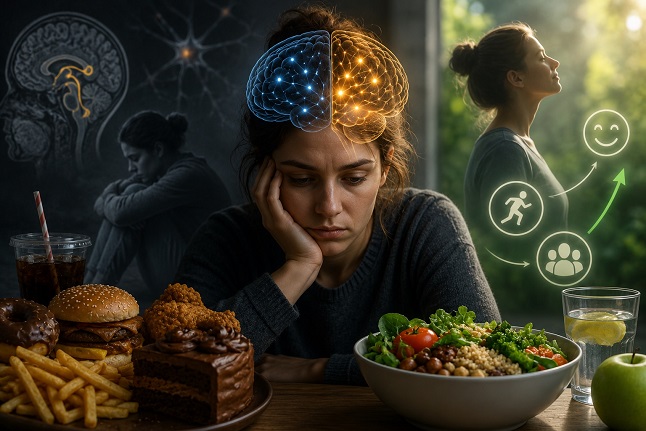 Researchers find that anhedonia-driven reward dysfunction may be a hidden force behind depression, obesity, diabetes,
and disordered eating
Why Pleasure Matters for Eating
Most people think eating is driven mainly by hunger. However, the brain’s reward system also plays a major role. Food normally creates feelings of pleasure that encourage people to eat and maintain healthy nutrition. In individuals with anhedonia, this process becomes disrupted.
Researchers explain that anhedonia is not simply an inability to enjoy things. It also affects motivation, anticipation of rewards, learning from pleasurable experiences, and decision-making. As a result, people may either lose interest in food or become trapped in unhealthy eating patterns while trying to compensate for reduced feelings of reward.
How the Brain Reward System Goes Wrong
The review highlights that eating behavior is influenced by three key reward components: “wanting,” which is the desire for food; “liking,” which is the pleasure experienced when eating; and “learning,” which helps people remember rewarding food experiences.
In many people with anhedonia, one or more of these processes become impaired. Some individuals continue craving food even when they no longer enjoy it as much. Others lose both the desire and pleasure associated with eating. These changes are strongly linked to disruptions in dopamine pathways, which are critical for processing rewards.
Researchers noted that some people with anhedonia can still experience moments of pleasure, but those positive feelings fade much faster than normal. This may drive repeated attempts to seek rewarding experiences, including excessive consumption of highly palatable foods.
Mental Health Disorders Show Strong Connections
The review found particularly strong links between anhedonia and psychiatric disorders. Among people with schizophrenia, anhedonia affects roughly 40 to 60 percent of patients. These individuals frequently experience binge eating, food cravings, food addiction, night eating, and emotional eating.
People with bipolar disorder often show dramatic changes in eating patterns depending on their mood state. During manic episodes they may crave high-calorie foods and eat impulsively, while depressive phases can lead to appetite loss, irregular meals, or emotional overeating.
Major depressive disorder also shows a close relationship with anhedonia. Studies cited in the review f
ound that between 37 and 80 percent of people with depression experience significant anhedonic symptoms. Many report binge eating, unhealthy food choices, increased sugar consumption, and reduced intake of fruits, vegetables, and fish.
Obesity, Diabetes and Eating Disorders Also Affected
This
Medical News report highlights that the effects of anhedonia extend well beyond mental illness. Individuals with obesity, prediabetes, and type 2 diabetes frequently show signs of altered reward processing and emotional eating.
Studies reviewed found that emotional eaters with diabetes often consume more calories, fat, sugary drinks, and alcohol. Binge eating and night eating were also common.
The review further revealed that anhedonia is highly prevalent among individuals with anorexia nervosa, bulimia nervosa, and binge-eating disorder. In many cases, disturbances in reward circuits appear to contribute directly to restrictive eating, compulsive overeating, or cycles of bingeing and guilt.
A New Way to Understand Eating Behavior
The researchers believe that understanding how pleasure and reward function in different groups could help healthcare professionals develop more effective treatments. Rather than focusing solely on food intake, future therapies may need to address the underlying reward-processing problems that drive unhealthy behaviors.
Conclusion
The review presents compelling evidence that anhedonia is far more than a symptom of depression. It appears to be a central factor connecting mental illness, obesity, diabetes, and eating disorders through shared disruptions in the brain’s reward system. By identifying how pleasure, motivation, and food-related rewards become altered, researchers hope to create more personalized treatment strategies that improve both mental health and dietary outcomes.
Understanding anhedonia may ultimately help millions of people regain healthier relationships with food and improve their overall quality of life.
The study findings were published in the peer reviewed journal: Nutrients.
https://www.mdpi.com/2072-6643/18/12/1981
For the latest on anhedonia and eating disorders, keep on logging to Thailand
Medical News.
Read Also:
https://www.thailandmedical.news/articles/mental-health
https://www.thailandmedical.news/articles/diets-and-nutrition
https://www.thailandmedical.news/articles/weight-loss-news




 Share
Share
 Tweet
Tweet
 Share
Share