Nikhil Prasad Fact checked by:Thailand Medical News Team Jul 15, 2026 1 month, 2 weeks, 4 days, 21 hours, 23 minutes ago
Medical News: Two-Year Eye Scan Study Reveals Lasting Changes
A new study has found that people living with long COVID may develop subtle but persistent changes in the retina, the light-sensitive tissue at the back of the eye that is closely connected to the brain. Although these changes do not necessarily affect vision immediately, researchers believe they could reflect ongoing neurological effects linked to the condition.
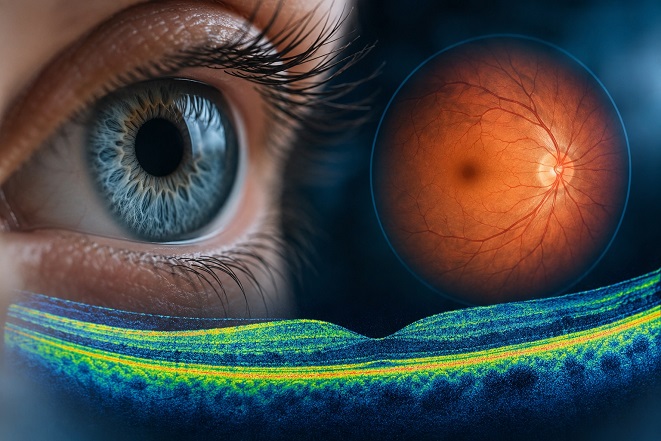 Two-year eye scans reveal subtle retinal nerve damage in people living with long COVID despite largely preserved vision
The research was conducted by scientists from the Department of Ophthalmology at Miguel Servet University Hospital, the Miguel Servet Ophthalmology Research Group (GIMSO), the Aragon Health Research Institute (IIS Aragón), the Biotech Vision Center, Quirón Ophthalmology Institute, and the Department of Surgery, Faculty of Medicine, University of Zaragoza, all in Zaragoza, Spain.
Following Patients for Two Years
The investigators tracked 133 participants over two years, including 94 people diagnosed with persistent COVID-19, also known as long COVID, and 39 individuals who had recovered from COVID-19 without lingering symptoms.
Using high-resolution optical coherence tomography (OCT), a painless imaging technique capable of detecting microscopic retinal changes, researchers examined several retinal layers during repeated eye assessments.
The retina is considered an extension of the central nervous system, making it an attractive window into possible brain-related damage caused by long COVID.
A Key Retinal Layer Became Thinner
The most important finding involved the inner plexiform layer (IPL), a retinal layer responsible for transmitting signals between nerve cells involved in vision.
People with long COVID experienced a significantly greater reduction in thickness within the central portion of this layer compared to healthy controls over the two-year follow-up. On average, the central IPL became approximately 1.4 micrometers thinner in long COVID patients, while virtually no meaningful change occurred in the comparison group.
Researchers also detected changes in other retinal structures, including the retinal nerve fiber layer and ganglion cell layer. However, these alterations were smaller, varied by retinal region, and were considered exploratory after statistical correction.
Importantly, standard vision remained largely normal despite these structural changes, suggesting the retinal abnormalities may develop long before noticeable visual symptoms appear.
Quality of Life Remained Poor
The study also found that participants with long COVID continued to report reduced quality of life and ongoing functional limitations throughout the study period.
Individuals with greater disability consistently reported poorer overall well-being, reinforcing previous evidence that long COVID continues to affect multiple body systems long after the initial infection has resolved.
In this
thailandmedical.news/">Medical News report, the findings suggest that the retina may serve as a sensitive biological indicator of the neurological consequences associated with long COVID, even when patients do not experience obvious vision loss.
Why These Findings Matter
Researchers believe the observed retinal changes could reflect chronic inflammation, tiny blood vessel abnormalities, or persistent injury affecting the nervous system after SARS-CoV-2 infection. Because the retina shares many characteristics with brain tissue, monitoring these subtle changes may eventually help scientists better understand how long COVID affects the nervous system.
However, the investigators stressed that OCT cannot yet be used as a validated diagnostic or monitoring tool for long COVID. Larger studies involving more diverse patient populations and longer follow-up periods will be necessary before retinal scans can become part of routine clinical care.
Conclusion
The study provides growing evidence that long COVID may leave lasting fingerprints within the retina even when eyesight appears normal. While the retinal alterations were generally subtle, their persistence over two years strengthens concerns that long COVID may produce ongoing neurological effects. Future research will determine whether these eye changes can become reliable biomarkers for tracking disease progression or evaluating new treatments.
The study findings were published in the peer reviewed Journal of Clinical Medicine.
https://www.mdpi.com/2077-0383/15/14/5497
For the latest on Long COVID, keep on logging to Thailand
Medical News.
Read Also:
https://www.thailandmedical.news/articles/long-covid




 Share
Share
 Tweet
Tweet
 Share
Share