Nikhil Prasad Fact checked by:Thailand Medical News Team Mar 18, 2026 6 months, 2 weeks, 2 days, 18 hours, 42 minutes ago
Medical News: A major new scientific review is challenging long-held beliefs about glaucoma, revealing that the disease may be driven by far more than just high eye pressure. Researchers now suggest that viral infections and imbalances in gut bacteria could be key factors behind ongoing optic nerve damage and progressive vision loss.
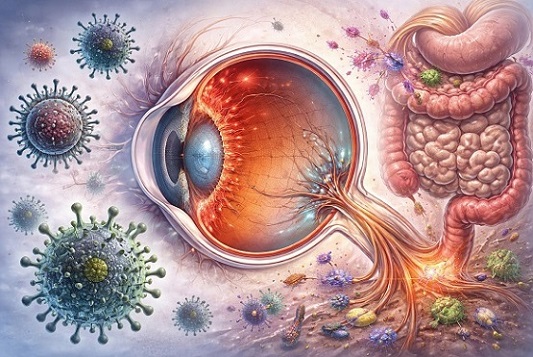 Viral infections and gut imbalance may accelerate glaucoma and worsen vision loss
The study was conducted by scientists from the Aier Academy of Ophthalmology, Central South University; Aier Glaucoma Institute; Changsha Aier Eye Hospital; Hunan Engineering Research Center for Glaucoma with Artificial Intelligence in Diagnosis and Application of New Materials; Changsha Glaucoma Diagnosis and Treatment Technology Innovation Center; and the Department of Ophthalmology, The Second Xiangya Hospital, Central South University, China.
Viruses Can Trigger Lasting Eye Damage
The researchers explain that several viruses, including herpes simplex virus, cytomegalovirus, and Zika virus, can directly infect vital structures inside the eye. These structures are responsible for regulating fluid drainage and maintaining healthy eye pressure.
When infected, these tissues become damaged and inflamed, leading to fluid buildup and increased pressure. Over time, this pressure harms the optic nerve, resulting in gradual and irreversible vision loss. In some cases, viruses can remain in the body in a dormant state and reactivate later, causing repeated cycles of damage that worsen the condition.
Inflammation Creates a Dangerous Cycle
A key finding from the study is that inflammation plays a central role in disease progression. When viruses infect the eye, the immune system responds aggressively, releasing chemicals meant to fight the infection.
However, prolonged inflammation can become harmful. It leads to scarring in the drainage system, blocks fluid flow, and releases substances that damage nerve cells. This creates a self-sustaining cycle where inflammation causes damage, and that damage triggers even more inflammation.
This
Medical News report highlights that glaucoma may share similarities with neurodegenerative diseases, where chronic inflammation slowly destroys critical nerve cells over time.
Gut Health Strongly Influences Eye Disease
Another surprising discovery is the role of the gut microbiome. When the balance of bacteria in the gut is disrupted, harmful toxins can leak into the bloodstream and reach the eye.
These toxins can activate immune responses that damage retinal cells and the optic nerve. At the same time, beneficial compounds produced by healthy bacteria, which normally help protect nerves, are reduced.
The study also points to a link between oral infections, including Helicobacter pylori, and increased glaucoma risk. This suggests that poor microbial health in the body may directly influence eye health and disease progression.
;
Future Treatments May Go Beyond Eye Pressure
The findings suggest that simply lowering eye pressure may not be enough to fully control glaucoma. Future treatments may need to address viral infections, reduce inflammation, and restore microbial balance.
Researchers are exploring antiviral therapies, dietary approaches to improve gut health, and advanced drug delivery systems that can better target affected areas of the eye. These strategies aim to slow disease progression and protect the optic nerve more effectively.
Although these approaches show promise, most are still in early stages and require further research before becoming widely available.
Conclusions
This study presents a major shift in understanding glaucoma, showing that it is likely a complex condition influenced by infections, immune responses, and microbial imbalance rather than a disease driven solely by eye pressure. These findings emphasize the need for more comprehensive treatment strategies that target underlying causes instead of just symptoms. While the evidence is still evolving, the research opens new pathways for earlier detection, better prevention, and more effective therapies that could significantly reduce the global burden of vision loss.
The study findings were published in the peer reviewed journal: Viruses.
https://www.mdpi.com/1999-4915/18/3/310
For the latest on glaucoma, keep on logging to Thailand
Medical News.
Read Also:
https://www.thailandmedical.news/articles/glaucoma-news




 Share
Share
 Tweet
Tweet
 Share
Share