Nikhil Prasad Fact checked by:Thailand Medical News Team Jul 15, 2026 1 month, 2 weeks, 4 days, 11 hours, 38 minutes ago
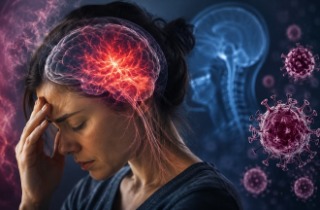
Medical News: For millions of people worldwide, COVID-19 recovery does not end when the virus disappears. Persistent fatigue remains one of the most common and debilitating long-term symptoms, often lasting months or even years. Now, researchers have identified biological changes that may help explain why this overwhelming exhaustion refuses to go away. Their findings suggest that lingering fatigue is associated with immune and metabolic disturbances that can directly influence human brain cells, providing fresh insight into the biological basis of post-COVID fatigue.
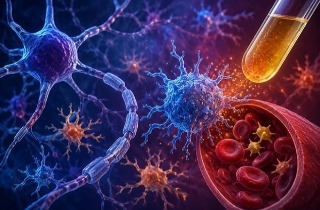
 New research reveals that blood from people suffering persistent COVID fatigue can trigger measurable immune
and metabolic changes in human brain cells
Researchers Investigate the Brain Connection
The study was conducted by scientists from the Institute of Psychiatry, Psychology & Neuroscience (IoPPN), King's College London, the Department of Neuroimaging, King's College London, the Faculty of Medicine, University of Porto, Portugal, and the Department of Life Sciences, University of Modena and Reggio Emilia, Italy.
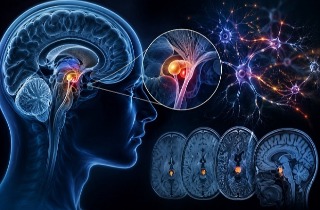
The research involved 38 adults who had experienced biologically confirmed mild COVID-19 infections. Participants were recruited between three and 36 months after infection and completed several well-established fatigue assessments. Blood samples were collected to measure immune molecules and metabolic compounds, while the same serum samples were applied to cultured human hippocampal progenitor cells. The hippocampus is a critical brain region involved in memory, learning, mood regulation, and cognitive function.
Distinct Biological Changes Found in People with Severe Fatigue
One of the clearest findings was that participants reporting the greatest fatigue consistently had lower blood levels of the immune signaling molecule interleukin-8 (IL-8). They also had significantly reduced levels of important metabolites involved in the kynurenine pathway and serotonin metabolism, including kynurenine (KYN), quinolinic acid (QUIN), and 5-hydroxyindoleacetic acid (5-HIAA), the main breakdown product of serotonin.
These molecules play essential roles in regulating immune activity, inflammation, nerve cell communication, and brain metabolism. Their reduction suggests that long after the initial infection has resolved, important biological pathways remain disrupted in individuals suffering from persistent fatigue.
Patient Blood Produced Remarkable Changes in Human Brain Cells
The researchers then exposed human hippocampal progenitor cells to serum collected from each participant.
Cells treated with serum from people experiencing more severe fatigue produced significantly higher levels of IL-13, an immune signaling molecule, together with increased production of the kynurenine metabolite anthranilic acid (ANA). At the same time, the cells displayed stronger expression of markers associated with immature neurons and reactive astrocytes, specialized support cells that maintain the brain's environment and respond to inflammation.
The researchers believe these findings suggest that circulat
ing biological factors in the blood of fatigued individuals can alter the behavior of brain cells, potentially contributing to cognitive problems frequently reported in long COVID.
Serotonin May Play a Major Role
An especially important discovery involved the serotonin metabolite 5-HIAA.
The investigators found that lower circulating 5-HIAA levels strongly predicted higher IL-13 production by hippocampal cells. Statistical analysis showed that approximately 71 percent of the relationship between fatigue severity and IL-13 production could be explained by reduced 5-HIAA levels.
This
Medical News report highlights one of the study's most significant implications: persistent COVID-related fatigue may involve disrupted serotonin metabolism interacting with abnormal immune signaling, creating biological changes capable of affecting brain function.
Researchers also found that lower IL-8 levels were linked to greater activation of brain cell markers, further strengthening evidence that immune disturbances outside the brain may influence neurological function.
Findings Could Open New Treatment Strategies
The study offers one of the strongest demonstrations to date that post-COVID fatigue has measurable biological foundations rather than being solely a subjective symptom. By combining patient blood analysis with experiments using living human brain cells, the researchers identified several promising biomarkers—including IL-8, IL-13, 5-HIAA, and kynurenine pathway metabolites—that may eventually help guide new diagnostic tests and targeted therapies for long COVID fatigue.
Conclusion
Although the study involved a relatively small group of participants and laboratory-grown brain cells rather than living human brains, it provides compelling evidence that persistent COVID-19 fatigue is associated with lasting immune and metabolic abnormalities capable of altering human hippocampal cell function. These findings significantly advance understanding of long COVID and could help pave the way toward more effective treatments for one of its most disabling symptoms.
The study findings were published in the peer reviewed journal: Translational Psychiatry.
https://link.springer.com/article/10.1038/s41398-026-04250-9
For the latest COVID-19 news, keep on logging to Thailand
Medical News.
Read Also:
https://www.thailandmedical.news/articles/coronavirus
https://www.thailandmedical.news/articles/long-covid




 Share
Share
 Tweet
Tweet
 Share
Share